
 Shopping Cart -
- Anti-hestaminic & Respiratory Drugs
- Anti-inflammatory Drugs +-
- Baby & Mom +-
- Baby & Mom > Bath, skin & Hair > Skin Care > wibes
- Beauty +-
- Beauty > Skin Care > whitening
- Chemotherapy & Immune Response +-
- Chemotherapy & Immune Response > ANTI-FUNGAL
- Chemotherapy & Immune Response > Chemotherapeutic Agents > Hormone Antagonists >Enzyme Inhibitors
- CIRCULATORY DISTURBANCE AGENTS
- Diet & Fitness Products +-
- DRUG AFFECTING CENTRAL NERVOUS SYSTEM
- HEMATOLOGY
-
Medical Supplies
+-
- Chemicals & Disinfectants
- Dental Supplies
- Devices & Instruments
- Diabetic Supplies
- General Medical Supplies
- I.V & Medical Solution
- Intensive Care Unit & Anesthesia Supplies
- KIDNEY UNIT SUPPLIES
- Lab Supplies
- Miscellaneous
- Neonatal Unit Supplies
- Operation Room Supplies
- Sanitary
- Sterilization Supplies
- Surgical Sutures
- Syringes
- Medicines & Health +-
- Medicines & health > Gout releif
- Natural & Organic Products +-
- OTC > Analgesics > Anti-inflammatory Drugs
- Personal Care +-
-
Prescription Drugs
+-
- Analgesics
- Cardiovascular System
- Drugs Affecting Musculoskeletal System
- Drugs Used In Infections
- Ear & Nose Drugs
- Endocrine System
- Gastrointestinal Tract
- Gastrointestinal Tract > Hepatology > Liver treatment
- GYNECOLOGY
- Miscellaneous
- NEPHROLOGY > URINARY SYSTEM > RENAL DISORDERS > URINARY TRACT DISORDERS
- NEUROLOGY
- Nutrients & Blood Electrolytes
- Respiratory System
- SKIN > NAILS > HAIR > TOPICAL PREPARATIONS
- Vaccines
- Prescription drugs > Cardiovascular system > Anti-hypertension drugs
- Sexual Wellness +-
- Vitamins & Minerals Supplements +-
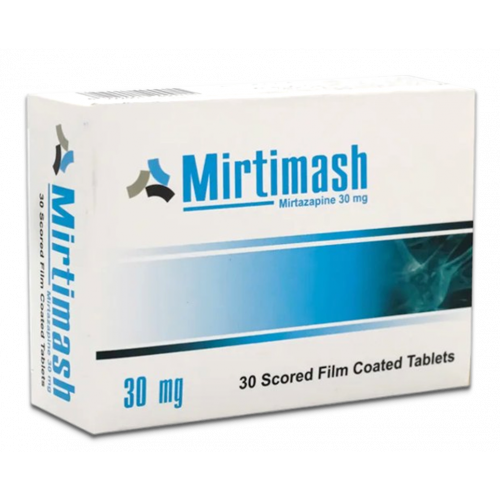
Ex Tax: 177EGP
Example
You can return the product within 14 days of purchase.
ReturnsYou can return the product within 14 days of purchase.

MIRTIMASH 30 MG (MIRTAZAPINE) — SCORED FILM-COATED TABLETS
Active Ingredient: Mirtazapine 30 mg
Dosage Form: Scored film-coated tablets
Pack Size: 30 tablets
Category: Antidepressant / Noradrenergic and Specific Serotonergic Antidepressant (NaSSA)
Overview
Mirtimash contains mirtazapine, an antidepressant medication used primarily for the treatment of major depressive disorder (MDD) in adults.
Mirtazapine works by enhancing noradrenergic and serotonergic neurotransmission in the brain, helping improve mood and alleviate symptoms of depression. It may also help improve sleep and appetite in patients experiencing depressive symptoms associated with insomnia or decreased appetite.
Its sedative properties are related partly to its antihistamine activity, making it particularly useful in some patients experiencing sleep disturbances associated with depression.
Indications & Potential Benefits
- Treatment of major depressive disorder in adults.
- Helps improve depressive symptoms, including persistent low mood and loss of interest.
- May help improve sleep quality in patients experiencing insomnia associated with depression.
- May help improve appetite in patients with depression accompanied by reduced appetite.
- May help alleviate anxiety symptoms associated with depressive illness in some patients.
Mechanism of Action
Mirtazapine is classified as a noradrenergic and specific serotonergic antidepressant (NaSSA).
It acts primarily by blocking central presynaptic alpha-2 adrenergic receptors, increasing the release of norepinephrine and serotonin.
Additionally, it selectively blocks serotonin 5-HT2 and 5-HT3 receptors, enhancing serotonergic neurotransmission through 5-HT1 receptors. Its potent histamine H1 receptor antagonism contributes to its sedative effects and may increase appetite.
This combination of pharmacological actions contributes to its antidepressant, sedative, and appetite-stimulating effects.
Dosage & Administration
- The usual recommended starting dose of mirtazapine is 15 mg once daily, preferably in the evening before bedtime.
- The dose may be adjusted according to the patient's clinical response and tolerability.
- The usual effective dose range is 15–45 mg daily.
- Mirtimash 30 mg should be taken orally, with or without food, and swallowed with water.
- Dose adjustments should generally be made at intervals of at least 1–2 weeks.
- Treatment should not be discontinued abruptly; gradual dose reduction is recommended to minimize withdrawal symptoms.
Important: The appropriate dose and duration of treatment should be determined by the prescribing physician.
Possible Side Effects
Mirtazapine may cause the following adverse effects:
- Drowsiness and sedation.
- Increased appetite.
- Weight gain.
- Dry mouth.
- Dizziness.
- Constipation.
- Fatigue.
- Headache.
- Nausea.
Less common but potentially serious adverse effects include:
- Suicidal thoughts or worsening depression.
- Serotonin syndrome, particularly when combined with other serotonergic medications.
- Mania or hypomania in susceptible individuals.
- Hyponatremia (low blood sodium).
- Neutropenia or agranulocytosis (rare blood disorders).
- QT prolongation and cardiac arrhythmias.
- Severe allergic reactions or serious skin reactions.
Warnings & Precautions
- Antidepressants may increase the risk of suicidal thoughts and behaviors in children, adolescents, and young adults, particularly during the initial treatment period or following dose changes.
- Monitor patients for worsening depression, unusual behavioral changes, agitation, or suicidal thoughts.
- Mirtazapine may cause significant drowsiness; patients should avoid driving or operating machinery until they know how the medication affects them.
- Avoid or limit alcohol consumption, as it may increase sedation and impairment.
- Use cautiously in patients with a history of seizures, bipolar disorder, cardiovascular disease, hepatic impairment, or renal impairment.
- Monitor for symptoms of serotonin syndrome, especially when combined with other serotonergic agents.
- Seek medical attention if fever, sore throat, mouth ulcers, or signs of infection develop, as rare blood disorders have been reported.
- Treatment should be tapered gradually rather than stopped abruptly.
- Screen for bipolar disorder before initiating antidepressant therapy.
Contraindications
Mirtazapine is contraindicated in patients with:
- Known hypersensitivity to mirtazapine or any component of the formulation.
- Concomitant use of monoamine oxidase inhibitors (MAOIs), or use within 14 days of discontinuing an MAOI.
Drug Interactions
Mirtazapine may interact with:
- MAO inhibitors: Risk of serious serotonin-related reactions.
- Other serotonergic medications: Such as SSRIs, SNRIs, tramadol, and certain other medications, increasing the risk of serotonin syndrome.
- Alcohol and sedatives: May increase CNS depression and impairment.
- CNS depressants: Such as benzodiazepines and opioids, potentially increasing sedation.
- Warfarin: May affect anticoagulant activity and require monitoring.
- Strong CYP enzyme inhibitors or inducers: May alter mirtazapine concentrations and clinical effects.
Storage
- Store at room temperature according to the manufacturer's instructions.
- Keep in a dry place, away from excessive heat and moisture.
- Keep the tablets in their original packaging until use.
- Keep out of reach of children.
Patient Disclaimer
This product description is intended for informational and educational purposes only and is not a substitute for professional medical advice, diagnosis, or treatment. Mirtimash 30 mg is a prescription medication and should be used only under the supervision of a qualified healthcare professional. Do not start, stop, or adjust the dose without consulting your physician. Seek medical attention if you experience worsening depression, suicidal thoughts, severe adverse reactions, or unusual behavioral changes.
References
- U.S. National Library of Medicine – DailyMed: Mirtazapine tablets, prescribing information. DailyMed – Mirtazapine
- Medicines and Healthcare products Regulatory Agency (MHRA): Mirtazapine 30 mg tablets – Summary of Product Characteristics. MHRA Product Information
- Health Products Regulatory Authority (HPRA), Ireland: Mirtazapine 30 mg Film-Coated Tablets – Summary of Product Characteristics. HPRA – Mirtazapine SmPC
- U.S. National Library of Medicine – DailyMed: Mirtazapine full prescribing information, dosage, warnings, contraindications, and adverse reactions. DailyMed – Full Prescribing Information
Write a review
Your Name:Your Review: (optional) Text is optional. Maximum 1,000 characters. Reviews are published automatically after validation.
Rating: Bad Good
Enter the code in the box below:


