 Shopping Cart -
- Anti-hestaminic & Respiratory Drugs
- Anti-inflammatory Drugs +-
- Baby & Mom +-
- Baby & Mom > Bath, skin & Hair > Skin Care > wibes
- Beauty +-
- Beauty > Skin Care > whitening
- Chemotherapy & Immune Response +-
- Chemotherapy & Immune Response > ANTI-FUNGAL
- Chemotherapy & Immune Response > Chemotherapeutic Agents > Hormone Antagonists >Enzyme Inhibitors
- CIRCULATORY DISTURBANCE AGENTS
- Diet & Fitness Products +-
- DRUG AFFECTING CENTRAL NERVOUS SYSTEM
- HEMATOLOGY
-
Medical Supplies
+-
- Chemicals & Disinfectants
- Dental Supplies
- Devices & Instruments
- Diabetic Supplies
- General Medical Supplies
- I.V & Medical Solution
- Intensive Care Unit & Anesthesia Supplies
- KIDNEY UNIT SUPPLIES
- Lab Supplies
- Miscellaneous
- Neonatal Unit Supplies
- Operation Room Supplies
- Sanitary
- Sterilization Supplies
- Surgical Sutures
- Syringes
- Medicines & Health +-
- Medicines & health > Gout releif
- Natural & Organic Products +-
- OTC > Analgesics > Anti-inflammatory Drugs
- Personal Care +-
-
Prescription Drugs
+-
- Analgesics
- Cardiovascular System
- Drugs Affecting Musculoskeletal System
- Drugs Used In Infections
- Ear & Nose Drugs
- Endocrine System
- Gastrointestinal Tract
- Gastrointestinal Tract > Hepatology > Liver treatment
- GYNECOLOGY
- Miscellaneous
- NEPHROLOGY > URINARY SYSTEM > RENAL DISORDERS > URINARY TRACT DISORDERS
- NEUROLOGY
- Nutrients & Blood Electrolytes
- Respiratory System
- SKIN > NAILS > HAIR > TOPICAL PREPARATIONS
- Vaccines
- Prescription drugs > Cardiovascular system > Anti-hypertension drugs
- Sexual Wellness +-
- Vitamins & Minerals Supplements +-
Ex Tax: 840EGP
Example
You can return the product within 14 days of purchase.
ReturnsYou can return the product within 14 days of purchase.

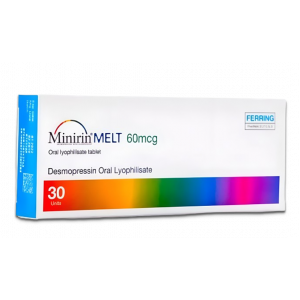
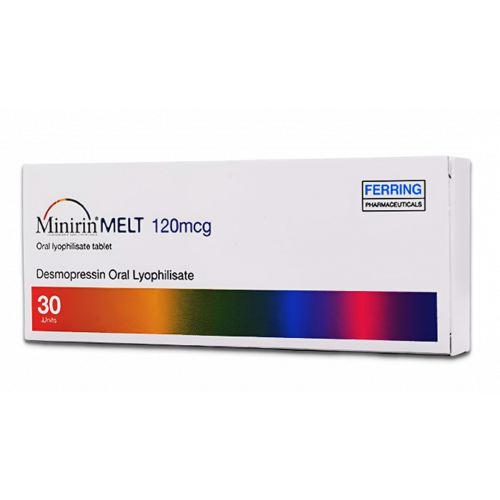
MINIRIN MELT 60 MCG & 120 MCG (DESMOPRESSIN ACETATE) – 30 ORAL LYOPHILISATE TABLETS
Active Ingredient: Desmopressin acetate
Available Strengths:
- Minirin Melt 60 mcg – 30 oral lyophilisate tablets.
- Minirin Melt 120 mcg – 30 oral lyophilisate tablets.
Dosage Form: Oral lyophilisate (orally disintegrating tablet).
Therapeutic Category: Synthetic vasopressin analogue / Antidiuretic agent.
Product Overview
Minirin Melt contains desmopressin acetate, a synthetic analogue of the natural antidiuretic hormone (ADH), also known as vasopressin.
It works primarily on the kidneys to reduce excessive water excretion by increasing water reabsorption in the renal collecting ducts. This helps reduce urine production and manage conditions associated with insufficient antidiuretic hormone activity or excessive nighttime urine production.
The oral lyophilisate formulation dissolves rapidly under the tongue without requiring water, providing a convenient administration option.
Available in 60 mcg and 120 mcg strengths, Minirin Melt allows individualized treatment according to the patient's condition, age, clinical response, and kidney function.
Active Ingredient and Mechanism of Action
Desmopressin Acetate 60 mcg / 120 mcg
Desmopressin is a synthetic analogue of the natural antidiuretic hormone (ADH).
It selectively stimulates vasopressin V2 receptors in the kidneys, increasing water reabsorption in the collecting ducts and reducing urine production.
Its main pharmacological actions include:
- Antidiuretic Action: Reduces excessive urine production by increasing water reabsorption in the kidneys.
- Urine Concentration: Helps increase urine concentration and reduce urinary water loss.
- Management of Central Diabetes Insipidus: Replaces deficient antidiuretic activity in patients with central diabetes insipidus.
- Management of Nocturnal Enuresis: Helps reduce nighttime urine production, supporting improved nighttime bladder control.
Desmopressin has a stronger antidiuretic effect and considerably less vasopressor activity than natural vasopressin at therapeutic doses.
Indications and Benefits
Minirin Melt is used in the management of conditions associated with insufficient antidiuretic hormone activity or excessive urine production.
Main therapeutic indications include:
- Central Diabetes Insipidus: Helps control excessive urination and persistent thirst caused by insufficient secretion of antidiuretic hormone (ADH).
- Primary Nocturnal Enuresis (Bedwetting): Helps reduce nighttime urine production in children aged 5 years and above, depending on the locally approved product indication and appropriate clinical assessment.
- Post-Hypophysectomy Polyuria and Polydipsia: Helps manage excessive urine production and thirst following pituitary surgery or injury affecting ADH secretion.
- Nocturnal Polyuria and Nocturia: In certain countries where the formulation is specifically approved for this indication, desmopressin may help reduce excessive nighttime urine production in appropriately selected adults.
►Important: Indications differ between countries and product registrations. Nocturia treatment should not be assumed to be an approved indication for every Minirin Melt product.
Dosage and Administration
Important: Desmopressin dosage is individualized according to the indication, age, clinical response, kidney function, and serum sodium levels. The following are reference dosing regimens, not instructions for self-medication.
1. Central Diabetes Insipidus
- Adults and children: A commonly recommended initial dose is 60 mcg three times daily, administered sublingually.
- The dose is adjusted according to urine output, urine concentration, and clinical response.
- Usual maintenance dose: 60–120 mcg three times daily.
- Typical total daily dose: 120–720 mcg.
2. Primary Nocturnal Enuresis (Bedwetting)
- Children aged 5 years and above: Initial dose is 120 mcg at bedtime.
- If the response is inadequate, the dose may be increased to 240 mcg at bedtime under medical supervision.
- Treatment is generally prescribed for up to 3 months, followed by a treatment-free interval of at least one week to reassess the need for continued therapy.
- If adequate clinical improvement is not achieved after appropriate dose adjustment, treatment should be discontinued.
3. Nocturnal Polyuria
In countries where Minirin Melt is approved for this indication:
- Initial dose: 60 mcg at bedtime.
- If necessary, the dose may be increased to 120 mcg and subsequently 240 mcg, with weekly dose adjustments under medical supervision.
- Fluid restriction and serum sodium monitoring are essential.
- Treatment in elderly patients is generally not recommended under the referenced product information.
Method of Administration:
- Place the oral lyophilisate under the tongue.
- Allow it to dissolve completely without chewing or swallowing it whole.
- No water is required for administration.
- Remove the tablet from the blister carefully with dry hands.
- Do not divide the lyophilisate to obtain a different dose.
Important Fluid Restriction:
For treatment of nocturnal enuresis and nocturia, fluid intake should be minimized from 1 hour before administration until the following morning, for at least 8 hours after taking the medicine.
For central diabetes insipidus, fluid intake must be individualized according to the patient's clinical condition and physician's instructions. Excessive fluid restriction can cause dehydration.
►Important: The 60 mcg and 120 mcg strengths are not interchangeable with other desmopressin formulations on a microgram-for-microgram basis without medical guidance.
Possible Side Effects
Minirin Melt is generally well tolerated when used appropriately. However, adverse effects may occur, particularly when fluid intake is not properly controlled.
Common or clinically important side effects:
- Headache.
- Nausea and vomiting.
- Abdominal discomfort.
- Dizziness.
- Fatigue.
- Hyponatremia (low sodium levels in the blood).
- Fluid retention.
Serious Potential Adverse Effects:
- Severe hyponatremia.
- Water intoxication.
- Confusion and altered consciousness.
- Seizures or convulsions in severe cases.
- Rare allergic reactions, including skin and generalized hypersensitivity reactions.
Hyponatremia is one of the most serious risks associated with desmopressin.
Excessive fluid intake during treatment can lead to water retention and dangerously low blood sodium levels.
Warning signs include:
- Persistent or severe headache.
- Nausea and vomiting.
- Unexplained weight gain.
- Unusual tiredness or confusion.
- Muscle cramps or weakness.
- Seizures in severe cases.
Patients experiencing symptoms suggestive of hyponatremia require immediate medical assessment. Treatment may need to be interrupted.
Warnings and Precautions
- Fluid Intake: Strict adherence to prescribed fluid-management instructions is essential, particularly when treating bedwetting or nocturia.
- Serum Sodium Monitoring: Assess sodium levels when clinically indicated, especially in patients at increased risk of hyponatremia and during long-term treatment or dose adjustments.
- Renal Impairment: Moderate to severe renal impairment requires particular attention. The referenced product information contraindicates use when creatinine clearance is below 50 mL/min.
- Cardiovascular Conditions: Avoid use in patients with heart failure or conditions requiring diuretic treatment, according to the applicable product labeling.
- Acute Illness: Treatment for enuresis or nocturia should be temporarily interrupted during illnesses involving fever, vomiting, diarrhea, or fluid and electrolyte imbalance.
- Elderly Patients: Increased susceptibility to hyponatremia requires particular caution. Treatment for nocturia in patients aged 65 years and older is contraindicated in some product information.
- Pregnancy: Use only following medical evaluation of potential benefits and risks.
- Breastfeeding: Consult a healthcare professional before use; some product information recommends avoiding breastfeeding during treatment.
- Bladder Disorders: Patients with significant bladder dysfunction or urinary outlet obstruction require assessment before treatment.
Contraindications
Minirin Melt is contraindicated in patients with:
- Known hypersensitivity to desmopressin or any of its excipients.
- Known hyponatremia (low blood sodium levels).
- Moderate or severe renal impairment (creatinine clearance below 50 mL/min).
- Known or suspected cardiac insufficiency.
- Habitual or psychogenic polydipsia (excessive fluid intake).
- Syndrome of inappropriate antidiuretic hormone secretion (SIADH).
- Conditions requiring diuretic therapy, according to the applicable product information.
Drug Interactions
Certain medications may increase the antidiuretic effect of desmopressin or increase the risk of water retention and hyponatremia.
Important interactions include:
- Tricyclic Antidepressants: Such as amitriptyline and imipramine.
- Selective Serotonin Reuptake Inhibitors (SSRIs): Such as fluoxetine, sertraline, and escitalopram.
- Non-Steroidal Anti-Inflammatory Drugs (NSAIDs): Such as ibuprofen and naproxen.
- Carbamazepine: May enhance the antidiuretic effect.
- Chlorpromazine: May increase the risk of water retention.
- Loperamide: May increase desmopressin plasma concentrations and enhance its effects.
- Certain Sulfonylureas: Particularly chlorpropamide, may increase the antidiuretic effect.
Patients should inform their physician or pharmacist about all prescription medicines, OTC products, and supplements they are taking before starting treatment.
Storage Conditions
- Store below 25°C.
- Protect from moisture and direct sunlight.
- Keep the tablets in their original blister packaging until use.
- Remove each tablet carefully immediately before administration.
- Keep out of reach of children.
References
- Ethiopian Food and Drug Authority (EFDA). Minirin 60, 120 and 240 mcg Oral Lyophilisate – Summary of Product Characteristics. Includes indications, dosage, contraindications, warnings, interactions, and adverse effects. Official product information (PDF).
- Electronic Medicines Compendium (emc), United Kingdom. Desmopressin Melt 120 mcg Oral Lyophilisate – Summary of Product Characteristics, updated June 2024. Official SmPC.
- Australian Commission on Safety and Quality in Health Care. Minirin Melt – Consumer Medicine Information. Includes administration, precautions, adverse effects, and storage conditions. Minirin Melt medicine information.
- Singapore National Drug Formulary. Minirin Oral Lyophilisate 60 mcg – Official product registration and therapeutic indications. National Drug Formulary.
- European Association of Urology (EAU). Guidelines on Paediatric Urology – Monosymptomatic Nocturnal Enuresis. Clinical recommendations regarding desmopressin use in children. EAU clinical guidelines.
- U.S. Food and Drug Administration (FDA). Desmopressin Acetate Tablets – Prescribing Information. Pharmacological action, safety warnings, hyponatremia, and drug interactions. FDA prescribing information.
Patient Disclaimer
This product description is intended for educational and informational purposes only. Minirin Melt (desmopressin acetate) is a prescription medicine that should be used strictly under the supervision of a qualified healthcare professional. Correct dosing, appropriate fluid management, and monitoring of blood sodium levels are essential to minimize the risk of water retention and hyponatremia. Patients should not initiate, discontinue, or adjust treatment without medical advice. This product is not intended to diagnose, treat, cure, or prevent any disease without appropriate medical supervision.
Write a review
Your Name:Your Review: (optional) Text is optional. Maximum 1,000 characters. Reviews are published automatically after validation.
Rating: Bad Good
Enter the code in the box below: