 Shopping Cart -
- Anti-hestaminic & Respiratory Drugs
- Anti-inflammatory Drugs +-
- Baby & Mom +-
- Baby & Mom > Bath, skin & Hair > Skin Care > wibes
- Beauty +-
- Beauty > Skin Care > whitening
- Chemotherapy & Immune Response +-
- Chemotherapy & Immune Response > ANTI-FUNGAL
- Chemotherapy & Immune Response > Chemotherapeutic Agents > Hormone Antagonists >Enzyme Inhibitors
- CIRCULATORY DISTURBANCE AGENTS
- Diet & Fitness Products +-
- DRUG AFFECTING CENTRAL NERVOUS SYSTEM
- HEMATOLOGY
-
Medical Supplies
+-
- Chemicals & Disinfectants
- Dental Supplies
- Devices & Instruments
- Diabetic Supplies
- General Medical Supplies
- I.V & Medical Solution
- Intensive Care Unit & Anesthesia Supplies
- KIDNEY UNIT SUPPLIES
- Lab Supplies
- Miscellaneous
- Neonatal Unit Supplies
- Operation Room Supplies
- Sanitary
- Sterilization Supplies
- Surgical Sutures
- Syringes
- Medicines & Health +-
- Medicines & health > Gout releif
- Natural & Organic Products +-
- OTC > Analgesics > Anti-inflammatory Drugs
- Personal Care +-
-
Prescription Drugs
+-
- Analgesics
- Cardiovascular System
- Drugs Affecting Musculoskeletal System
- Drugs Used In Infections
- Ear & Nose Drugs
- Endocrine System
- Gastrointestinal Tract
- Gastrointestinal Tract > Hepatology > Liver treatment
- GYNECOLOGY
- Miscellaneous
- NEPHROLOGY > URINARY SYSTEM > RENAL DISORDERS > URINARY TRACT DISORDERS
- NEUROLOGY
- Nutrients & Blood Electrolytes
- Respiratory System
- SKIN > NAILS > HAIR > TOPICAL PREPARATIONS
- Vaccines
- Prescription drugs > Cardiovascular system > Anti-hypertension drugs
- Sexual Wellness +-
- Vitamins & Minerals Supplements +-
Ex Tax: 33EGP
Example
You can return the product within 14 days of purchase.
ReturnsYou can return the product within 14 days of purchase.

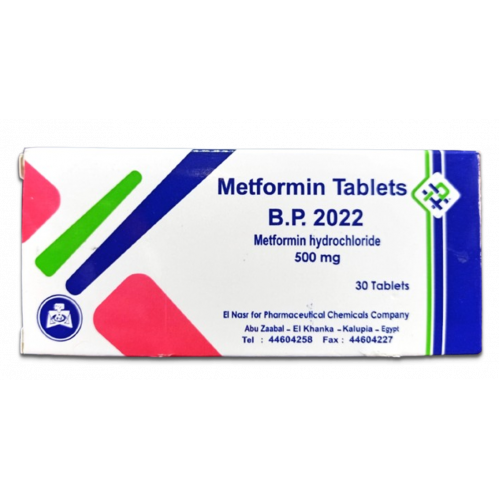
METFORMIN HYDROCHLORIDE 500 MG
Product Overview
Metformin hydrochloride is an oral antidiabetic medicine belonging to the biguanide class. It is commonly used to improve blood glucose control in people with type 2 diabetes mellitus, alongside dietary changes, physical activity, and other appropriate lifestyle measures.
It helps lower blood glucose without usually causing hypoglycemia when used alone.
Active Ingredient
- Metformin hydrochloride 500 mg per tablet.
Indications and Uses
Metformin is indicated for:
- Management of type 2 diabetes mellitus, particularly in patients who are overweight or obese.
- Improving blood glucose control when diet and exercise alone are insufficient.
- Use alone or in combination with other antidiabetic medicines, including insulin, when clinically appropriate.
Metformin is not used to treat type 1 diabetes as a substitute for insulin.
Mechanism of Action
Metformin lowers blood glucose mainly by:
- Reducing glucose production by the liver.
- Improving insulin sensitivity and peripheral glucose uptake.
- Reducing intestinal glucose absorption to a lesser extent.
It does not stimulate insulin secretion, which explains its relatively low risk of hypoglycemia when used alone.
Dosage and Administration
- The dosage should be individualized according to blood glucose levels, kidney function, and treatment response.
- A commonly recommended adult starting dose for immediate-release tablets is 500 mg twice daily with meals, or 850 mg once daily with a meal.
- The dose may be gradually increased by the physician according to tolerability and glycemic control.
- Swallow the tablet with food to reduce gastrointestinal discomfort.
- Do not change the dose or discontinue treatment without medical advice.
Possible Side Effects
Common side effects:
- Nausea and vomiting.
- Diarrhea.
- Abdominal discomfort or pain.
- Bloating and flatulence.
- Indigestion.
- Reduced appetite.
- Metallic taste in the mouth.
Less common but important effects:
- Vitamin B12 deficiency, particularly with long-term use.
- Hypoglycemia, mainly when combined with insulin or other glucose-lowering medicines.
- Lactic acidosis, a rare but potentially life-threatening complication.
Contraindications
Metformin should not be used in patients with:
- Severe renal impairment (eGFR below 30 mL/min/1.73 m²).
- Known hypersensitivity to metformin or any of the product's ingredients.
- Acute or chronic metabolic acidosis, including diabetic ketoacidosis.
Warnings and Precautions
- Kidney function: Assess renal function before starting treatment and periodically during therapy.
- Lactic acidosis: Risk may increase with significant kidney impairment, severe dehydration, serious infection, hypoxia, liver impairment, or excessive alcohol consumption.
- Vitamin B12: Long-term use may reduce vitamin B12 levels. Periodic monitoring may be appropriate, particularly in patients with anemia or peripheral neuropathy.
- Dehydration: Temporarily stopping treatment may be necessary during severe vomiting, diarrhea, or conditions causing significant dehydration, following medical advice.
- Surgery and contrast imaging: Metformin may need to be temporarily discontinued around certain surgical procedures or iodinated contrast investigations, depending on kidney function and clinical circumstances.
- Older adults: Use cautiously, with more frequent assessment of kidney function when appropriate.
Drug Interactions
Metformin may interact with:
- Insulin and sulfonylureas: May increase the risk of hypoglycemia.
- Alcohol: Excessive intake increases the risk of lactic acidosis.
- Cimetidine, dolutegravir, and ranolazine: May increase metformin exposure.
- Carbonic anhydrase inhibitors, such as topiramate: May increase the risk of metabolic acidosis.
- Iodinated contrast agents: May require temporary interruption of metformin.
Inform the healthcare professional about all medicines and supplements being used.
Pregnancy and Breastfeeding
- Pregnancy: Diabetes management during pregnancy requires individualized medical supervision. Metformin may be considered in selected circumstances, but treatment decisions should be made by the treating physician.
- Breastfeeding: Metformin passes into breast milk in small amounts. Its use may be considered during breastfeeding when clinically appropriate, following medical assessment.
Storage
- Store at room temperature according to the manufacturer's instructions.
- Keep in a dry place, protected from excessive heat and moisture.
- Keep out of reach of children.
Patient Disclaimer
This information is provided for educational purposes only and is not intended to diagnose, treat, cure, or prevent any disease. Metformin should be used only under the supervision of a qualified healthcare professional. Patients should not start, adjust, or discontinue treatment without medical advice. Always refer to the manufacturer's leaflet for product-specific instructions.
References
Write a review
Your Name:Your Review: (optional) Text is optional. Maximum 1,000 characters. Reviews are published automatically after validation.
Rating: Bad Good
Enter the code in the box below: