 Shopping Cart -
 - Anti-hestaminic & Respiratory Drugs (21)
- Anti-inflammatory Drugs (210) +-
- Baby & Mom (1381) +-
- Baby & Mom > Bath, skin & Hair > Skin Care > wibes (54)
- Beauty (3238) +-
- Beauty > Skin Care > whitening (309)
- Chemotherapy & Immune Response (891) +-
- Chemotherapy & Immune Response > ANTI-FUNGAL (11)
- Chemotherapy & Immune Response > Chemotherapeutic Agents > Hormone Antagonists >Enzyme Inhibitors (288)
- CIRCULATORY DISTURBANCE AGENTS (24)
- Diet & Fitness Products (287) +-
- DRUG AFFECTING CENTRAL NERVOUS SYSTEM (195)
- HEMATOLOGY (43)
-
Medical Supplies (539)
+-
- Chemicals & Disinfectants (19)
- Dental Supplies (38)
- Devices & Instruments (11)
- Diabetic Supplies (145)
- General Medical Supplies (21)
- I.V & Medical Solution (0)
- Intensive Care Unit & Anesthesia Supplies (0)
- KIDNEY UNIT SUPPLIES (23)
- Lab Supplies (3)
- Miscellaneous (21)
- Neonatal Unit Supplies (0)
- Operation Room Supplies (2)
- Sanitary (5)
- Sterilization Supplies (1)
- Surgical Sutures (4)
- Syringes (3)
-
Medicines & Health (2873)
+-
- Allergy & Sinus (99)
- Children's Health Care (54)
- Cough, Cold & Flu (303)
- Digestive Health & Nausea (248)
- Ear, Nose & Throat Care (201)
- Eye Care (136)
- Feminine Care (327)
- Foot Care (12)
- Orthopaedic Appliances (1)
- Pain Relief & Management (255)
- Pill Organizer (2)
- Skin Treatments (906)
- Sleep & Snoring Aids (2)
- Support & Braces (9)
- Medicines & health > Gout releif (41)
- Natural & Organic Products (82) +-
- OTC > Analgesics > Anti-inflammatory Drugs (48)
-
Personal Care (3454)
+-
- Bath & Body (283)
- Deodorant & Anti-perspirants (192)
- Ear, Nose & Throat Care (197)
- Eye Care (139)
- Feminine Care (379)
- Foot Care (21)
- Hair Care (522)
- Home Tests & Monitorings (17)
- Incontinence (7)
- Lip Care (29)
- Massage & Relaxation (17)
- Natural & Organic Personal Care (7)
- Oral Care (95)
- Pregnancy & Fertility (69)
- Shaving & Grooming (75)
- Sun Care (89)
-
Prescription Drugs (3140)
+-
- Analgesics (194)
- Cardiovascular System (410)
- Drugs Affecting Musculoskeletal System (65)
- Drugs Used In Infections (56)
- Ear & Nose Drugs (2)
- Endocrine System (224)
- Gastrointestinal Tract (263)
- Gastrointestinal Tract > Hepatology > Liver treatment (61)
- GYNECOLOGY (2)
- Miscellaneous (11)
- NEPHROLOGY > URINARY SYSTEM > RENAL DISORDERS > URINARY TRACT DISORDERS (52)
- NEUROLOGY (243)
- Nutrients & Blood Electrolytes (2)
- Respiratory System (170)
- SKIN > NAILS > HAIR > TOPICAL PREPARATIONS (138)
- Vaccines (1)
- Prescription drugs > Cardiovascular system > Anti-hypertension drugs (255)
- Sexual Wellness (325) +-
- Vitamins & Minerals Supplements (1276) +-
Ex Tax: 105EGP
Example
You can return the product within 14 days of purchase.
ReturnsYou can return the product within 14 days of purchase.

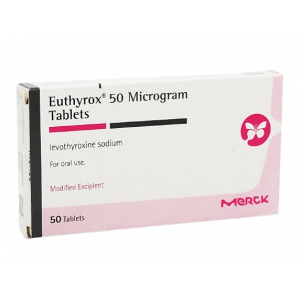
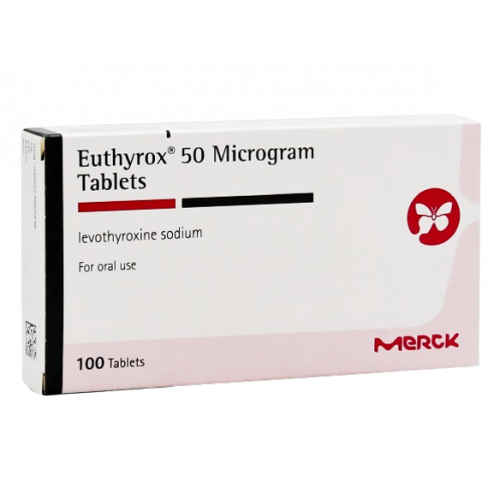
EUTHYROX 50 MCG ( LEVOTHYROXINE SODIUM ) FOR ORAL USE 100 TABLETS
LEVOTHYROXINE SODIUM – ORAL ROUTE
Synthetic Thyroid Hormone (T4) | Thyroid Hormone Replacement
Levothyroxine sodium is a synthetic form of thyroxine (T4), the hormone normally produced by the thyroid gland. It is chemically equivalent to endogenous thyroxine and is used to replace or supplement thyroid hormone when the body does not produce enough.
Medical Description
Levothyroxine sodium is the standard oral thyroid-hormone replacement medicine used primarily for the treatment of hypothyroidism. After administration, levothyroxine is converted in peripheral tissues to the more biologically active thyroid hormone, triiodothyronine (T3). Thyroid hormones regulate metabolism and are important for normal growth, development, neurological function, cardiovascular function, and energy metabolism.
Treatment aims to restore thyroid hormone levels and maintain TSH within the appropriate target range, with the exact dose individualized according to the patient's age, weight, clinical condition, cardiovascular status, laboratory results, and other medicines.
Main Clinical Uses
Levothyroxine sodium may be prescribed for:
- Primary hypothyroidism, including thyroid failure due to autoimmune thyroid disease.
- Post-surgical hypothyroidism, following thyroidectomy.
- Hypothyroidism following radioactive iodine treatment.
- Congenital hypothyroidism in infants and children.
- Secondary or tertiary hypothyroidism, with treatment monitored using appropriate thyroid hormone measurements.
- TSH suppression in selected patients with differentiated thyroid cancer, according to the treating specialist's treatment plan.
How It Works
Levothyroxine supplies synthetic T4, replacing thyroid hormone that is deficient or absent. T4 is converted in tissues to T3, which binds to thyroid hormone receptors and influences gene expression and metabolic activity throughout the body.
The therapeutic objective is not simply to relieve symptoms, but to achieve appropriate biochemical thyroid replacement while avoiding excessive thyroid hormone exposure.
Available Oral Strengths
For levothyroxine sodium tablets, commonly available strengths include:
| Strength | Amount |
|---|---|
| 25 mcg | 0.025 mg |
| 50 mcg | 0.05 mg |
| 75 mcg | 0.075 mg |
| 88 mcg | 0.088 mg |
| 100 mcg | 0.1 mg |
| 112 mcg | 0.112 mg |
| 125 mcg | 0.125 mg |
| 137 mcg | 0.137 mg |
| 150 mcg | 0.15 mg |
| 175 mcg | 0.175 mg |
| 200 mcg | 0.2 mg |
| 300 mcg | 0.3 mg |
These are the strengths listed for levothyroxine sodium oral tablets in current U.S. prescribing information.
Note: Some oral capsule formulations also contain 13 mcg, in addition to several of the strengths above. The available strengths depend on the specific manufacturer and formulation.
Dosage & Administration
Levothyroxine is generally administered once daily.
For tablets, the recommended administration is:
Take on an empty stomach, approximately 30–60 minutes before breakfast, with water.
Medicines or supplements that interfere with levothyroxine absorption should generally be separated from levothyroxine by at least 4 hours. Important examples include:
- Calcium-containing supplements
- Iron supplements
- Aluminum-containing antacids
- Certain bile-acid sequestrants
- Some other medicines that interfere with absorption
Food, soy products, coffee, and high-fiber diets can also affect absorption, so consistent administration is important.
Dose Selection
There is no single dose that is appropriate for every patient. The required dose depends on factors including:
- Age
- Body weight
- Severity and duration of hypothyroidism
- Residual thyroid function
- Cardiovascular status
- Pregnancy
- Other medications
- TSH and/or free T4 results
The dose is usually adjusted gradually according to laboratory results and clinical response. Full therapeutic effects may take 4–6 weeks after a dose change.
Special Consideration in Older Adults and Heart Disease
Patients who are older or have underlying cardiovascular disease are generally started at lower doses, because excessive thyroid hormone replacement can precipitate cardiovascular complications, including angina or cardiac arrhythmias such as atrial fibrillation.
Monitoring
Treatment requires periodic monitoring of TSH and/or thyroid hormone levels.
After initiating treatment or changing the dose, laboratory monitoring is performed after an appropriate interval to determine whether the dose needs adjustment. Once a stable dose is established, ongoing monitoring is still required.
Patients should also inform their healthcare professional if they change between different levothyroxine products or formulations, because consistent formulation and appropriate laboratory monitoring are important for maintaining stable thyroid replacement.
Common Signs of Excessive Dosage
Too much levothyroxine can produce symptoms of excessive thyroid hormone activity, such as:
- Palpitations or rapid heartbeat
- Tremor
- Nervousness or anxiety
- Increased sweating
- Heat intolerance
- Insomnia
- Unexplained weight loss
- Increased appetite
- Diarrhea
- Muscle weakness
Persistent or severe symptoms should be evaluated by a healthcare professional. Excessive long-term thyroid hormone replacement can also contribute to bone loss and cardiovascular complications.
Important Warnings & Precautions
Cardiovascular effects
Over-replacement may increase heart rate and cardiac workload and may precipitate angina or arrhythmias, particularly in older adults and patients with cardiovascular disease.
Bone health
Long-term excessive thyroid hormone replacement can increase bone turnover and may decrease bone mineral density, particularly in susceptible individuals.
Adrenal insufficiency
Levothyroxine is contraindicated in patients with uncorrected adrenal insufficiency. If adrenal insufficiency is present, appropriate glucocorticoid replacement should be addressed before thyroid hormone therapy.
Diabetes
Thyroid hormone therapy may affect glycemic control and can sometimes increase requirements for insulin or other antidiabetic medicines. Blood glucose should be monitored appropriately when treatment is initiated or adjusted.
Weight loss
Levothyroxine should not be used for weight loss or treatment of obesity in people with normal thyroid function. Excessive doses can cause serious or potentially life-threatening complications.
Pregnancy & Breastfeeding
Adequate thyroid hormone replacement is particularly important during pregnancy because maternal thyroid hormone is important for normal fetal development. Women receiving levothyroxine may require dose adjustment during pregnancy, with thyroid-function testing used to guide treatment.
Levothyroxine is also commonly continued during breastfeeding when clinically indicated, under medical supervision.
Important Drug & Supplement Interactions
Levothyroxine absorption can be reduced by several substances. Particular attention should be given to:
Calcium + Levothyroxine
Iron + Levothyroxine
Antacids containing aluminum/magnesium
Certain bile-acid sequestrants
Sucralfate
Some high-fiber foods and soy products
A separation of approximately 4 hours is recommended for medicines known to significantly interfere with absorption.
Biotin supplements can interfere with thyroid laboratory tests. Current prescribing information advises stopping biotin-containing supplements for at least 2 days before thyroid-function testing, when medically appropriate.
Patient Counseling Points
- Take levothyroxine consistently at the same time each day.
- Take it on an empty stomach, 30–60 minutes before breakfast.
- Take it with water.
- Keep calcium and iron supplements separated by approximately 4 hours.
- Do not change the dose based solely on symptoms.
- Do not discontinue treatment without medical advice.
- Tell your healthcare professional about all medicines and supplements you use.
- Have TSH and/or T4 monitored as recommended.
- Inform your healthcare professional before changing brands or formulations.
Patient Disclaimer
Levothyroxine sodium is a prescription medicine and should be used only according to the healthcare professional's instructions. The required strength and dose are individualized according to thyroid-function tests, age, body weight, cardiovascular status, pregnancy status, and other clinical factors. This information is for educational purposes and does not replace medical advice, diagnosis, or the official prescribing information. Do not start, stop, or change your levothyroxine dose without consulting your physician or pharmacist.
References
- U.S. FDA / DailyMed – Levothyroxine Sodium Tablets, official prescribing information.
- National Institutes of Health / MedlinePlus – Hypothyroidism.
- American Thyroid Association (ATA) – Hypothyroidism.
- American Thyroid Association – Thyroid Hormone Therapy.
Write a review
Your Name:Your Review: Note: HTML is not translated!
Rating: Bad Good
Enter the code in the box below: