 Shopping Cart -
 - Anti-hestaminic & Respiratory Drugs (21)
- Anti-inflammatory Drugs (211) +-
- Baby & Mom (1382) +-
- Baby & Mom > Bath, skin & Hair > Skin Care > wibes (54)
- Beauty (3279) +-
- Beauty > Skin Care > whitening (307)
- Chemotherapy & Immune Response (895) +-
- Chemotherapy & Immune Response > ANTI-FUNGAL (11)
- Chemotherapy & Immune Response > Chemotherapeutic Agents > Hormone Antagonists >Enzyme Inhibitors (290)
- CIRCULATORY DISTURBANCE AGENTS (24)
- Diet & Fitness Products (287) +-
- DRUG AFFECTING CENTRAL NERVOUS SYSTEM (195)
- HEMATOLOGY (44)
-
Medical Supplies (539)
+-
- Chemicals & Disinfectants (19)
- Dental Supplies (38)
- Devices & Instruments (11)
- Diabetic Supplies (146)
- General Medical Supplies (21)
- I.V & Medical Solution (0)
- Intensive Care Unit & Anesthesia Supplies (0)
- KIDNEY UNIT SUPPLIES (23)
- Lab Supplies (3)
- Miscellaneous (21)
- Neonatal Unit Supplies (0)
- Operation Room Supplies (2)
- Sanitary (5)
- Sterilization Supplies (1)
- Surgical Sutures (4)
- Syringes (3)
-
Medicines & Health (2890)
+-
- Allergy & Sinus (100)
- Children's Health Care (54)
- Cough, Cold & Flu (306)
- Digestive Health & Nausea (249)
- Ear, Nose & Throat Care (204)
- Eye Care (135)
- Feminine Care (326)
- Foot Care (12)
- Orthopaedic Appliances (1)
- Pain Relief & Management (255)
- Pill Organizer (2)
- Skin Treatments (917)
- Sleep & Snoring Aids (2)
- Support & Braces (9)
- Medicines & health > Gout releif (41)
- Natural & Organic Products (82) +-
- OTC > Analgesics > Anti-inflammatory Drugs (48)
-
Personal Care (3474)
+-
- Bath & Body (282)
- Deodorant & Anti-perspirants (192)
- Ear, Nose & Throat Care (200)
- Eye Care (138)
- Feminine Care (378)
- Foot Care (24)
- Hair Care (529)
- Home Tests & Monitorings (17)
- Incontinence (7)
- Lip Care (29)
- Massage & Relaxation (17)
- Natural & Organic Personal Care (7)
- Oral Care (96)
- Pregnancy & Fertility (68)
- Shaving & Grooming (75)
- Sun Care (89)
-
Prescription Drugs (3177)
+-
- Analgesics (194)
- Cardiovascular System (424)
- Drugs Affecting Musculoskeletal System (65)
- Drugs Used In Infections (56)
- Ear & Nose Drugs (2)
- Endocrine System (224)
- Gastrointestinal Tract (264)
- Gastrointestinal Tract > Hepatology > Liver treatment (61)
- GYNECOLOGY (2)
- Miscellaneous (11)
- NEPHROLOGY > URINARY SYSTEM > RENAL DISORDERS > URINARY TRACT DISORDERS (52)
- NEUROLOGY (244)
- Nutrients & Blood Electrolytes (2)
- Respiratory System (171)
- SKIN > NAILS > HAIR > TOPICAL PREPARATIONS (147)
- Vaccines (1)
- Prescription drugs > Cardiovascular system > Anti-hypertension drugs (268)
- Sexual Wellness (325) +-
- Vitamins & Minerals Supplements (1282) +-
Ex Tax: 56EGP
Example
You can return the product within 14 days of purchase.
ReturnsYou can return the product within 14 days of purchase.

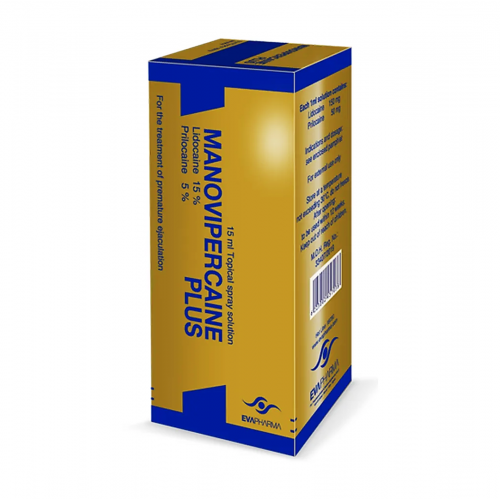
Lidocaine and Prilocaine are local anesthetic agents belonging to the amide-type anesthetic class. When applied topically (as a spray), they produce localized numbing (analgesia) by directly affecting nerve endings in the skin or mucosal surfaces.
- Lidocaine (15%) – a potent local anesthetic that quickly interferes with nerve signal transmission.
- Prilocaine (5%) – another local anesthetic that enhances the effect and may prolong numbness.
Together they provide more effective and broader topical anesthesia than either agent alone.
A spray with this combination is typically used for short-term local anesthesia before minor medical, dental, or dermatologic procedures such as:
- Numbing the skin before needle insertion (e.g., injections, IV lines)
- Relieve pain before minor surgical or dermatologic treatments
- Local anesthesia for minor oral/dental work
- Anesthesia before superficial cosmetic procedures
- Reducing localized pain or discomfort from minor injuries or conditions
- To numb the skin or surfaces of the penis or vagina. lidocaine and prilocaine topical is used to prepare you for minor surgery or medical procedures on these areas.
*Lidocaine and prilocaine topical may also be used for purposes not listed in this medication guide.
Lidocaine and prilocaine topical side effects
- Get emergency medical help if you have any of these signs of an allergic reaction: hives; difficulty breathing; swelling of your face, lips, tongue, or throat.
- Lidocaine and prilocaine topical may cause serious side effects. Call your doctor at once if you have:
- severe burning, stinging, or irritation where the medicine was applied;
- swelling or redness;
- sudden dizziness or drowsiness after medicine is applied;
- confusion, blurred vision, ringing in your ears;
- bruising or purple appearance of the skin; or
- unusual sensations of temperature.
Common side effects of lidocaine and prilocaine topical may include:
- mild burning where the medicine is applied;
- itching, rash; or
- changes in skin color where the medicine was applied.
This is not a complete list of side effects and others may occur. Call your doctor for medical advice about side effects. You may report side effects to FDA at 1-800-FDA-1088.
Warnings
An overdose of numbing medicine can cause fatal side effects if too much of the medicine is absorbed through your skin. Overdose symptoms may include uneven heartbeats, seizure (convulsions), coma, slowed breathing, or respiratory failure (breathing stops).
Use the smallest amount of lidocaine and prilocaine topical needed to numb the skin. Do not use large amounts of lidocaine and prilocaine topical, or cover treated skin areas with a bandage or plastic wrap without medical advice.
Before taking this medicine
You should not use lidocaine and prilocaine topical if you are allergic to any type of numbing medicine.
Fatal overdoses have occurred when numbing medicines were used without the advice of a medical doctor (such as during a cosmetic procedure like laser hair removal). However, overdose has also occurred in women treated with a numbing medicine before having a mammography.
Be aware that many cosmetic procedures are performed without a medical doctor present.
To make sure lidocaine and prilocaine topical is safe for you, tell your doctor if you have:
- a blood cell disorder called methemoglobinemia;
- liver disease;
- a genetic enzyme deficiency called glucose-6-phosphate dehydrogenase (G6PD) deficiency; or
- a family history of methemoglobinemia, or any genetic enzyme deficiency.
FDA pregnancy category B. Lidocaine and prilocaine topical is not expected to harm an unborn baby. Tell your doctor if you are pregnant or plan to become pregnant during treatment.
Lidocaine and prilocaine can pass into breast milk and may harm a nursing baby. Tell your doctor if you are breast-feeding a baby.
How should I use lidocaine and prilocaine topical?
- Follow all directions on your prescription label. Do not apply lidocaine and prilocaine topical in larger amounts than recommended.
- You may need to apply lidocaine and prilocaine topical at home up to 4 hours before your surgery or procedure. You will be given instructions about how much medicine to use and how long to leave it on the skin. Follow these directions carefully. Ask your doctor or pharmacist if you have any questions.
- Use the smallest amount of medicine needed to numb the skin. Your body may absorb too much of this medicine if you use too much, if you apply it over large skin areas, or if you apply heat, bandages, or plastic wrap to treated skin areas. Skin that is cut or irritated may also absorb more topical medication than healthy skin.
- You may need to cover the skin to help keep the medicine in place. Do not cover treated skin unless your doctor has told you to.
- Carefully follow dosing instructions when applying this medicine to a child. Lidocaine and prilocaine topical doses are based on weight in children. Do not allow a child to use this medicine without adult supervision.
- Store at room temperature away from moisture and heat. Do not allow the cream to freeze.
What happens if I miss a dose?
Call your doctor for instructions if you forget to apply lidocaine and prilocaine topical at the time needed before your surgery or medical procedure.
What happens if I overdose?
Seek emergency medical attention or call the Poison Help line.
An overdose of numbing medicine can cause fatal side effects if too much of the medicine is absorbed through your skin and into your blood. Symptoms may include uneven heartbeats, seizure (convulsions), slowed breathing, coma, or respiratory failure (breathing stops).
Lidocaine and prilocaine applied to the skin is not likely to cause an overdose unless you apply more than the recommended dose.
What should I avoid while using lidocaine and prilocaine topical?
Do not allow lidocaine and prilocaine topical to come into contact with your eyes. If it does, rinse with water.
Do not take by mouth. Lidocaine and prilocaine topical is for use only on the skin.
Avoid accidentally injuring treated skin areas while they are numb. Avoid coming into contact with very hot or very cold surfaces.
What other drugs will affect lidocaine and prilocaine topical?
Tell your doctor about all medicines you use, and those you start or stop using during your treatment with lidocaine and prilocaine topical, especially:
- chloroquine, dapsone, nitrofurantoin, isosorbide dinitrate, nitroglycerin, nitroprusside, quinine;
- heart rhythm medication--amiodarone, dofetilide, dronedarone, mexiletine, sotalol, tocainide, and others;
- seizure medicine--phenobarbital, phenytoin, primaquine; or
- a sulfa drug--Bactrim, Septra, SMX-TMP or SMZ-TMP, and others.
This list is not complete. Other drugs may interact with lidocaine and prilocaine topical, including prescription and over-the-counter medicines, vitamins, and herbal products. Not all possible interactions are listed in this medication guide.
Write a review
Your Name:Your Review: Note: HTML is not translated!
Rating: Bad Good
Enter the code in the box below: