 Shopping Cart -
 - Anti-hestaminic & Respiratory Drugs (21)
- Anti-inflammatory Drugs (211) +-
- Baby & Mom (1382) +-
- Baby & Mom > Bath, skin & Hair > Skin Care > wibes (54)
- Beauty (3279) +-
- Beauty > Skin Care > whitening (307)
- Chemotherapy & Immune Response (895) +-
- Chemotherapy & Immune Response > ANTI-FUNGAL (11)
- Chemotherapy & Immune Response > Chemotherapeutic Agents > Hormone Antagonists >Enzyme Inhibitors (290)
- CIRCULATORY DISTURBANCE AGENTS (24)
- Diet & Fitness Products (287) +-
- DRUG AFFECTING CENTRAL NERVOUS SYSTEM (195)
- HEMATOLOGY (44)
-
Medical Supplies (539)
+-
- Chemicals & Disinfectants (19)
- Dental Supplies (38)
- Devices & Instruments (11)
- Diabetic Supplies (146)
- General Medical Supplies (21)
- I.V & Medical Solution (0)
- Intensive Care Unit & Anesthesia Supplies (0)
- KIDNEY UNIT SUPPLIES (23)
- Lab Supplies (3)
- Miscellaneous (21)
- Neonatal Unit Supplies (0)
- Operation Room Supplies (2)
- Sanitary (5)
- Sterilization Supplies (1)
- Surgical Sutures (4)
- Syringes (3)
-
Medicines & Health (2890)
+-
- Allergy & Sinus (100)
- Children's Health Care (54)
- Cough, Cold & Flu (306)
- Digestive Health & Nausea (249)
- Ear, Nose & Throat Care (204)
- Eye Care (135)
- Feminine Care (326)
- Foot Care (12)
- Orthopaedic Appliances (1)
- Pain Relief & Management (255)
- Pill Organizer (2)
- Skin Treatments (917)
- Sleep & Snoring Aids (2)
- Support & Braces (9)
- Medicines & health > Gout releif (41)
- Natural & Organic Products (82) +-
- OTC > Analgesics > Anti-inflammatory Drugs (48)
-
Personal Care (3474)
+-
- Bath & Body (282)
- Deodorant & Anti-perspirants (192)
- Ear, Nose & Throat Care (200)
- Eye Care (138)
- Feminine Care (378)
- Foot Care (24)
- Hair Care (529)
- Home Tests & Monitorings (17)
- Incontinence (7)
- Lip Care (29)
- Massage & Relaxation (17)
- Natural & Organic Personal Care (7)
- Oral Care (96)
- Pregnancy & Fertility (68)
- Shaving & Grooming (75)
- Sun Care (89)
-
Prescription Drugs (3177)
+-
- Analgesics (194)
- Cardiovascular System (424)
- Drugs Affecting Musculoskeletal System (65)
- Drugs Used In Infections (56)
- Ear & Nose Drugs (2)
- Endocrine System (224)
- Gastrointestinal Tract (264)
- Gastrointestinal Tract > Hepatology > Liver treatment (61)
- GYNECOLOGY (2)
- Miscellaneous (11)
- NEPHROLOGY > URINARY SYSTEM > RENAL DISORDERS > URINARY TRACT DISORDERS (52)
- NEUROLOGY (244)
- Nutrients & Blood Electrolytes (2)
- Respiratory System (171)
- SKIN > NAILS > HAIR > TOPICAL PREPARATIONS (147)
- Vaccines (1)
- Prescription drugs > Cardiovascular system > Anti-hypertension drugs (268)
- Sexual Wellness (325) +-
- Vitamins & Minerals Supplements (1282) +-
Availability: In Stock
Ex Tax: 470EGP
Example
You can return the product within 14 days of purchase.
ReturnsYou can return the product within 14 days of purchase.

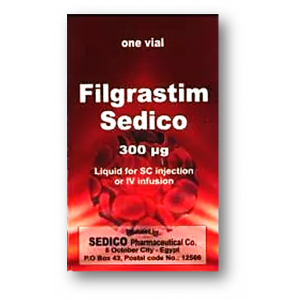
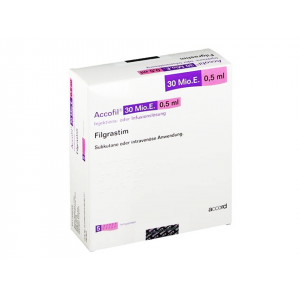
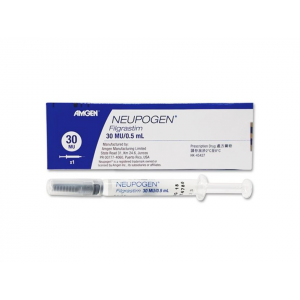
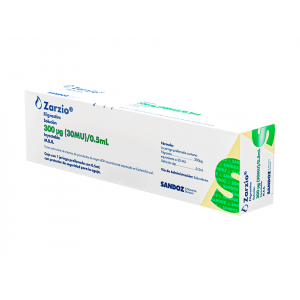
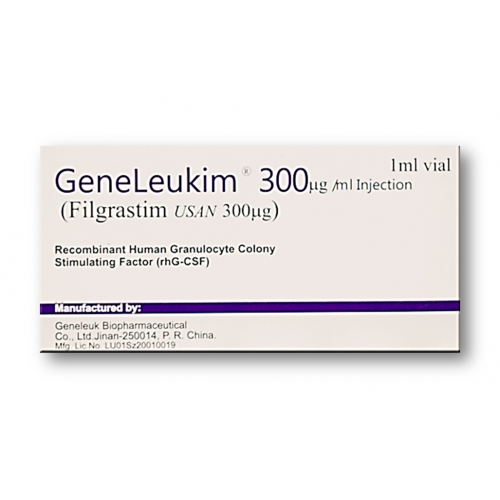
GENELEUKIM 300 MCG ( FILGRASTIM ) VIAL
Filgrastim
Recombinant Human Granulocyte Colony-Stimulating Factor (G-CSF)
Product Description
Filgrastim is a recombinant, non-glycosylated form of human granulocyte colony-stimulating factor (G-CSF). It is a hematopoietic growth factor that stimulates the bone marrow to produce and release neutrophils, helping reduce the duration and severity of neutropenia and the associated risk of infection.
Filgrastim is available in different strengths and presentations and may be administered by subcutaneous injection or intravenous infusion, depending on the specific product, indication, and approved labeling.
Active Ingredient & Pharmacological Class
- Active ingredient: Filgrastim
- Drug class: Granulocyte colony-stimulating factor (G-CSF)
- ATC classification: L03AA02
- Therapeutic category: Hematopoietic growth factor / immunostimulant
- Routes: Subcutaneous or intravenous, depending on the formulation and indication
Mechanism of Action
Filgrastim binds to and activates G-CSF receptors expressed on hematopoietic cells.
This stimulates:
- Proliferation of neutrophil precursor cells in the bone marrow
- Differentiation of granulocytic progenitor cells
- Maturation and release of neutrophils into the bloodstream
- Certain functional activities of mature neutrophils
The resulting increase in circulating neutrophils can shorten the period of chemotherapy-associated neutropenia and reduce complications related to severe neutropenia.
Indications & Clinical Uses
1. Prevention of Chemotherapy-Induced Neutropenia
Filgrastim is used to reduce the duration of neutropenia and the risk of infection in patients receiving myelosuppressive chemotherapy for certain cancers. It is also used in selected chemotherapy regimens associated with clinically significant neutropenia.
2. Neutropenia Associated With Acute Myeloid Leukemia (AML) Treatment
Filgrastim may be used following appropriate chemotherapy for AML to support neutrophil recovery, according to the relevant treatment protocol.
3. Myeloablative Therapy Before Bone Marrow Transplantation
It may be used following myeloablative chemotherapy in appropriate patients to support hematopoietic recovery.
4. Peripheral Blood Stem-Cell Mobilization
Filgrastim can be administered to mobilize hematopoietic progenitor/stem cells from the bone marrow into peripheral blood, allowing their collection by leukapheresis for subsequent autologous transplantation.
5. Severe Chronic Neutropenia
Filgrastim is also used in patients with certain forms of severe chronic neutropenia, including congenital, cyclic, and idiopathic neutropenia, to increase neutrophil counts and reduce infection-related complications.
Administration & Dosing
The dose and duration of filgrastim treatment depend on the indication, patient's body weight, chemotherapy regimen, neutrophil count, clinical response, and the specific approved product.
For chemotherapy-associated neutropenia, treatment is generally initiated after completion of cytotoxic chemotherapy, rather than immediately before or during cytotoxic chemotherapy. The exact timing and duration should follow the prescribed oncology protocol.
For peripheral blood stem-cell mobilization, dosing is administered according to a specialized stem-cell collection protocol.
Dosing must be individually prescribed by the treating physician and should not be determined from this general description.
Monitoring During Treatment
Patients receiving filgrastim may require monitoring of:
- Complete blood count (CBC)
- Absolute neutrophil count
- Platelet count
- Clinical signs of infection
- Spleen-related symptoms where clinically appropriate
- Laboratory parameters during prolonged treatment or stem-cell mobilization
The dose may be adjusted or treatment discontinued according to the patient's clinical response and laboratory findings.
Important Warnings & Precautions
Splenic enlargement and splenic rupture
Splenomegaly has been reported during filgrastim treatment, and rare cases of splenic rupture, including fatal cases, have occurred. Patients should promptly report left upper abdominal or shoulder-tip pain.
Serious allergic reactions
Hypersensitivity reactions, including anaphylaxis, may occur. Treatment should be stopped and appropriate medical management initiated if a serious allergic reaction develops.
Acute respiratory distress syndrome (ARDS)
Rare cases of ARDS have been reported. New respiratory symptoms, particularly with fever or pulmonary infiltrates, require urgent medical assessment.
Sickle-cell disease
Severe or potentially life-threatening sickle-cell crises have been reported in patients with sickle-cell disorders receiving G-CSF products. Appropriate clinical caution and monitoring are required.
Thrombocytopenia
Although filgrastim primarily increases neutrophil production, reductions in platelet count can occur, particularly in certain treatment settings. CBC monitoring is therefore important.
Leukocytosis
Marked increases in white blood-cell counts may occur. Filgrastim should be used according to the prescribed dose and treatment duration rather than continued solely to achieve a high neutrophil count.
Common Adverse Effects
Reported adverse effects include:
- Bone pain
- Musculoskeletal pain
- Headache
- Fatigue
- Nausea
- Fever
- Injection-site reactions
- Increased white blood-cell count
- Abdominal pain
Bone and musculoskeletal pain is particularly associated with stimulation of bone marrow activity.
Important Drug & Treatment Considerations
Filgrastim is generally used as supportive treatment around chemotherapy rather than as an anticancer drug itself. It does not directly destroy cancer cells; instead, it supports hematopoietic recovery by increasing neutrophil production.
Filgrastim and pegfilgrastim are not interchangeable on a dose-for-dose basis. Pegfilgrastim is a longer-acting, PEG-modified form of G-CSF that generally requires less frequent administration.
Storage
Storage requirements depend on the specific filgrastim product and formulation. Many approved filgrastim products require refrigerated storage and protection from light, while freezing and vigorous shaking should generally be avoided.
Always follow the current manufacturer-approved product information for the exact product regarding temperature, handling, stability, and administration.
Patient Information
Patients should promptly contact their healthcare professional if they experience:
- Severe or persistent left upper abdominal or shoulder pain
- Difficulty breathing or new/worsening cough
- Facial swelling, wheezing, or other symptoms of allergic reaction
- Fever or signs of infection
- Unusual bleeding or bruising
- Severe or persistent bone pain
- Significant weakness or other unexpected symptoms
Patients should inform their healthcare professional about any history of sickle-cell disease, splenic disorders, allergies, pregnancy, breastfeeding, or previous reactions to G-CSF medicines.
Patient / Medical Disclaimer
This information is provided for educational purposes only and is not intended to replace the advice of a qualified oncologist, hematologist, pharmacist, or other healthcare professional. Filgrastim is a prescription biological medicine that should be used under appropriate medical supervision. The indication, dose, route, timing, and duration of treatment depend on the patient's condition, chemotherapy regimen, blood counts, body weight, and the specific filgrastim product. Do not start, stop, or modify treatment without medical advice. Always consult the current approved product information and the treating healthcare professional before use.
References
- National Cancer Institute (NCI) — Filgrastim.
- NCI Drug Dictionary — Filgrastim.
- NCI — Granulocyte Colony-Stimulating Factor (G-CSF).
- European Medicines Agency (EMA) — Filgrastim Hexal.
- European Medicines Agency (EMA) — Zarzio (Filgrastim).
- European Medicines Agency (EMA) — Tevagrastim.
Write a review
Your Name:Your Review: Note: HTML is not translated!
Rating: Bad Good
Enter the code in the box below: