Categories
Specials
Brand: Natrol
Product Code: 16783
Availability: In Stock
Price: 120EGP
Ex Tax: 120EGP

Example

Returns

You can return the product within 14 days of purchase.

Returns

You can return the product within 14 days of purchase.

Custom block
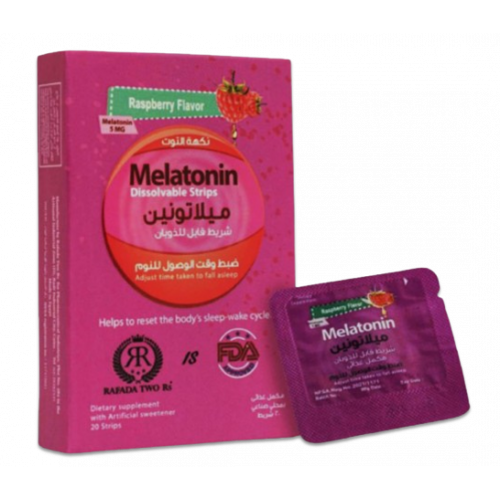
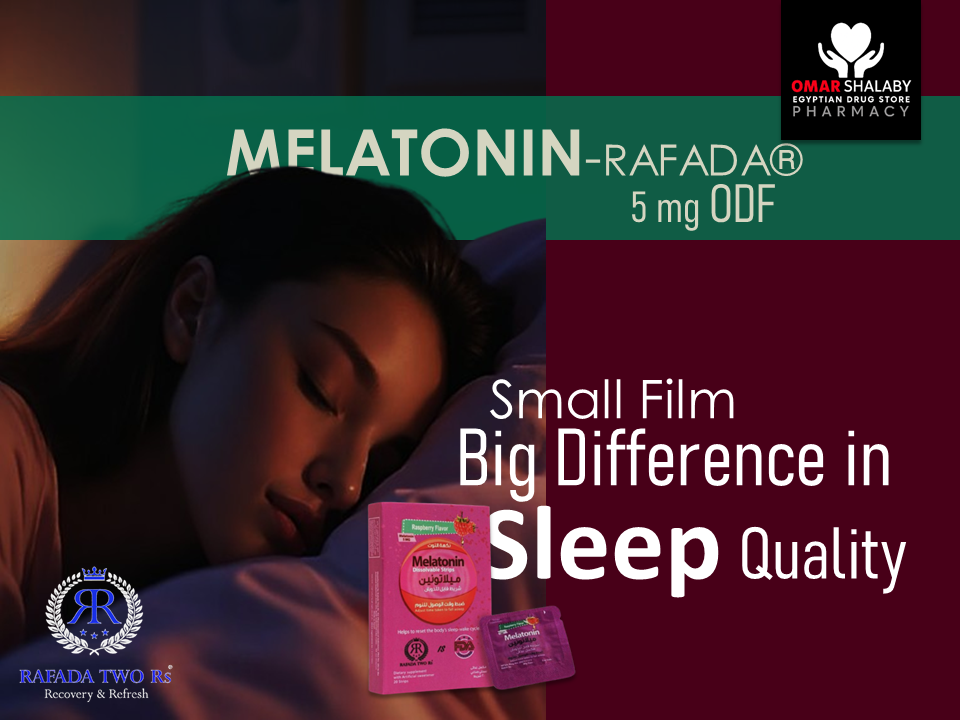
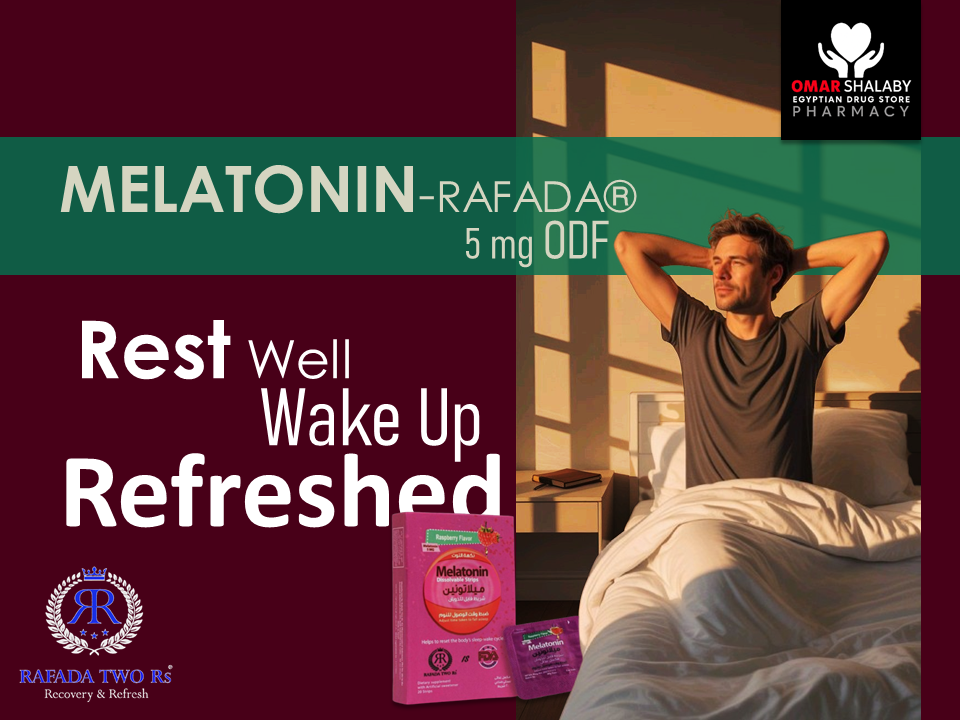
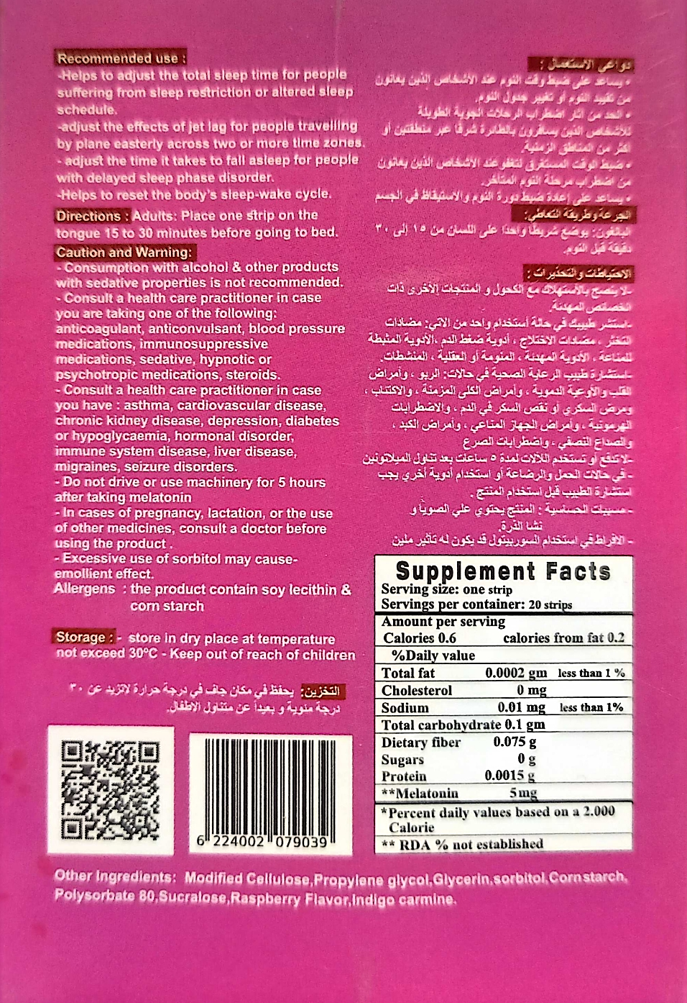
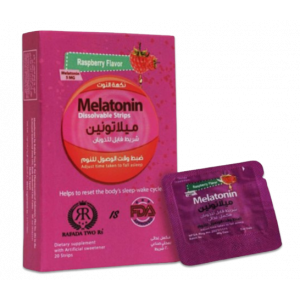
MELATONIN RAFADA TWO 5 MG ( MELATONIN ) DIETARY SUPPLEMENT — RASPBERRY FLAVOR 20 ODF DISSOLVABLE STRIPS
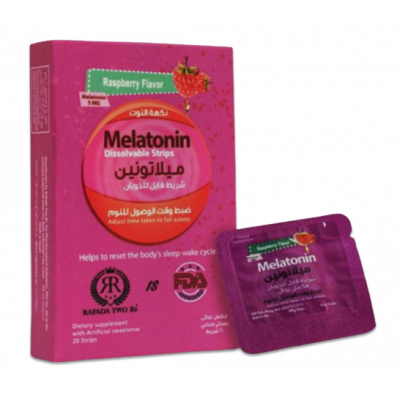
 

MELATONIN-RAFADA® 5 mg Oral Dissolving Film (ODF)

Medical Description

Generic Name: Melatonin
Strength: 5 mg
Dosage Form: Oral Dissolving Film (ODF)
Pack Size: 20 Oral Dissolving Films
Pharmacological Class: Endogenous hormone / Chronobiotic / Sleep-wake cycle regulator

Description

MELATONIN-RAFADA® 5 mg ODF contains melatonin, a naturally occurring hormone primarily secreted by the pineal gland that regulates the body's circadian rhythm and sleep-wake cycle. The oral dissolving film formulation rapidly disintegrates on the tongue without the need for water, offering convenient administration for adults who have difficulty swallowing conventional tablets.

Melatonin supplementation is primarily used to improve circadian rhythm disturbances and selected sleep disorders. Clinical evidence demonstrates the greatest benefit in disorders related to circadian misalignment, including jet lag and delayed sleep-wake phase disorder. Evidence for chronic primary insomnia is mixed, and major sleep medicine guidelines generally recommend cognitive behavioral therapy for insomnia (CBT-I) as first-line treatment.

Mechanism of Action

Melatonin acts primarily through activation of MT1 and MT2 receptors in the suprachiasmatic nucleus of the hypothalamus, the body's biological clock.

Its actions include:

  • Promotes physiological sleep onset
  • Synchronizes circadian rhythms
  • Reduces sleep latency (time to fall asleep)
  • Helps regulate the sleep-wake cycle
  • Assists adaptation to changes in time zones
  • Exhibits antioxidant and neuroprotective properties in experimental studies

Therapeutic Indications

Melatonin may be used for:

Approved / Common Uses

  • Short-term management of sleep disturbances
  • Circadian rhythm sleep disorders
  • Jet lag
  • Delayed Sleep-Wake Phase Disorder (DSWPD)
  • Shift-work related sleep disturbances (selected patients)

►Adult Use

Adults may use melatonin for:

  • Difficulty falling asleep
  • Circadian rhythm disruption
  • Jet lag
  • Temporary sleep disturbances

The optimal dose varies among individuals. Many patients respond to low doses, while others may require higher doses under healthcare supervision. Long-term routine use should be periodically reassessed.

►Pediatric Use

Melatonin is not recommended for routine use in healthy children without medical supervision.

Specialists may prescribe melatonin for:

  • Autism spectrum disorder
  • ADHD-associated sleep disorders
  • Neurodevelopmental conditions causing persistent insomnia

Safety data for prolonged pediatric use remain limited.

Benefits

  • Helps reduce sleep onset latency
  • Supports restoration of normal circadian rhythm
  • Useful during jet lag
  • Convenient oral dissolving film formulation
  • No water required
  • Easy administration for elderly patients or individuals with swallowing difficulties
  • Generally well tolerated when used short term

Administration

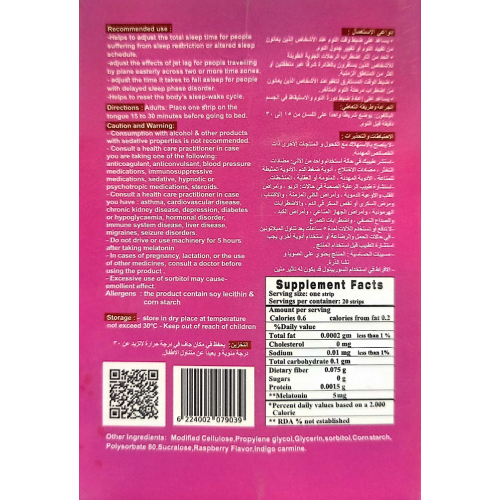
  • Place one oral dissolving film on the tongue.
  • Allow it to dissolve completely.
  • No water is required.
  • Usually taken 30–60 minutes before bedtime, or as directed by a healthcare professional.
  • Maintain good sleep hygiene for optimal benefit.

Contraindications

Do not use in patients with:

  • Known hypersensitivity to melatonin or any formulation component.

Precautions

Use with caution in patients with:

  • Autoimmune disorders
  • Epilepsy
  • Severe hepatic impairment
  • Severe renal impairment
  • Depression
  • Pregnancy or breastfeeding (unless advised by a healthcare professional)

Patients should avoid driving or operating machinery after taking melatonin if drowsiness occurs.

Drug Interactions

Melatonin may interact with:

  • Anticoagulants (e.g., warfarin)
  • Antiplatelet agents
  • Sedatives and hypnotics
  • Benzodiazepines
  • Alcohol
  • Fluvoxamine
  • CYP1A2 inhibitors
  • CYP1A2 inducers
  • Immunosuppressive medications

Healthcare providers should review concomitant medications before initiation.

Adverse Effects

Melatonin is generally well tolerated.

Common adverse effects include:

  • Daytime drowsiness
  • Headache
  • Dizziness
  • Nausea
  • Fatigue
  • Dry mouth

Less common:

  • Vivid dreams
  • Irritability
  • Mood changes
  • Gastrointestinal discomfort

Serious adverse reactions are uncommon.

Evidence from Clinical Studies

Evidence from systematic reviews and randomized trials indicates:

  • Moderate improvement in sleep onset latency
  • Small improvements in total sleep duration in selected populations
  • Strongest benefit in circadian rhythm disorders and jet lag
  • Variable benefit in chronic primary insomnia
  • Favorable short-term safety profile

Major sleep medicine guidelines recommend CBT-I as first-line therapy for chronic insomnia, with melatonin considered mainly in circadian rhythm disorders or selected patients rather than as routine treatment for chronic insomnia.

Storage

  • Store below 25°C.
  • Protect from moisture and direct sunlight.
  • Keep in the original packaging.
  • Keep out of reach of children.

Patient Counseling

Patients should:

  • Take melatonin at the same time each evening if used regularly.
  • Avoid alcohol before bedtime.
  • Limit caffeine intake during the evening.
  • Reduce screen exposure before sleep.
  • Maintain consistent sleep and wake times.
  • Inform their healthcare provider of all medications and supplements they use.

​Patient Disclaimer

This information is intended for educational purposes only and does not replace professional medical advice. MELATONIN-RAFADA® should be used according to the prescribing information or the advice of a qualified healthcare professional. Seek medical attention if sleep problems persist, worsen, or are associated with other concerning symptoms. Do not exceed the recommended dose without medical supervision.


Key Evidence Sources

  • American Academy of Sleep Medicine (AASM) Clinical Practice Guideline for Pharmacologic Treatment of Chronic Insomnia.
  • National Heart, Lung, and Blood Institute (NIH) – Insomnia Treatment.
  • National Center for Complementary and Integrative Health (NCCIH) – Sleep Disorders and Complementary Health Approaches.
  • Canadian Agency for Drugs and Technologies in Health (CADTH) Rapid Review: Melatonin for the Treatment of Insomnia (2022).


Write a review

Your Name:


Your Review: Note: HTML is not translated!

Rating: Bad           Good

Enter the code in the box below:



Related Products (30)