 Shopping Cart -
 - Anti-hestaminic & Respiratory Drugs (21)
- Anti-inflammatory Drugs (212) +-
- Baby & Mom (1381) +-
- Baby & Mom > Bath, skin & Hair > Skin Care > wibes (54)
- Beauty (3274) +-
- Beauty > Skin Care > whitening (306)
- Chemotherapy & Immune Response (893) +-
- Chemotherapy & Immune Response > ANTI-FUNGAL (11)
- Chemotherapy & Immune Response > Chemotherapeutic Agents > Hormone Antagonists >Enzyme Inhibitors (289)
- CIRCULATORY DISTURBANCE AGENTS (24)
- Diet & Fitness Products (285) +-
- DRUG AFFECTING CENTRAL NERVOUS SYSTEM (197)
- HEMATOLOGY (44)
-
Medical Supplies (539)
+-
- Chemicals & Disinfectants (19)
- Dental Supplies (38)
- Devices & Instruments (11)
- Diabetic Supplies (146)
- General Medical Supplies (21)
- I.V & Medical Solution (0)
- Intensive Care Unit & Anesthesia Supplies (0)
- KIDNEY UNIT SUPPLIES (23)
- Lab Supplies (3)
- Miscellaneous (21)
- Neonatal Unit Supplies (0)
- Operation Room Supplies (2)
- Sanitary (5)
- Sterilization Supplies (1)
- Surgical Sutures (4)
- Syringes (3)
-
Medicines & Health (2892)
+-
- Allergy & Sinus (100)
- Children's Health Care (54)
- Cough, Cold & Flu (307)
- Digestive Health & Nausea (250)
- Ear, Nose & Throat Care (205)
- Eye Care (135)
- Feminine Care (327)
- Foot Care (12)
- Orthopaedic Appliances (1)
- Pain Relief & Management (255)
- Pill Organizer (2)
- Skin Treatments (915)
- Sleep & Snoring Aids (2)
- Support & Braces (9)
- Medicines & health > Gout releif (41)
- Natural & Organic Products (82) +-
- OTC > Analgesics > Anti-inflammatory Drugs (48)
-
Personal Care (3474)
+-
- Bath & Body (282)
- Deodorant & Anti-perspirants (192)
- Ear, Nose & Throat Care (201)
- Eye Care (138)
- Feminine Care (379)
- Foot Care (24)
- Hair Care (528)
- Home Tests & Monitorings (17)
- Incontinence (7)
- Lip Care (29)
- Massage & Relaxation (17)
- Natural & Organic Personal Care (7)
- Oral Care (97)
- Pregnancy & Fertility (68)
- Shaving & Grooming (75)
- Sun Care (89)
-
Prescription Drugs (3182)
+-
- Analgesics (195)
- Cardiovascular System (424)
- Drugs Affecting Musculoskeletal System (65)
- Drugs Used In Infections (56)
- Ear & Nose Drugs (2)
- Endocrine System (224)
- Gastrointestinal Tract (265)
- Gastrointestinal Tract > Hepatology > Liver treatment (61)
- GYNECOLOGY (2)
- Miscellaneous (11)
- NEPHROLOGY > URINARY SYSTEM > RENAL DISORDERS > URINARY TRACT DISORDERS (52)
- NEUROLOGY (245)
- Nutrients & Blood Electrolytes (2)
- Respiratory System (173)
- SKIN > NAILS > HAIR > TOPICAL PREPARATIONS (146)
- Vaccines (1)
- Prescription drugs > Cardiovascular system > Anti-hypertension drugs (268)
- Sexual Wellness (325) +-
- Vitamins & Minerals Supplements (1282) +-
Ex Tax: 96EGP
Example
You can return the product within 14 days of purchase.
ReturnsYou can return the product within 14 days of purchase.

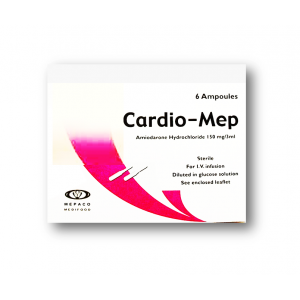
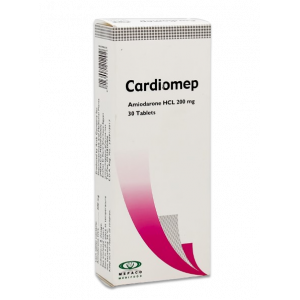
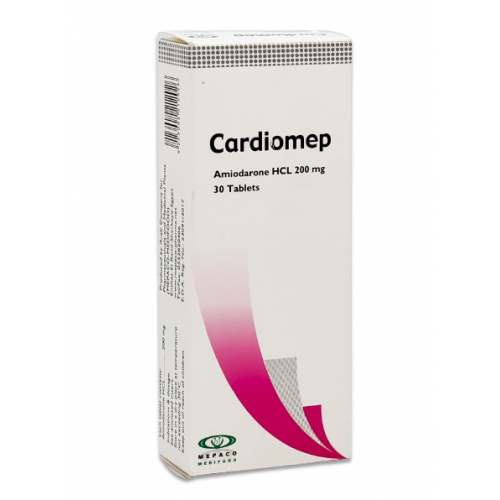
CARDIOMEP 200 MG ( AMIODARONE HCL ) 30 TABLETS
AMIODARONE OF CARDIO-MEP 200 mg
Amiodarone hydrochloride • 30 tablets • Oral antiarrhythmic medicine
Medical Description
Amiodarone OF CARDIO-MEP 200 mg is an oral antiarrhythmic medication containing amiodarone, a medicine used to treat certain serious cardiac rhythm disorders. It helps regulate abnormal electrical activity in the heart and restore or maintain a more stable heart rhythm. Due to its potential for significant cardiac, thyroid, pulmonary, hepatic, and ocular adverse effects, treatment requires medical supervision and appropriate monitoring.
Indications and Potential Benefits
Amiodarone may be prescribed for selected patients with serious or potentially life-threatening arrhythmias, including:
- Ventricular arrhythmias: Treatment of certain serious ventricular rhythm disturbances, including recurrent ventricular tachycardia and ventricular fibrillation, when clinically appropriate.
- Atrial fibrillation: Rhythm control in selected patients, particularly when other treatment options are unsuitable or ineffective.
- Other supraventricular arrhythmias: Management of certain abnormal heart rhythms when indicated by a cardiologist.
Important: The specific indication depends on the patient's diagnosis, cardiac status, and applicable treatment guidelines. Amiodarone is not intended for routine treatment of every type of irregular heartbeat.
Mechanism of Action
Amiodarone is a Class III antiarrhythmic agent that primarily prolongs cardiac repolarization by blocking potassium channels. It increases the duration of the cardiac action potential and the effective refractory period. It also exhibits Class I (sodium-channel blockade), Class II (noncompetitive antiadrenergic activity), and Class IV (calcium-channel blockade) effects.
These combined actions slow cardiac conduction, particularly through the atrioventricular node, and help suppress abnormal electrical impulses that cause certain arrhythmias.
Dosage and Administration
- Dose: Must be individualized according to the type and severity of the arrhythmia, clinical response, and tolerability.
- Administration: Take orally as directed by the treating physician, consistently with regard to meals.
- Dose adjustment: Treatment may involve an initial loading regimen followed by a lower maintenance dose, depending on the indication and the patient's response.
- Important: The 200 mg tablet strength does not determine the appropriate daily dose. Do not initiate treatment, adjust the dose, or discontinue amiodarone without specialist guidance.
Contraindications and Precautions
Amiodarone may be contraindicated in patients with certain conditions, including:
- Severe sinus-node dysfunction, symptomatic bradycardia, or advanced atrioventricular block without a functioning pacemaker.
- Cardiogenic shock.
- Known hypersensitivity to amiodarone or formulation ingredients.
Use with particular caution in patients with pre-existing thyroid disease, liver impairment, pulmonary disease, electrolyte abnormalities, or cardiac conduction disorders. Contraindications should be checked against the locally approved product information.
Possible Side Effects
Common or less serious effects may include:
- Nausea, vomiting, or other gastrointestinal discomfort.
- Fatigue or dizziness.
- Increased sensitivity to sunlight and skin discoloration with prolonged use.
- Tremor or other neurological symptoms.
- Corneal deposits or visual disturbances.
Serious adverse effects requiring prompt medical assessment include:
- Pulmonary toxicity: New or worsening cough, shortness of breath, or difficulty breathing.
- Thyroid dysfunction: Unexplained weight changes, heat or cold intolerance, or marked changes in heart rate.
- Liver injury: Yellowing of the skin or eyes, dark urine, or persistent abdominal discomfort.
- Cardiac complications: Markedly slow heartbeat, fainting, or worsening arrhythmias.
- Eye complications: New visual changes or reduced vision.
Seek urgent medical attention for severe breathing difficulties, fainting, or sudden significant visual changes.
Drug Interactions
Amiodarone has clinically significant interactions with many medicines. Particular care is needed with:
- Anticoagulants: Warfarin, because amiodarone may increase its anticoagulant effect.
- Cardiac glycosides: Digoxin, which may reach higher blood concentrations.
- Other antiarrhythmics and QT-prolonging medicines: Increased risk of conduction abnormalities or potentially dangerous arrhythmias.
- Certain statins: Simvastatin and other susceptible statins may have an increased risk of muscle toxicity.
- Other medicines: Including some beta-blockers, calcium-channel blockers, and medicines that affect amiodarone metabolism.
Patients should inform their physician and pharmacist of all prescription medicines, nonprescription products, and supplements they use. Avoid grapefruit and grapefruit juice while taking amiodarone unless the treating clinician advises otherwise.
Monitoring During Treatment
Regular monitoring is essential because some adverse effects can develop gradually or persist after treatment ends. Depending on the patient's clinical situation, monitoring may include:
- ECG and heart-rate assessment.
- Thyroid function tests.
- Liver function tests.
- Assessment for pulmonary toxicity, including chest imaging or lung-function testing when indicated.
- Ophthalmic assessment if visual symptoms occur or as clinically appropriate.
Patients should report new respiratory symptoms, unexplained fatigue, significant weight changes, jaundice, or visual disturbances promptly.
Storage
Store according to the manufacturer's instructions on the product packaging. Keep the tablets in their original packaging where appropriate, away from excessive heat and moisture, and out of the reach of children.
References
The following trusted, non-commercial and official sources support this medical description.
- U.S. National Library of Medicine — DailyMed (.gov): Amiodarone Hydrochloride Tablets: Prescribing Information — indications, dosage, contraindications, warnings, adverse effects, and drug interactions.
- Cambridge University Hospitals (.nhs.uk): Amiodarone — Patient Information — administration, precautions, side effects, and monitoring.
- Frimley Health NHS Foundation Trust (.nhs.uk): A Guide to Taking Amiodarone — patient counselling and safety monitoring.
Patient Disclaimer
This medical description is provided for educational and informational purposes only. It is not intended to replace professional medical advice, diagnosis, or treatment. Amiodarone is a potent prescription antiarrhythmic medicine that can cause serious and potentially life-threatening adverse effects. It should be used only under appropriate medical supervision, with the necessary clinical and laboratory monitoring. Do not start, stop, or change the dose without consulting your treating physician. Always follow the approved package leaflet and the advice of a qualified healthcare professional.
Write a review
Your Name:Your Review: Note: HTML is not translated!
Rating: Bad Good
Enter the code in the box below: