Welcome visitor you can login or create an account.

 Shopping Cart -
 Categories
- Anti-hestaminic & Respiratory Drugs (21)
- Anti-inflammatory Drugs (211) +-
- Baby & Mom (1382) +-
- Baby & Mom > Bath, skin & Hair > Skin Care > wibes (54)
- Beauty (3279) +-
- Beauty > Skin Care > whitening (307)
- Chemotherapy & Immune Response (895) +-
- Chemotherapy & Immune Response > ANTI-FUNGAL (11)
- Chemotherapy & Immune Response > Chemotherapeutic Agents > Hormone Antagonists >Enzyme Inhibitors (290)
- CIRCULATORY DISTURBANCE AGENTS (24)
- Diet & Fitness Products (287) +-
- DRUG AFFECTING CENTRAL NERVOUS SYSTEM (195)
- HEMATOLOGY (44)
-
Medical Supplies (539)
+-
- Chemicals & Disinfectants (19)
- Dental Supplies (38)
- Devices & Instruments (11)
- Diabetic Supplies (146)
- General Medical Supplies (21)
- I.V & Medical Solution (0)
- Intensive Care Unit & Anesthesia Supplies (0)
- KIDNEY UNIT SUPPLIES (23)
- Lab Supplies (3)
- Miscellaneous (21)
- Neonatal Unit Supplies (0)
- Operation Room Supplies (2)
- Sanitary (5)
- Sterilization Supplies (1)
- Surgical Sutures (4)
- Syringes (3)
-
Medicines & Health (2890)
+-
- Allergy & Sinus (100)
- Children's Health Care (54)
- Cough, Cold & Flu (306)
- Digestive Health & Nausea (249)
- Ear, Nose & Throat Care (204)
- Eye Care (135)
- Feminine Care (326)
- Foot Care (12)
- Orthopaedic Appliances (1)
- Pain Relief & Management (255)
- Pill Organizer (2)
- Skin Treatments (917)
- Sleep & Snoring Aids (2)
- Support & Braces (9)
- Medicines & health > Gout releif (41)
- Natural & Organic Products (82) +-
- OTC > Analgesics > Anti-inflammatory Drugs (48)
-
Personal Care (3474)
+-
- Bath & Body (282)
- Deodorant & Anti-perspirants (192)
- Ear, Nose & Throat Care (200)
- Eye Care (138)
- Feminine Care (378)
- Foot Care (24)
- Hair Care (529)
- Home Tests & Monitorings (17)
- Incontinence (7)
- Lip Care (29)
- Massage & Relaxation (17)
- Natural & Organic Personal Care (7)
- Oral Care (96)
- Pregnancy & Fertility (68)
- Shaving & Grooming (75)
- Sun Care (89)
-
Prescription Drugs (3177)
+-
- Analgesics (194)
- Cardiovascular System (424)
- Drugs Affecting Musculoskeletal System (65)
- Drugs Used In Infections (56)
- Ear & Nose Drugs (2)
- Endocrine System (224)
- Gastrointestinal Tract (264)
- Gastrointestinal Tract > Hepatology > Liver treatment (61)
- GYNECOLOGY (2)
- Miscellaneous (11)
- NEPHROLOGY > URINARY SYSTEM > RENAL DISORDERS > URINARY TRACT DISORDERS (52)
- NEUROLOGY (244)
- Nutrients & Blood Electrolytes (2)
- Respiratory System (171)
- SKIN > NAILS > HAIR > TOPICAL PREPARATIONS (147)
- Vaccines (1)
- Prescription drugs > Cardiovascular system > Anti-hypertension drugs (268)
- Sexual Wellness (325) +-
- Vitamins & Minerals Supplements (1282) +-
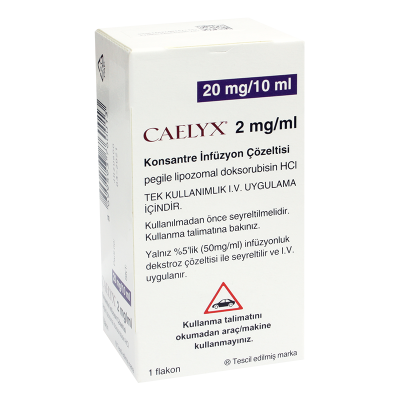
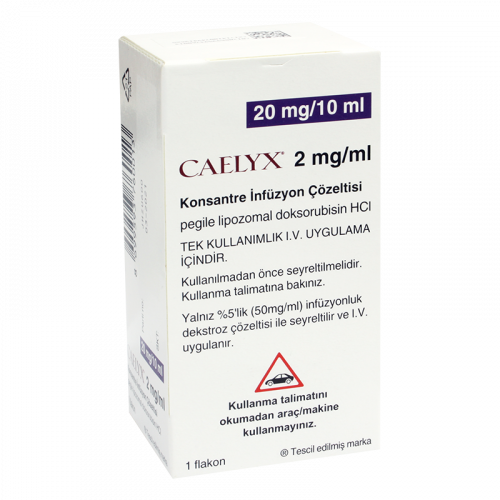
CAELYX 20 MG / 10 ML ( DOXORUBICIN 2 MG / ML ) CONCENTRATE FOR SOLUTION FOR IV INFUSION 10 ML VIAL
Your Review: Note: HTML is not translated!
Rating: Bad Good
Enter the code in the box below:

Product Code: 16477
Availability: In Stock
Availability: In Stock
Price: 13,308EGP
Ex Tax: 13,308EGP
Ex Tax: 13,308EGP
0
Example
Returns

You can return the product within 14 days of purchase.
ReturnsYou can return the product within 14 days of purchase.
CAELYX 20 MG / 10 ML ( DOXORUBICIN 2 MG / ML ) CONCENTRATE FOR SOLUTION FOR IV INFUSION 10 ML VIAL
Doxorubicin is a potent anthracycline chemotherapy medication derived from the bacterium Streptomyces peucetius. It is widely used to treat various cancers but requires rigorous monitoring due to its potential for serious side effects, particularly heart damage.
Medical Description and Mechanism
Therapeutic Indications
Doxorubicin is approved to treat a broad range of malignancies, including:
Clinical Warnings & Safety
Medical Description and Mechanism
- Classification: It is an antitumor antibiotic in the anthracycline class.
- Mechanism of Action: It primarily works by DNA intercalation, where the molecule wedges itself between DNA base pairs. This inhibits the enzyme topoisomerase II, preventing cancer cells from repairing their DNA and effectively stopping cell replication. It also promotes the production of reactive oxygen species (ROS) (free radicals), which further damages cancer cell structures.
- Pharmacokinetics: Doxorubicin is administered intravenously (IV) and follows a triphasic clearance pattern. It is primarily metabolized by the liver and excreted mainly through bile (40-50%) and, to a lesser extent, urine (5-12%).
- Formulations: Common forms include standard doxorubicin hydrochloride and pegylated liposomal versions (e.g., Doxil), which are designed to reduce certain toxicities and stay in the bloodstream longer.
Therapeutic Indications
Doxorubicin is approved to treat a broad range of malignancies, including:
- Solid Tumors: Breast, bladder, ovarian, gastric (stomach), thyroid, and lung cancers.
- Hematological Cancers: Hodgkin and non-Hodgkin lymphomas, and various leukemias (ALL, AML).
- Sarcomas: Soft tissue and bone sarcomas (such as Ewing's sarcoma and osteosarcoma).
- Pediatric Cancers: Wilms' tumor and neuroblastoma.
Clinical Warnings & Safety
- Cardiotoxicity: Doxorubicin has a Black Box Warning for dose-related heart damage. The risk of cardiomyopathy increases with the cumulative dose, and patients must undergo regular heart function tests (like ECHOs or MUGA scans).
- Myelosuppression: It can severely decrease blood cell counts (white cells, red cells, and platelets), leading to a high risk of infection, anemia, and bleeding.
- Extravasation: If the drug leaks out of the vein into surrounding tissue during infusion, it can cause severe tissue necrosis (tissue death) and permanent damage.
- Urine Discoloration: Patients should expect their urine to turn a reddish-orange color for 1 to 2 days after treatment; this is harmless and due to the color of the drug itself.
- Secondary Cancers: There is a small risk of developing secondary leukemias (AML or MDS) years after treatment.
| Patient Medical Disclaimer: The information provided here is for educational and informational purposes only and is not a substitute for professional medical advice, diagnosis, or treatment. Doxorubicin is a high-risk medication that must only be administered by trained healthcare professionals in a clinical setting. Always consult with your oncologist or a qualified healthcare provider regarding your specific medical condition or treatment plan. Do not ignore professional medical advice or delay seeking it because of something you have read here. If you experience symptoms of an allergic reaction (such as difficulty breathing or swelling) or signs of heart trouble (shortness of breath or rapid heartbeat), seek emergency medical care immediately. |
Write a review
Your Name:Your Review: Note: HTML is not translated!
Rating: Bad Good
Enter the code in the box below: