 Shopping Cart -
 - Anti-hestaminic & Respiratory Drugs (21)
- Anti-inflammatory Drugs (211) +-
- Baby & Mom (1382) +-
- Baby & Mom > Bath, skin & Hair > Skin Care > wibes (54)
- Beauty (3279) +-
- Beauty > Skin Care > whitening (307)
- Chemotherapy & Immune Response (895) +-
- Chemotherapy & Immune Response > ANTI-FUNGAL (11)
- Chemotherapy & Immune Response > Chemotherapeutic Agents > Hormone Antagonists >Enzyme Inhibitors (290)
- CIRCULATORY DISTURBANCE AGENTS (24)
- Diet & Fitness Products (287) +-
- DRUG AFFECTING CENTRAL NERVOUS SYSTEM (195)
- HEMATOLOGY (44)
-
Medical Supplies (539)
+-
- Chemicals & Disinfectants (19)
- Dental Supplies (38)
- Devices & Instruments (11)
- Diabetic Supplies (146)
- General Medical Supplies (21)
- I.V & Medical Solution (0)
- Intensive Care Unit & Anesthesia Supplies (0)
- KIDNEY UNIT SUPPLIES (23)
- Lab Supplies (3)
- Miscellaneous (21)
- Neonatal Unit Supplies (0)
- Operation Room Supplies (2)
- Sanitary (5)
- Sterilization Supplies (1)
- Surgical Sutures (4)
- Syringes (3)
-
Medicines & Health (2890)
+-
- Allergy & Sinus (100)
- Children's Health Care (54)
- Cough, Cold & Flu (306)
- Digestive Health & Nausea (249)
- Ear, Nose & Throat Care (204)
- Eye Care (135)
- Feminine Care (326)
- Foot Care (12)
- Orthopaedic Appliances (1)
- Pain Relief & Management (255)
- Pill Organizer (2)
- Skin Treatments (917)
- Sleep & Snoring Aids (2)
- Support & Braces (9)
- Medicines & health > Gout releif (41)
- Natural & Organic Products (82) +-
- OTC > Analgesics > Anti-inflammatory Drugs (48)
-
Personal Care (3474)
+-
- Bath & Body (282)
- Deodorant & Anti-perspirants (192)
- Ear, Nose & Throat Care (200)
- Eye Care (138)
- Feminine Care (378)
- Foot Care (24)
- Hair Care (529)
- Home Tests & Monitorings (17)
- Incontinence (7)
- Lip Care (29)
- Massage & Relaxation (17)
- Natural & Organic Personal Care (7)
- Oral Care (96)
- Pregnancy & Fertility (68)
- Shaving & Grooming (75)
- Sun Care (89)
-
Prescription Drugs (3177)
+-
- Analgesics (194)
- Cardiovascular System (424)
- Drugs Affecting Musculoskeletal System (65)
- Drugs Used In Infections (56)
- Ear & Nose Drugs (2)
- Endocrine System (224)
- Gastrointestinal Tract (264)
- Gastrointestinal Tract > Hepatology > Liver treatment (61)
- GYNECOLOGY (2)
- Miscellaneous (11)
- NEPHROLOGY > URINARY SYSTEM > RENAL DISORDERS > URINARY TRACT DISORDERS (52)
- NEUROLOGY (244)
- Nutrients & Blood Electrolytes (2)
- Respiratory System (171)
- SKIN > NAILS > HAIR > TOPICAL PREPARATIONS (147)
- Vaccines (1)
- Prescription drugs > Cardiovascular system > Anti-hypertension drugs (268)
- Sexual Wellness (325) +-
- Vitamins & Minerals Supplements (1282) +-

Ex Tax: 186EGP
Example
You can return the product within 14 days of purchase.
ReturnsYou can return the product within 14 days of purchase.

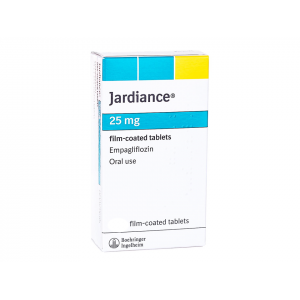
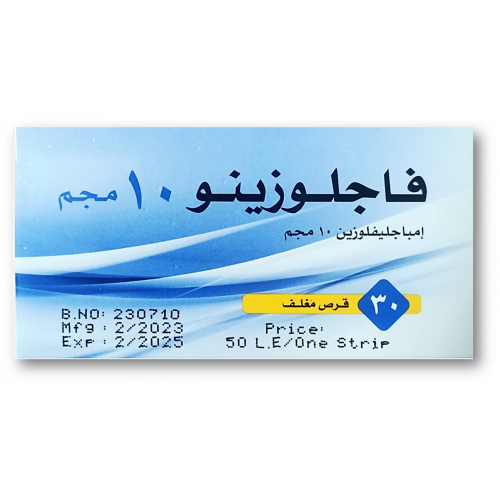
EMPAGLIFLOZIN
Active Ingredient: Empagliflozin
Drug Class: Sodium–glucose cotransporter-2 (SGLT2) inhibitor
Dosage Form: Oral film-coated tablets
Common Strengths: 10 mg and 25 mg
Medical Description
Empagliflozin is an oral SGLT2 inhibitor used primarily in the management of type 2 diabetes mellitus and, according to approved indications, in adults with heart failure and chronic kidney disease.
It works by inhibiting SGLT2 in the kidneys, thereby reducing the reabsorption of filtered glucose and increasing glucose excretion in the urine. In addition to lowering blood glucose, empagliflozin has demonstrated important cardiovascular and kidney benefits in appropriate patient populations.
How Empagliflozin Works
Under normal conditions, the kidneys reabsorb most of the glucose filtered from the blood. Empagliflozin blocks the SGLT2 transporter, reducing renal glucose and sodium reabsorption.
This results in:
- Increased urinary glucose excretion.
- Reduced blood glucose levels.
- Mild increases in urinary sodium and fluid excretion.
- Modest reductions in body weight and blood pressure in some patients.
- Reduced intraglomerular pressure and other mechanisms contributing to kidney protection.
Unlike insulin and insulin-secretagogue medicines, empagliflozin does not directly stimulate insulin secretion, so its intrinsic risk of hypoglycemia is relatively low when used alone.
Therapeutic Uses
1. Type 2 Diabetes Mellitus
Empagliflozin may be prescribed together with diet and physical activity to improve glycemic control in adults and, under applicable labeling, pediatric patients aged 10 years and older with type 2 diabetes mellitus.
It may be used alone or in combination with other glucose-lowering medicines when clinically appropriate.
2. Heart Failure
Empagliflozin is used in appropriate adults with heart failure, including patients with preserved or reduced ejection fraction, to reduce the risk of worsening heart failure and cardiovascular events. ADA 2026 guidance recommends an SGLT2 inhibitor with proven benefit for people with diabetes and established heart failure.
Importantly, the cardiovascular benefits of SGLT2 inhibitors can occur independently of their glucose-lowering effect.
3. Chronic Kidney Disease
Empagliflozin may be used in appropriate adults with chronic kidney disease at risk of progression. Clinical evidence and current ADA recommendations support SGLT2 inhibitor therapy to reduce CKD progression and cardiovascular events in appropriate patients.
Potential Benefits
When appropriately prescribed, empagliflozin may provide:
- Improved glycemic control in type 2 diabetes.
- Reduced risk of hospitalization for heart failure.
- Cardiovascular benefits in appropriate high-risk patients.
- Slower progression of chronic kidney disease in appropriate populations.
- Modest weight reduction.
- Mild reduction in blood pressure due partly to increased urinary sodium and fluid excretion.
Dosage & Administration
For many approved adult indications, the recommended dose is:
Empagliflozin 10 mg once daily, preferably in the morning, with or without food.
For additional glycemic control in patients with type 2 diabetes who tolerate 10 mg, the dose may be increased to:
25 mg once daily.
The appropriate dose depends on the indication, kidney function, age, concomitant medicines, and individual clinical circumstances.
Renal function should be assessed before initiation and monitored as clinically appropriate. The glucose-lowering effect becomes less pronounced with declining eGFR, while cardiovascular and kidney benefits may persist at lower eGFR levels for appropriate indications.
Important Warnings & Precautions
1. Diabetic Ketoacidosis
SGLT2 inhibitors can cause diabetic ketoacidosis (DKA), including cases where blood glucose is not markedly elevated.
Patients should seek urgent medical attention if they develop:
- Nausea or persistent vomiting.
- Abdominal pain.
- Unusual fatigue or weakness.
- Difficulty breathing.
- Confusion.
- Excessive thirst or dehydration.
Risk may increase with prolonged fasting, severe illness, dehydration, excessive alcohol consumption, markedly reduced carbohydrate intake, or surgery.
2. Dehydration and Low Blood Pressure
Empagliflozin produces an osmotic diuretic effect and may cause volume depletion, dizziness, hypotension, or dehydration.
Extra caution may be necessary in:
- Older adults.
- Patients taking loop diuretics.
- Patients with impaired kidney function.
- Patients with low blood pressure.
- Patients experiencing vomiting, diarrhea, or inadequate fluid intake.
Volume depletion should be corrected before treatment is initiated.
3. Genital Fungal Infections
Increased glucose excretion in urine may increase the risk of genital mycotic infections, particularly genital candidiasis.
Symptoms may include genital itching, redness, discomfort, or abnormal discharge.
4. Urinary Tract Infections
Urinary tract infections may occur during treatment. Patients experiencing painful urination, fever, blood in the urine, flank pain, or significant urinary symptoms should seek medical evaluation.
Clinical studies have reported urinary tract infections and genital mycotic infections among adverse reactions associated with empagliflozin.
5. Kidney Function
Kidney function should be evaluated before treatment and periodically thereafter.
The glucose-lowering effect of SGLT2 inhibitors is reduced as eGFR declines, but current ADA guidance supports their use for cardiovascular and kidney protection in appropriate patients with CKD, including initiation at eGFR ≥20 mL/min/1.73 m² for indicated SGLT2 inhibitors.
Temporary Interruption Before Surgery
Empagliflozin should generally be withheld for at least 3 days before major surgery or procedures associated with prolonged fasting, when possible.
Treatment may be resumed when the patient is clinically stable and has returned to normal oral intake, according to the treating healthcare professional.
Hypoglycemia
Empagliflozin alone has a relatively low intrinsic risk of hypoglycemia.
However, the risk can increase when it is used together with:
- Insulin.
- Sulfonylureas.
- Other medicines capable of causing hypoglycemia.
The physician may need to adjust the dose of these accompanying medicines.
Possible Side Effects
Potential adverse effects include:
Common or relatively frequent:
- Increased urination.
- Genital fungal infections.
- Urinary tract infections.
- Increased thirst.
- Dizziness.
- Dehydration.
- Nausea.
- Changes in blood pressure.
Important but less common:
- Diabetic ketoacidosis.
- Significant volume depletion or hypotension.
- Acute kidney injury in susceptible patients.
- Serious genital or perineal infections.
- Hypoglycemia when combined with insulin or insulin secretagogues.
- Hypersensitivity reactions, including angioedema.
Contraindications
Empagliflozin should not be used in patients with:
- Known hypersensitivity to empagliflozin or any component of the formulation.
- Dialysis, according to current U.S. product labeling.
Empagliflozin is not recommended for glycemic control in patients with type 1 diabetes mellitus because of the risk of diabetic ketoacidosis.
Drug & Treatment Considerations
Patients should inform their physician or pharmacist about all prescription medicines, over-the-counter medicines, supplements, and herbal products they use.
Particular attention may be required with:
- Insulin or sulfonylureas — increased risk of hypoglycemia.
- Diuretics — increased risk of dehydration and hypotension.
- Medicines affecting kidney function.
- Other glucose-lowering medicines.
Adequate hydration should generally be maintained unless a healthcare professional has prescribed fluid restriction.
Monitoring During Treatment
Depending on the patient's condition, the healthcare professional may monitor:
- Blood glucose and HbA1c.
- Kidney function/eGFR.
- Blood pressure and hydration status.
- Urinary and genital symptoms.
- Signs and symptoms of ketoacidosis.
- Electrolytes when clinically indicated.
For patients with type 2 diabetes and CKD, ADA 2026 recommends an SGLT2 inhibitor with demonstrated benefit to reduce CKD progression and cardiovascular events.
Patient Disclaimer
This information is provided for educational purposes only and is not intended to replace professional medical advice, diagnosis, or treatment. Empagliflozin is a prescription medicine and should be used only under the supervision of a qualified healthcare professional. The appropriate dose and indication depend on the patient's medical condition, kidney function, cardiovascular status, and other medications.
Do not start, stop, or change the dose without consulting your physician. Seek urgent medical attention if severe weakness, persistent vomiting, abdominal pain, difficulty breathing, confusion, severe dehydration, or other symptoms suggestive of diabetic ketoacidosis occur.
Inform your healthcare professional before surgery or prolonged fasting, as empagliflozin may need to be temporarily discontinued.
References
- U.S. National Library of Medicine – DailyMed: JARDIANCE (empagliflozin) prescribing information.
- U.S. Food and Drug Administration (FDA): Empagliflozin prescribing information and safety data.
- American Diabetes Association (ADA), Standards of Care in Diabetes—2026: Pharmacologic Approaches to Glycemic Treatment.
- American Diabetes Association (ADA), Standards of Care in Diabetes—2026: Cardiovascular Disease and Risk Management.
- American Diabetes Association (ADA), Standards of Care in Diabetes—2026: Chronic Kidney Disease and Risk Management.
Write a review
Your Name:Your Review: Note: HTML is not translated!
Rating: Bad Good
Enter the code in the box below: