 Shopping Cart -
 - Anti-hestaminic & Respiratory Drugs (21)
- Anti-inflammatory Drugs (211) +-
- Baby & Mom (1383) +-
- Baby & Mom > Bath, skin & Hair > Skin Care > wibes (54)
- Beauty (3242) +-
- Beauty > Skin Care > whitening (311)
- Chemotherapy & Immune Response (891) +-
- Chemotherapy & Immune Response > ANTI-FUNGAL (11)
- Chemotherapy & Immune Response > Chemotherapeutic Agents > Hormone Antagonists >Enzyme Inhibitors (288)
- CIRCULATORY DISTURBANCE AGENTS (24)
- Diet & Fitness Products (287) +-
- DRUG AFFECTING CENTRAL NERVOUS SYSTEM (195)
- HEMATOLOGY (44)
-
Medical Supplies (540)
+-
- Chemicals & Disinfectants (19)
- Dental Supplies (38)
- Devices & Instruments (11)
- Diabetic Supplies (146)
- General Medical Supplies (21)
- I.V & Medical Solution (0)
- Intensive Care Unit & Anesthesia Supplies (0)
- KIDNEY UNIT SUPPLIES (23)
- Lab Supplies (3)
- Miscellaneous (21)
- Neonatal Unit Supplies (0)
- Operation Room Supplies (2)
- Sanitary (5)
- Sterilization Supplies (1)
- Surgical Sutures (4)
- Syringes (3)
-
Medicines & Health (2878)
+-
- Allergy & Sinus (99)
- Children's Health Care (54)
- Cough, Cold & Flu (303)
- Digestive Health & Nausea (248)
- Ear, Nose & Throat Care (201)
- Eye Care (136)
- Feminine Care (329)
- Foot Care (12)
- Orthopaedic Appliances (1)
- Pain Relief & Management (255)
- Pill Organizer (2)
- Skin Treatments (909)
- Sleep & Snoring Aids (2)
- Support & Braces (9)
- Medicines & health > Gout releif (41)
- Natural & Organic Products (82) +-
- OTC > Analgesics > Anti-inflammatory Drugs (48)
-
Personal Care (3458)
+-
- Bath & Body (283)
- Deodorant & Anti-perspirants (192)
- Ear, Nose & Throat Care (197)
- Eye Care (139)
- Feminine Care (381)
- Foot Care (21)
- Hair Care (522)
- Home Tests & Monitorings (17)
- Incontinence (7)
- Lip Care (29)
- Massage & Relaxation (17)
- Natural & Organic Personal Care (7)
- Oral Care (95)
- Pregnancy & Fertility (69)
- Shaving & Grooming (75)
- Sun Care (89)
-
Prescription Drugs (3142)
+-
- Analgesics (194)
- Cardiovascular System (411)
- Drugs Affecting Musculoskeletal System (65)
- Drugs Used In Infections (56)
- Ear & Nose Drugs (2)
- Endocrine System (224)
- Gastrointestinal Tract (263)
- Gastrointestinal Tract > Hepatology > Liver treatment (61)
- GYNECOLOGY (2)
- Miscellaneous (11)
- NEPHROLOGY > URINARY SYSTEM > RENAL DISORDERS > URINARY TRACT DISORDERS (52)
- NEUROLOGY (243)
- Nutrients & Blood Electrolytes (2)
- Respiratory System (170)
- SKIN > NAILS > HAIR > TOPICAL PREPARATIONS (138)
- Vaccines (1)
- Prescription drugs > Cardiovascular system > Anti-hypertension drugs (255)
- Sexual Wellness (325) +-
- Vitamins & Minerals Supplements (1278) +-
Ex Tax: 75EGP
Example
You can return the product within 14 days of purchase.
ReturnsYou can return the product within 14 days of purchase.

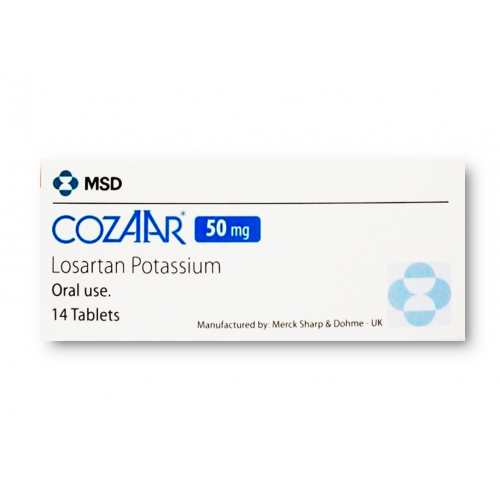
COZAAR 50 MG ( LOSARTAN POTASSIUM ) 14 TABLETS
Losartan Potassium – Medical Description
Generic Name: Losartan Potassium
Pharmacological Class
Angiotensin II Receptor Blocker (ARB)
Description
Losartan potassium is an orally active angiotensin II receptor blocker (ARB) used primarily to treat hypertension (high blood pressure). It selectively blocks the binding of angiotensin II to the AT1 receptor, resulting in vasodilation, reduced aldosterone secretion, decreased sodium and water retention, and lower blood pressure. Losartan is also indicated to reduce the risk of stroke in selected patients with hypertension and left ventricular hypertrophy (LVH) and to slow the progression of diabetic kidney disease in patients with type 2 diabetes and proteinuria. It was the first ARB approved for clinical use and is considered a first-line antihypertensive agent in many international guidelines.
Available Pharmaceutical Forms
Losartan potassium is available as:
- Film-coated tablets
- Oral tablets (most commonly 25 mg, 50 mg, and 100 mg)
- Oral suspension (available in some countries or prepared extemporaneously for patients unable to swallow tablets)
Mechanism of Action
Losartan selectively and competitively blocks the angiotensin II type 1 (AT1) receptor, preventing the effects of angiotensin II, including:
- Vasoconstriction
- Aldosterone secretion
- Sodium and water retention
- Sympathetic activation
- Vascular remodeling
Blocking these effects leads to:
- Vasodilation
- Reduced systemic vascular resistance
- Lower blood pressure
- Reduced intraglomerular pressure
- Renal protection in patients with diabetic nephropathy
Unlike ACE inhibitors, losartan does not inhibit bradykinin metabolism, making cough and angioedema less common.
Indications
Losartan potassium is indicated for:
Cardiovascular
- Essential hypertension in adults
- Hypertension in children 6 years of age and older
- Reduction of stroke risk in patients with hypertension and left ventricular hypertrophy (LVH)
Renal
- Diabetic nephropathy in patients with type 2 diabetes, hypertension, elevated serum creatinine, and proteinuria
Off-label Uses
Depending on clinical judgment and guideline recommendations, losartan may also be used for:
- Heart failure (particularly when ACE inhibitors are not tolerated)
- Chronic kidney disease with proteinuria
- Prevention of cardiovascular events in selected high-risk patients
Benefits
Treatment with losartan may help:
- Lower systolic and diastolic blood pressure
- Reduce the risk of stroke in eligible patients with hypertension and LVH
- Protect kidney function in diabetic nephropathy
- Reduce urinary protein excretion (proteinuria)
- Improve long-term cardiovascular outcomes
- Lower the risk of hypertension-related complications when combined with lifestyle modifications
Recommended Dosage
Dosage should be individualized based on the patient's condition and response.
→Adults
Hypertension
- Initial dose: 50 mg once daily
- Maintenance dose: 25–100 mg daily, administered once daily or in two divided doses
- Maximum dose: 100 mg/day
Hypertension with Left Ventricular Hypertrophy
- Initial dose: 50 mg once daily
- May increase to 100 mg daily; hydrochlorothiazide may be added if additional blood pressure control is required.
Diabetic Nephropathy
- Initial dose: 50 mg once daily
- Increase to 100 mg once daily if clinically appropriate
→Pediatric Patients (≥6 years)
- Initial dose: 0.7 mg/kg once daily (maximum initial dose 50 mg)
- Dose adjustment should be based on clinical response.
Administration
- May be taken with or without food.
- Take at the same time each day.
- Swallow tablets whole with water.
- Continue therapy even if blood pressure becomes well controlled unless advised otherwise by a healthcare provider.
Common Side Effects
Losartan is generally well tolerated. Common adverse effects include:
- Dizziness
- Lightheadedness
- Fatigue
- Headache
- Upper respiratory tract infection
- Nasal congestion
- Back pain
- Hyperkalemia (elevated potassium levels)
Most adverse effects are mild and often improve with continued treatment.
Serious Adverse Effects
Although uncommon, patients should seek immediate medical attention if they experience:
- Severe hypotension
- Angioedema (swelling of the face, lips, tongue, or throat)
- Severe hyperkalemia
- Acute kidney injury
- Significant decline in renal function
- Fainting
- Severe allergic reactions
Boxed Warning: Drugs acting directly on the renin–angiotensin system, including losartan, can cause fetal injury or death if used during pregnancy. Treatment should be discontinued immediately if pregnancy is detected.
Contraindications
Losartan should not be used in patients with:
- Known hypersensitivity to losartan or any component of the formulation
- Pregnancy
- Concomitant use with aliskiren in patients with diabetes
Use with caution in patients with:
- Renal artery stenosis
- Severe renal impairment
- Hepatic impairment
- Volume depletion
- Hyperkalemia
Drug Interactions
Clinically important interactions include:
- Potassium supplements
- Potassium-containing salt substitutes
- Potassium-sparing diuretics (e.g., spironolactone)
- NSAIDs (may reduce antihypertensive effect and increase renal risk)
- Lithium (risk of lithium toxicity)
- Aliskiren
- Other antihypertensive agents
Patients should inform their healthcare provider about all prescription, over-the-counter, and herbal medicines they are taking.
Use in Special Populations
Elderly
No routine dosage adjustment is generally required, but renal function and blood pressure should be monitored.
Pregnancy
Contraindicated during pregnancy, particularly during the second and third trimesters, because of the risk of fetal toxicity and death.
Breastfeeding
Because limited data are available, alternative antihypertensive agents are generally preferred during breastfeeding, especially when nursing newborns or preterm infants.
Pediatric Patients
Approved for the treatment of hypertension in children 6 years of age and older. Safety and efficacy have not been established in children younger than 6 years.
Storage
- Store at 20–25°C (68–77°F).
- Protect from moisture and excessive heat.
- Keep tablets in the original container.
- Keep out of the reach of children.
Patient Counseling
Patients should be advised to:
- Take losartan exactly as prescribed.
- Monitor blood pressure regularly.
- Rise slowly from sitting or lying positions if dizziness occurs.
- Avoid potassium supplements or salt substitutes unless instructed by a healthcare provider.
- Maintain adequate hydration, especially during vomiting or diarrhea.
- Inform healthcare providers immediately if pregnancy occurs.
- Attend regular follow-up appointments to monitor blood pressure, kidney function, and serum potassium.
Medical Disclaimer
This information is intended for educational purposes only and should not replace professional medical advice, diagnosis, or treatment. Losartan potassium should be used only under the supervision of a qualified healthcare professional. Regular monitoring of blood pressure, renal function, and serum potassium is recommended, particularly in patients with chronic kidney disease, diabetes, or those taking concomitant medications that affect renal function or potassium levels.
References
- U.S. National Library of Medicine (NIH) – MedlinePlus: Losartan Drug Information.
- DailyMed (U.S. National Library of Medicine) – Losartan Potassium Prescribing Information.
- FDA – COZAAR® (Losartan Potassium) Prescribing Information.
- NCBI Bookshelf (NIH) – Losartan, StatPearls.
- PubMed (NIH) – Losartan Potassium: A Review of its Pharmacology, Clinical Efficacy and Tolerability in the Management of Hypertension.
Write a review
Your Name:Your Review: Note: HTML is not translated!
Rating: Bad Good
Enter the code in the box below: