 Shopping Cart -
 - Anti-hestaminic & Respiratory Drugs (21)
- Anti-inflammatory Drugs (211) +-
- Baby & Mom (1381) +-
- Baby & Mom > Bath, skin & Hair > Skin Care > wibes (54)
- Beauty (3277) +-
- Beauty > Skin Care > whitening (306)
- Chemotherapy & Immune Response (895) +-
- Chemotherapy & Immune Response > ANTI-FUNGAL (11)
- Chemotherapy & Immune Response > Chemotherapeutic Agents > Hormone Antagonists >Enzyme Inhibitors (290)
- CIRCULATORY DISTURBANCE AGENTS (24)
- Diet & Fitness Products (285) +-
- DRUG AFFECTING CENTRAL NERVOUS SYSTEM (195)
- HEMATOLOGY (44)
-
Medical Supplies (539)
+-
- Chemicals & Disinfectants (19)
- Dental Supplies (38)
- Devices & Instruments (11)
- Diabetic Supplies (146)
- General Medical Supplies (21)
- I.V & Medical Solution (0)
- Intensive Care Unit & Anesthesia Supplies (0)
- KIDNEY UNIT SUPPLIES (23)
- Lab Supplies (3)
- Miscellaneous (21)
- Neonatal Unit Supplies (0)
- Operation Room Supplies (2)
- Sanitary (5)
- Sterilization Supplies (1)
- Surgical Sutures (4)
- Syringes (3)
-
Medicines & Health (2891)
+-
- Allergy & Sinus (100)
- Children's Health Care (54)
- Cough, Cold & Flu (306)
- Digestive Health & Nausea (250)
- Ear, Nose & Throat Care (204)
- Eye Care (135)
- Feminine Care (327)
- Foot Care (12)
- Orthopaedic Appliances (1)
- Pain Relief & Management (255)
- Pill Organizer (2)
- Skin Treatments (916)
- Sleep & Snoring Aids (2)
- Support & Braces (9)
- Medicines & health > Gout releif (41)
- Natural & Organic Products (82) +-
- OTC > Analgesics > Anti-inflammatory Drugs (48)
-
Personal Care (3475)
+-
- Bath & Body (282)
- Deodorant & Anti-perspirants (192)
- Ear, Nose & Throat Care (200)
- Eye Care (138)
- Feminine Care (379)
- Foot Care (24)
- Hair Care (529)
- Home Tests & Monitorings (17)
- Incontinence (7)
- Lip Care (29)
- Massage & Relaxation (17)
- Natural & Organic Personal Care (7)
- Oral Care (97)
- Pregnancy & Fertility (68)
- Shaving & Grooming (75)
- Sun Care (89)
-
Prescription Drugs (3179)
+-
- Analgesics (194)
- Cardiovascular System (424)
- Drugs Affecting Musculoskeletal System (65)
- Drugs Used In Infections (56)
- Ear & Nose Drugs (2)
- Endocrine System (224)
- Gastrointestinal Tract (265)
- Gastrointestinal Tract > Hepatology > Liver treatment (61)
- GYNECOLOGY (2)
- Miscellaneous (11)
- NEPHROLOGY > URINARY SYSTEM > RENAL DISORDERS > URINARY TRACT DISORDERS (52)
- NEUROLOGY (244)
- Nutrients & Blood Electrolytes (2)
- Respiratory System (171)
- SKIN > NAILS > HAIR > TOPICAL PREPARATIONS (147)
- Vaccines (1)
- Prescription drugs > Cardiovascular system > Anti-hypertension drugs (268)
- Sexual Wellness (325) +-
- Vitamins & Minerals Supplements (1282) +-
Ex Tax: 150EGP
Example
You can return the product within 14 days of purchase.
ReturnsYou can return the product within 14 days of purchase.

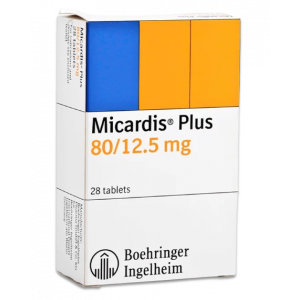
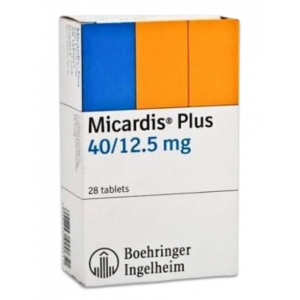
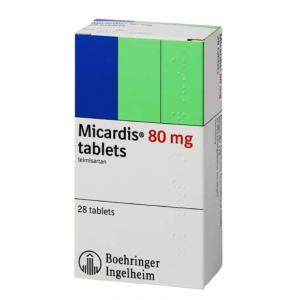
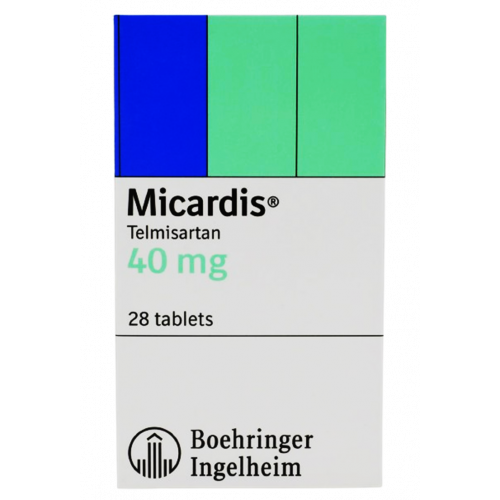
MICARDIS®
Telmisartan
Available strengths: 40 mg and 80 mg tablets
Medical Description
MICARDIS® (telmisartan) is an oral antihypertensive medicine belonging to the angiotensin II receptor blocker (ARB) class. It is used primarily for the treatment of hypertension (high blood pressure). By blocking the effects of angiotensin II, telmisartan promotes vasodilation and reduces the activity of the renin–angiotensin–aldosterone system (RAAS), resulting in lower blood pressure.
Effective control of hypertension helps reduce the long-term risk of cardiovascular complications, particularly stroke and myocardial infarction. WHO recognizes ARBs, including telmisartan, as an established class of medicines used in pharmacological treatment of hypertension in adults.
Available Strengths
| Strength | Active Ingredient | Usual Clinical Use |
|---|---|---|
| MICARDIS 40 mg | Telmisartan 40 mg | Common starting strength for hypertension |
| MICARDIS 80 mg | Telmisartan 80 mg | Higher dose when additional blood-pressure control is required |
The usual starting dose for hypertension is 40 mg once daily, with the dose adjusted according to the patient's blood-pressure response. The antihypertensive dose range is generally 40–80 mg once daily.
Indications
MICARDIS is indicated for:
- Treatment of hypertension in adults.
- Reduction of blood pressure to help reduce the risk of cardiovascular events associated with uncontrolled hypertension.
- Cardiovascular risk reduction in certain high-risk patients who are unable to take ACE inhibitors, where telmisartan 80 mg once daily is the recommended dose according to U.S. prescribing information.
Mechanism of Action
Telmisartan is a selective angiotensin II type 1 (AT₁) receptor blocker.
Angiotensin II normally binds to AT₁ receptors and causes:
- Vasoconstriction
- Increased peripheral vascular resistance
- Stimulation of aldosterone secretion
- Increased sodium and water retention
Telmisartan selectively blocks the binding of angiotensin II to the AT₁ receptor. This reduces angiotensin-II-mediated vasoconstriction and aldosterone-related effects, resulting in vasodilation and reduced blood pressure.
Telmisartan does not inhibit angiotensin-converting enzyme (ACE) and therefore does not directly inhibit the breakdown of bradykinin.
Clinical Benefits
When appropriately prescribed, MICARDIS may:
- Lower elevated blood pressure.
- Reduce vascular resistance through blockade of angiotensin II.
- Provide 24-hour antihypertensive activity with once-daily administration.
- Help reduce the long-term cardiovascular consequences associated with uncontrolled hypertension.
The antihypertensive effect is generally apparent within approximately 2 weeks, with maximal blood-pressure reduction generally reached by about 4 weeks of treatment.
Dosage & Administration
For hypertension:
- The usual starting dose is 40 mg once daily.
- Depending on the response, the dose may be increased to 80 mg once daily.
- The dosage should be individualized according to blood-pressure response and the patient's clinical condition.
- MICARDIS may be taken with or without food.
- It should preferably be taken at approximately the same time each day.
- Do not increase, decrease, or discontinue the dose without medical advice.
For cardiovascular risk reduction:
The recommended telmisartan dose in the U.S. prescribing information is 80 mg once daily. Blood pressure should be monitored because additional adjustment of other blood-pressure-lowering medicines may be necessary.
Important Warnings & Precautions
Pregnancy
Telmisartan can cause serious fetal harm when administered during pregnancy, particularly during the second and third trimesters. MICARDIS should be discontinued and medical advice sought promptly if pregnancy is detected.
Low blood pressure / volume depletion
Patients who are dehydrated or sodium-depleted, including those receiving intensive diuretic treatment or experiencing significant vomiting or diarrhea, may be more susceptible to symptomatic hypotension.
Kidney function
Renal function should be monitored in susceptible patients. Telmisartan can cause changes in renal function, particularly in patients with conditions that depend on the renin–angiotensin system for maintenance of renal perfusion.
Hyperkalemia
Telmisartan may increase serum potassium concentrations. Patients with renal impairment, diabetes, heart failure, or those taking other medicines that increase potassium may require closer monitoring.
Hepatic impairment
Because telmisartan is substantially eliminated through the hepatobiliary system, patients with hepatic impairment may require particular caution and medical supervision.
Possible Adverse Effects
Possible adverse effects include:
- Dizziness
- Headache
- Back pain
- Diarrhea
- Fatigue
- Hypotension
Clinically important but less common reactions may include:
- Hyperkalemia
- Worsening renal function or acute kidney injury
- Significant hypotension
- Angioedema
- Hypersensitivity reactions
Patients should seek urgent medical attention for signs of angioedema such as swelling of the face, lips, tongue or throat, particularly if associated with difficulty breathing or swallowing.
Important Drug Interactions
Tell the physician or pharmacist about all medicines and supplements being used. Important interactions include:
- Aliskiren — concomitant use with telmisartan is contraindicated in patients with diabetes.
- ACE inhibitors — combined blockade of the renin–angiotensin system is generally not recommended because it may increase the risk of hypotension, hyperkalemia and renal impairment.
- Potassium supplements and potassium-containing salt substitutes — may increase the risk of hyperkalemia.
- Potassium-sparing diuretics — may further increase potassium levels.
- NSAIDs — may reduce antihypertensive efficacy and increase the risk of renal impairment, particularly in susceptible patients.
- Lithium — ARBs may increase lithium concentrations and toxicity risk.
Monitoring
Depending on the patient's condition, healthcare professionals may monitor:
- Blood pressure
- Renal function (serum creatinine/eGFR)
- Serum potassium
- Sodium and other electrolytes when clinically indicated
- Signs and symptoms of hypotension
- Blood glucose in patients with diabetes or increased metabolic risk
WHO recommends appropriate assessment and monitoring as part of pharmacological hypertension management, including consideration of kidney function and cardiovascular risk.
Storage
Store MICARDIS according to the conditions specified on the original product packaging. Keep the tablets in their original package, protected from excessive moisture and heat, and keep out of the reach of children.
Medical Disclaimer
MICARDIS® (telmisartan) is a prescription antihypertensive medicine and should be used under the supervision of a qualified healthcare professional. This information is provided for educational purposes only and does not replace professional medical advice, diagnosis, or individualized treatment. Do not start, stop, or change the dose without consulting your physician. Inform your healthcare professional if you are pregnant, planning pregnancy, breastfeeding, or have kidney, liver, heart, diabetes, or electrolyte-related conditions.
References
- U.S. National Library of Medicine — DailyMed: MICARDIS (telmisartan) Prescribing Information
- DailyMed — Telmisartan Tablets: Indications, Dosage, Warnings and Precautions
- World Health Organization (WHO) — Guideline for the Pharmacological Treatment of Hypertension in Adults
- NIH/PubMed — Pharmacological and Clinical Profile of Telmisartan
- NIH PubChem — Telmisartan pharmacology and mechanism
Write a review
Your Name:Your Review: Note: HTML is not translated!
Rating: Bad Good
Enter the code in the box below: