 Shopping Cart -
 - Anti-hestaminic & Respiratory Drugs (21)
- Anti-inflammatory Drugs (211) +-
- Baby & Mom (1383) +-
- Baby & Mom > Bath, skin & Hair > Skin Care > wibes (54)
- Beauty (3272) +-
- Beauty > Skin Care > whitening (310)
- Chemotherapy & Immune Response (891) +-
- Chemotherapy & Immune Response > ANTI-FUNGAL (11)
- Chemotherapy & Immune Response > Chemotherapeutic Agents > Hormone Antagonists >Enzyme Inhibitors (288)
- CIRCULATORY DISTURBANCE AGENTS (24)
- Diet & Fitness Products (287) +-
- DRUG AFFECTING CENTRAL NERVOUS SYSTEM (195)
- HEMATOLOGY (44)
-
Medical Supplies (540)
+-
- Chemicals & Disinfectants (19)
- Dental Supplies (38)
- Devices & Instruments (11)
- Diabetic Supplies (146)
- General Medical Supplies (21)
- I.V & Medical Solution (0)
- Intensive Care Unit & Anesthesia Supplies (0)
- KIDNEY UNIT SUPPLIES (23)
- Lab Supplies (3)
- Miscellaneous (21)
- Neonatal Unit Supplies (0)
- Operation Room Supplies (2)
- Sanitary (5)
- Sterilization Supplies (1)
- Surgical Sutures (4)
- Syringes (3)
-
Medicines & Health (2891)
+-
- Allergy & Sinus (100)
- Children's Health Care (54)
- Cough, Cold & Flu (306)
- Digestive Health & Nausea (249)
- Ear, Nose & Throat Care (204)
- Eye Care (135)
- Feminine Care (329)
- Foot Care (12)
- Orthopaedic Appliances (1)
- Pain Relief & Management (255)
- Pill Organizer (2)
- Skin Treatments (915)
- Sleep & Snoring Aids (2)
- Support & Braces (9)
- Medicines & health > Gout releif (41)
- Natural & Organic Products (82) +-
- OTC > Analgesics > Anti-inflammatory Drugs (48)
-
Personal Care (3476)
+-
- Bath & Body (285)
- Deodorant & Anti-perspirants (192)
- Ear, Nose & Throat Care (200)
- Eye Care (138)
- Feminine Care (381)
- Foot Care (24)
- Hair Care (523)
- Home Tests & Monitorings (17)
- Incontinence (7)
- Lip Care (29)
- Massage & Relaxation (17)
- Natural & Organic Personal Care (7)
- Oral Care (96)
- Pregnancy & Fertility (69)
- Shaving & Grooming (75)
- Sun Care (89)
-
Prescription Drugs (3152)
+-
- Analgesics (194)
- Cardiovascular System (411)
- Drugs Affecting Musculoskeletal System (65)
- Drugs Used In Infections (56)
- Ear & Nose Drugs (2)
- Endocrine System (224)
- Gastrointestinal Tract (264)
- Gastrointestinal Tract > Hepatology > Liver treatment (61)
- GYNECOLOGY (2)
- Miscellaneous (11)
- NEPHROLOGY > URINARY SYSTEM > RENAL DISORDERS > URINARY TRACT DISORDERS (52)
- NEUROLOGY (244)
- Nutrients & Blood Electrolytes (2)
- Respiratory System (171)
- SKIN > NAILS > HAIR > TOPICAL PREPARATIONS (144)
- Vaccines (1)
- Prescription drugs > Cardiovascular system > Anti-hypertension drugs (255)
- Sexual Wellness (325) +-
- Vitamins & Minerals Supplements (1284) +-

Ex Tax: 72EGP
Example
You can return the product within 14 days of purchase.
ReturnsYou can return the product within 14 days of purchase.

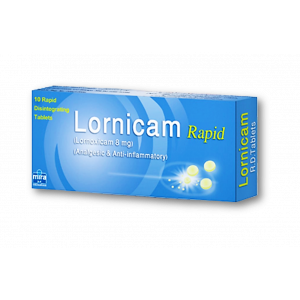
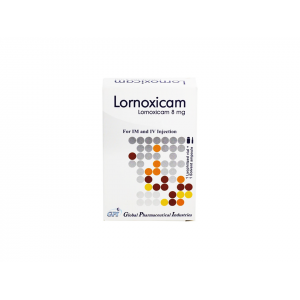
Lornoxicam – Medical Description
Generic Name: Lornoxicam
Pharmacological Class
Nonsteroidal Anti-inflammatory Drug (NSAID)
Oxicam derivative
Description
Lornoxicam is a potent nonsteroidal anti-inflammatory drug (NSAID) with analgesic, anti-inflammatory, and antipyretic properties. It is used for the short-term and long-term management of acute and chronic pain associated with musculoskeletal disorders, inflammatory arthritis, postoperative pain, and other painful conditions.
Lornoxicam inhibits cyclooxygenase (COX-1 and COX-2) enzymes, reducing prostaglandin synthesis, thereby decreasing inflammation, pain, and fever. Compared with other oxicams, lornoxicam has a relatively short elimination half-life (approximately 3–5 hours), which may contribute to less prolonged drug exposure while maintaining effective analgesia.
Available Pharmaceutical Forms
Lornoxicam is available in several dosage forms depending on the country and manufacturer:
- Film-coated tablets
- Orally dispersible tablets (ODT)
- Powder for solution for intravenous (IV) injection
- Powder for solution for intramuscular (IM) injection
Mechanism of Action
Lornoxicam inhibits both cyclooxygenase-1 (COX-1) and cyclooxygenase-2 (COX-2) enzymes, reducing the production of prostaglandins responsible for:
- Pain
- Inflammation
- Fever
It also modulates inflammatory pathways involved in acute and chronic pain without possessing opioid activity.
Indications
Lornoxicam is indicated for the symptomatic treatment of:
Acute Pain
- Acute musculoskeletal pain
- Dental pain
- Postoperative pain
- Trauma-related pain
- Acute low back pain
Chronic Inflammatory Disorders
- Osteoarthritis
- Rheumatoid arthritis
- Ankylosing spondylitis
- Other inflammatory musculoskeletal disorders
Injectable formulations are commonly used when rapid analgesia or temporary inability to take oral medication exists.
Benefits
Lornoxicam may help:
- Relieve mild to severe pain
- Reduce inflammation
- Improve joint mobility
- Decrease morning stiffness
- Reduce postoperative analgesic requirements
- Improve physical function in inflammatory arthritis
Clinical studies have shown analgesic efficacy comparable to several commonly used NSAIDs in appropriate clinical settings.
Recommended Dosage
Dosage should always be individualized according to clinical condition and patient risk factors.
1. Film-Coated Tablets / Orally Dispersible Tablets
Adults
- 4–8 mg orally
- Two to three times daily
- Maximum daily dose: 16 mg
For chronic inflammatory diseases:
- Usually 8–12 mg/day
- Maximum 16 mg/day
Take with water. Orally dispersible tablets should dissolve on the tongue before swallowing.
2. Intravenous Injection (IV)
Adults
- 8 mg IV
- May repeat after 12 hours if clinically indicated
- Maximum 16 mg/day
3. Intramuscular Injection (IM)
Adults
- 8 mg IM
- Repeat only if required
- Maximum 16 mg/day
Injectable therapy is generally intended for short-term use, after which patients should transition to oral therapy when appropriate.
Administration
Oral Tablets
- Swallow whole with water.
- May be taken with food to reduce gastrointestinal irritation, although absorption may be slightly delayed.
Orally Dispersible Tablets
- Allow the tablet to dissolve on the tongue before swallowing.
- Water is optional unless otherwise directed.
Injection
- Administer only by qualified healthcare professionals.
- IV administration should be given slowly according to institutional protocols.
- IM injection should be administered deeply into a large muscle.
Common Side Effects
Most adverse effects are dose-dependent and typical of NSAIDs.
Common adverse reactions include:
- Nausea
- Dyspepsia
- Abdominal pain
- Diarrhea
- Constipation
- Headache
- Dizziness
- Fatigue
- Vomiting
- Elevated liver enzymes
Serious Adverse Effects
Although uncommon, serious adverse events may occur:
- Gastrointestinal ulceration
- Gastrointestinal bleeding or perforation
- Severe allergic reactions
- Bronchospasm in susceptible patients
- Acute kidney injury
- Hepatic dysfunction
- Severe skin reactions (Stevens–Johnson syndrome, toxic epidermal necrolysis)
- Increased risk of thrombotic cardiovascular events (e.g., myocardial infarction and stroke), particularly with prolonged use or high doses, a class warning applicable to NSAIDs.
Contraindications
Lornoxicam is contraindicated in patients with:
- Hypersensitivity to lornoxicam or other NSAIDs
- History of NSAID-induced asthma, urticaria, or allergic reactions
- Active peptic ulcer disease
- Active gastrointestinal bleeding
- Severe heart failure
- Severe hepatic impairment
- Severe renal impairment unless specifically supervised
- Third trimester of pregnancy
Drug Interactions
Use caution with:
- Other NSAIDs
- Aspirin
- Anticoagulants (e.g., warfarin)
- Antiplatelet agents
- Corticosteroids
- SSRIs and SNRIs
- ACE inhibitors
- ARBs
- Diuretics
- Methotrexate
- Lithium
- Cyclosporine
- Tacrolimus
Patients with reduced CYP2C9 activity may have increased exposure to lornoxicam, and pharmacogenetic guidelines recommend considering dose adjustments in poor metabolizers.
Use in Special Populations
Elderly
Older adults have an increased risk of gastrointestinal bleeding, renal impairment, and cardiovascular adverse events. The lowest effective dose for the shortest duration is recommended.
Pregnancy
- Avoid during the third trimester due to the risk of premature closure of the fetal ductus arteriosus and other fetal complications.
- NSAIDs should generally be avoided after approximately 20 weeks of gestation unless specifically advised by a healthcare professional.
Breastfeeding
Clinical data during lactation are limited. An alternative medication may be preferred, particularly when nursing newborn or preterm infants.
Pediatrics
Safety and efficacy in children have not been firmly established; routine pediatric use is generally not recommended.
Storage
Tablets / ODT
- Store at 20–25°C (68–77°F).
- Protect from moisture and excessive heat.
Injection
- Store according to manufacturer recommendations.
- Use reconstituted solutions promptly or within the validated stability period.
Patient Counseling
Patients should be advised to:
- Take the lowest effective dose for the shortest duration necessary.
- Avoid taking more than one NSAID at the same time unless directed by a healthcare provider.
- Take oral doses with food if stomach upset occurs.
- Stay adequately hydrated.
- Report black stools, vomiting blood, severe abdominal pain, chest pain, shortness of breath, sudden weakness, or severe skin reactions immediately.
- Inform healthcare providers about all prescription, over-the-counter, and herbal medicines they are taking.
Medical Disclaimer
This information is intended for educational purposes only and should not replace professional medical advice, diagnosis, or treatment. Lornoxicam should be used only under the supervision of a qualified healthcare professional. The lowest effective dose should be used for the shortest duration necessary to achieve treatment goals, with consideration of each patient's gastrointestinal, cardiovascular, renal, and hepatic risk factors.
References:
- National Center for Biotechnology Information (NCBI), NIH – Lornoxicam (LactMed® Database).
- PubMed (NIH) – Lornoxicam: A Potent NSAID with an Improved Tolerability Profile.
- European Bioinformatics Institute (EMBL-EBI) – ChEBI: Lornoxicam pharmacology and mechanism.
- Clinical Pharmacogenetics Implementation Consortium (CPIC) – CYP2C9 Guideline for NSAIDs.
- World Health Organization (WHO) – International Nonproprietary Name (INN) for Lornoxicam and WHO Medicines Programme.
- European League Against Rheumatism (EULAR) – Recommendations for the management of osteoarthritis and inflammatory arthritis (NSAID use).
- American College of Rheumatology (ACR) – Evidence-based guidelines for osteoarthritis and rheumatoid arthritis management.
Write a review
Your Name:Your Review: Note: HTML is not translated!
Rating: Bad Good
Enter the code in the box below: