
 Shopping Cart -
 - Anti-hestaminic & Respiratory Drugs (21)
- Anti-inflammatory Drugs (211) +-
- Baby & Mom (1382) +-
- Baby & Mom > Bath, skin & Hair > Skin Care > wibes (54)
- Beauty (3279) +-
- Beauty > Skin Care > whitening (307)
- Chemotherapy & Immune Response (895) +-
- Chemotherapy & Immune Response > ANTI-FUNGAL (11)
- Chemotherapy & Immune Response > Chemotherapeutic Agents > Hormone Antagonists >Enzyme Inhibitors (290)
- CIRCULATORY DISTURBANCE AGENTS (24)
- Diet & Fitness Products (287) +-
- DRUG AFFECTING CENTRAL NERVOUS SYSTEM (195)
- HEMATOLOGY (44)
-
Medical Supplies (539)
+-
- Chemicals & Disinfectants (19)
- Dental Supplies (38)
- Devices & Instruments (11)
- Diabetic Supplies (146)
- General Medical Supplies (21)
- I.V & Medical Solution (0)
- Intensive Care Unit & Anesthesia Supplies (0)
- KIDNEY UNIT SUPPLIES (23)
- Lab Supplies (3)
- Miscellaneous (21)
- Neonatal Unit Supplies (0)
- Operation Room Supplies (2)
- Sanitary (5)
- Sterilization Supplies (1)
- Surgical Sutures (4)
- Syringes (3)
-
Medicines & Health (2890)
+-
- Allergy & Sinus (100)
- Children's Health Care (54)
- Cough, Cold & Flu (306)
- Digestive Health & Nausea (249)
- Ear, Nose & Throat Care (204)
- Eye Care (135)
- Feminine Care (326)
- Foot Care (12)
- Orthopaedic Appliances (1)
- Pain Relief & Management (255)
- Pill Organizer (2)
- Skin Treatments (917)
- Sleep & Snoring Aids (2)
- Support & Braces (9)
- Medicines & health > Gout releif (41)
- Natural & Organic Products (82) +-
- OTC > Analgesics > Anti-inflammatory Drugs (48)
-
Personal Care (3474)
+-
- Bath & Body (282)
- Deodorant & Anti-perspirants (192)
- Ear, Nose & Throat Care (200)
- Eye Care (138)
- Feminine Care (378)
- Foot Care (24)
- Hair Care (529)
- Home Tests & Monitorings (17)
- Incontinence (7)
- Lip Care (29)
- Massage & Relaxation (17)
- Natural & Organic Personal Care (7)
- Oral Care (96)
- Pregnancy & Fertility (68)
- Shaving & Grooming (75)
- Sun Care (89)
-
Prescription Drugs (3177)
+-
- Analgesics (194)
- Cardiovascular System (424)
- Drugs Affecting Musculoskeletal System (65)
- Drugs Used In Infections (56)
- Ear & Nose Drugs (2)
- Endocrine System (224)
- Gastrointestinal Tract (264)
- Gastrointestinal Tract > Hepatology > Liver treatment (61)
- GYNECOLOGY (2)
- Miscellaneous (11)
- NEPHROLOGY > URINARY SYSTEM > RENAL DISORDERS > URINARY TRACT DISORDERS (52)
- NEUROLOGY (244)
- Nutrients & Blood Electrolytes (2)
- Respiratory System (171)
- SKIN > NAILS > HAIR > TOPICAL PREPARATIONS (147)
- Vaccines (1)
- Prescription drugs > Cardiovascular system > Anti-hypertension drugs (268)
- Sexual Wellness (325) +-
- Vitamins & Minerals Supplements (1282) +-
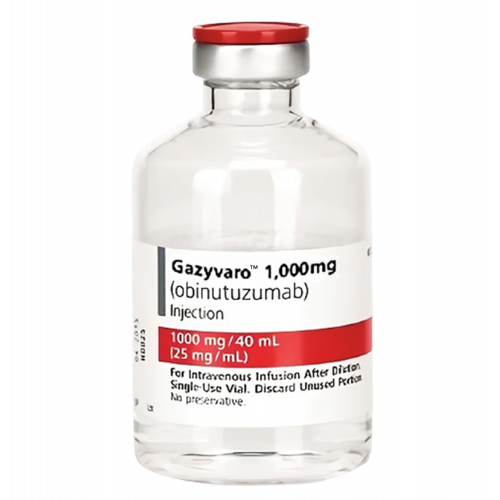
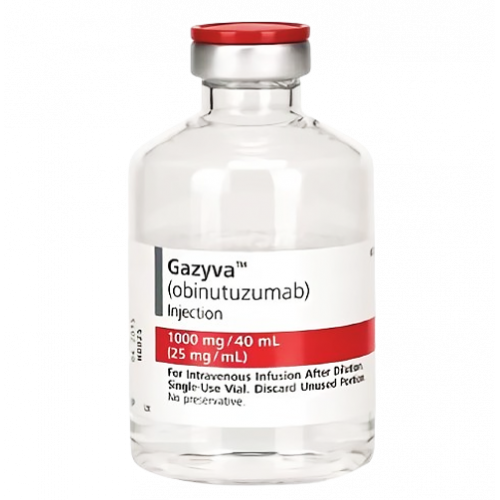
Ex Tax: 126,300EGP
Example
You can return the product within 14 days of purchase.
ReturnsYou can return the product within 14 days of purchase.

Gazyvaro 1000 mg / 40 mL
Obinutuzumab 25 mg/mL — Concentrate for Solution for IV Infusion
40 mL Single-Dose Vial
Product Description
Gazyvaro (obinutuzumab) is a recombinant, humanized type II anti-CD20 monoclonal antibody of the IgG1 class. Each 40 mL single-dose vial contains 1,000 mg of obinutuzumab at a concentration of 25 mg/mL. It is supplied as a clear, colorless to slightly brown, preservative-free concentrate that must be diluted before intravenous infusion.
Obinutuzumab selectively targets CD20, a protein expressed on pre-B and mature B lymphocytes. Binding to CD20 promotes B-cell depletion through immune-mediated mechanisms, including antibody-dependent cellular cytotoxicity, antibody-dependent cellular phagocytosis, complement activation, and direct cell-death signaling.
Indications & Clinical Uses
Depending on the approved indication and treatment regimen, Gazyvaro is used in adults for:
- Chronic Lymphocytic Leukemia (CLL): In combination with chlorambucil for previously untreated CLL.
- Follicular Lymphoma (FL): In combination with chemotherapy for previously untreated advanced follicular lymphoma, followed by Gazyvaro maintenance in patients achieving an appropriate response.
- Relapsed/Refractory Follicular Lymphoma: In combination with bendamustine followed by Gazyvaro maintenance for patients whose disease has relapsed after or is refractory to a rituximab-containing regimen.
- Active Lupus Nephritis: In combination with standard therapy; current U.S. labeling includes adult patients with active lupus nephritis. EMA product information specifies active Class III or IV disease, with or without concomitant Class V, in combination with mycophenolate mofetil.
Mechanism of Action
Obinutuzumab binds to CD20 on B lymphocytes, marking these cells for elimination. Its glycoengineered structure enhances interaction with immune effector cells, contributing to increased antibody-dependent cellular cytotoxicity and phagocytosis. It can also promote direct B-cell death and complement-mediated cytotoxicity.
Strength & Dosage Form
- Active ingredient: Obinutuzumab
- Strength: 1,000 mg/40 mL
- Concentration: 25 mg/mL
- Dosage form: Concentrate for solution for infusion
- Route: Intravenous infusion after dilution
- Presentation: 40 mL single-dose vial
- Preservative-free
Administration & Dosing
Gazyvaro must be administered only as an intravenous infusion by appropriately trained healthcare professionals. It must not be administered by IV push or bolus. Premedication is recommended to reduce the risk of infusion-related reactions, and additional prophylaxis may be required to reduce the risk of tumor lysis syndrome.
The exact regimen depends on the indication. Examples from the current U.S. prescribing information include:
CLL
- Cycle 1: 100 mg on Day 1, 900 mg on Day 2, followed by 1,000 mg on Days 8 and 15.
- Cycles 2–6: 1,000 mg on Day 1 of each 28-day cycle.
Follicular lymphoma
- 1,000 mg on Days 1, 8 and 15 of Cycle 1
- Then 1,000 mg on Day 1 of subsequent cycles, followed by maintenance dosing every 2 months for up to 2 years in appropriate patients.
Active lupus nephritis
-
The current U.S. regimen includes 1,000 mg at the initial infusion, Week 2, Week 24, Week 26, and every 6 months thereafter, in combination with standard therapy.
Dosing schedules should always be individualized according to the indication, treatment protocol, laboratory findings, and the current official prescribing information.
Preparation
The concentrate must be diluted using aseptic technique, generally in 0.9% Sodium Chloride Injection. The diluted solution should be gently inverted rather than shaken. Gazyvaro should not be mixed with other medicines in the infusion bag.
Important Warnings & Precautions
1. Hepatitis B virus (HBV) reactivation
Obinutuzumab can cause HBV reactivation, which may lead to severe hepatitis, hepatic failure, and potentially death. Patients should undergo appropriate HBV screening before treatment, with monitoring and management according to clinical guidelines.
2. Progressive multifocal leukoencephalopathy (PML)
Rare cases of PML, a potentially fatal infection of the brain caused by JC virus, have been reported with obinutuzumab. New or worsening neurological symptoms require urgent medical evaluation.
3. Infusion-related reactions
Severe and potentially life-threatening infusion reactions may occur, particularly during the initial infusion. Symptoms may include fever, chills, flushing, nausea, dizziness, hypotension, respiratory difficulty, bronchospasm, or other hypersensitivity manifestations. Patients should be closely monitored during and after infusion as clinically appropriate.
4. Tumor lysis syndrome (TLS)
Rapid destruction of malignant B cells can cause metabolic abnormalities and acute kidney injury. Patients with high tumor burden, high circulating lymphocyte counts, or renal impairment may require hydration, uric-acid–lowering therapy, and close laboratory monitoring.
5. Infections and reduced blood-cell counts
Because obinutuzumab depletes B cells, patients may have an increased risk of infections and hematologic abnormalities, including neutropenia. Blood counts and clinical signs of infection should be monitored during treatment.
Common Adverse Effects
Adverse effects vary according to the indication and accompanying treatment. Reported reactions include:
- Infusion-related reactions
- Neutropenia and other cytopenias
- Upper respiratory tract infections
- Fatigue
- Fever
- Cough
- Musculoskeletal pain
- Diarrhea or constipation
- Headache
- Nausea
- Urinary tract and other infections
In lupus nephritis studies, infections including upper respiratory tract infection, COVID-19, urinary tract infection and pneumonia, as well as infusion-related reactions and neutropenia, were among reported adverse reactions.
Storage
- Store unopened vials at 2°C–8°C.
- Protect from light.
- Do not freeze.
- Do not shake.
- The vial is intended for single use; discard unused portion.
- After dilution, follow the official preparation and stability requirements; the U.S. prescribing information specifies refrigerated storage of the diluted solution for up to 24 hours when it is not used immediately.
Important Patient Information
Patients should inform their healthcare provider about previous or current hepatitis B infection, recurrent infections, neurological symptoms, vaccination history, pregnancy or plans for pregnancy, and all medicines or immunosuppressive treatments they are receiving.
Because Gazyvaro can cause serious infusion reactions and immunosuppression, treatment should be performed in a suitably equipped medical facility under specialist supervision.
Patient / Medical Disclaimer:
This information is provided for educational purposes only and is not intended to replace the advice of a qualified physician, oncologist, hematologist, or other healthcare professional. Gazyvaro (obinutuzumab) is a prescription biological medicine that requires specialist assessment, appropriate laboratory monitoring, and administration by trained healthcare professionals. Do not use, discontinue, or modify treatment without medical supervision. The prescribing regimen, indications, contraindications, precautions, and monitoring requirements may vary according to the patient's condition and the applicable local regulatory approval. Always refer to the current official product information before administration.
References
Write a review
Your Name:Your Review: Note: HTML is not translated!
Rating: Bad Good
Enter the code in the box below:


