 Shopping Cart -
- Anti-hestaminic & Respiratory Drugs
- Anti-inflammatory Drugs +-
- Baby & Mom +-
- Baby & Mom > Bath, skin & Hair > Skin Care > wibes
- Beauty +-
- Beauty > Skin Care > whitening
- Chemotherapy & Immune Response +-
- Chemotherapy & Immune Response > ANTI-FUNGAL
- Chemotherapy & Immune Response > Chemotherapeutic Agents > Hormone Antagonists >Enzyme Inhibitors
- CIRCULATORY DISTURBANCE AGENTS
- Diet & Fitness Products +-
- DRUG AFFECTING CENTRAL NERVOUS SYSTEM
- HEMATOLOGY
-
Medical Supplies
+-
- Chemicals & Disinfectants
- Dental Supplies
- Devices & Instruments
- Diabetic Supplies
- General Medical Supplies
- I.V & Medical Solution
- Intensive Care Unit & Anesthesia Supplies
- KIDNEY UNIT SUPPLIES
- Lab Supplies
- Miscellaneous
- Neonatal Unit Supplies
- Operation Room Supplies
- Sanitary
- Sterilization Supplies
- Surgical Sutures
- Syringes
- Medicines & Health +-
- Medicines & health > Gout releif
- Natural & Organic Products +-
- OTC > Analgesics > Anti-inflammatory Drugs
- Personal Care +-
-
Prescription Drugs
+-
- Analgesics
- Cardiovascular System
- Drugs Affecting Musculoskeletal System
- Drugs Used In Infections
- Ear & Nose Drugs
- Endocrine System
- Gastrointestinal Tract
- Gastrointestinal Tract > Hepatology > Liver treatment
- GYNECOLOGY
- Miscellaneous
- NEPHROLOGY > URINARY SYSTEM > RENAL DISORDERS > URINARY TRACT DISORDERS
- NEUROLOGY
- Nutrients & Blood Electrolytes
- Respiratory System
- SKIN > NAILS > HAIR > TOPICAL PREPARATIONS
- Vaccines
- Prescription drugs > Cardiovascular system > Anti-hypertension drugs
- Sexual Wellness +-
- Vitamins & Minerals Supplements +-
Ex Tax: 26EGP
Example
You can return the product within 14 days of purchase.
ReturnsYou can return the product within 14 days of purchase.

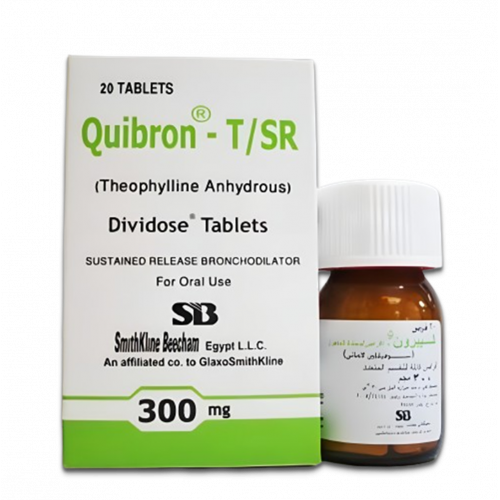
QUIBRON-T/SR 300 MG (THEOPHYLLINE ANHYDROUS) – DIVIDOSE SUSTAINED-RELEASE TABLETS
Quibron-T/SR 300 mg contains Theophylline Anhydrous 300 mg, a bronchodilator belonging to the methylxanthine class of medicines.
It features a sustained-release Dividose formulation designed to provide prolonged theophylline release, helping relax bronchial smooth muscles, widen the airways, and improve airflow in patients with certain respiratory conditions.
Pack size: 20 tablets.
Composition
- Active ingredient: Theophylline Anhydrous 300 mg.
- Pharmaceutical class: Methylxanthine bronchodilator.
- Dosage form: Dividose sustained-release oral tablets.
- Pack size: 20 tablets.
Mechanism of Action
Theophylline works through several mechanisms:
- Inhibits phosphodiesterase enzymes (mainly PDE III and PDE IV), helping relax bronchial smooth muscles.
- Produces bronchodilation, facilitating airflow through the respiratory passages.
- Helps suppress airway responses to certain stimuli.
- Enhances the contractile strength of the diaphragm, supporting respiratory muscle function.
Indications
Quibron-T/SR may be prescribed for the management of:
- Bronchial asthma: Long-term management of symptoms associated with reversible airway obstruction.
- Chronic bronchitis: Relief of bronchospasm associated with chronic airway inflammation.
- Pulmonary emphysema: Management of respiratory symptoms associated with airflow obstruction.
- Other chronic obstructive respiratory conditions: When theophylline is considered appropriate by the treating physician.
Important: It is intended for maintenance treatment and is not suitable for immediate relief of an acute asthma attack.
Benefits / Therapeutic Effects
- Helps relax bronchial smooth muscles and widen the airways.
- Supports improved airflow and respiratory function.
- Helps reduce symptoms associated with reversible bronchial obstruction.
- Supports respiratory muscle function by enhancing diaphragmatic contractility.
- Sustained-release formulation provides prolonged drug delivery.
Dosage & Administration
- Adults: Dosage should be individualized according to body weight, clinical response, tolerability, and serum theophylline concentrations.
- Treatment is generally initiated at a relatively low dose and gradually adjusted under medical supervision.
- The sustained-release formulation may allow administration at approximately 12-hour intervals in many patients, depending on the prescribed regimen.
- Take orally as directed by the physician.
- Swallow tablets according to the product instructions; do not crush or chew sustained-release tablets.
- The Dividose formulation is designed to allow dose adjustments through tablet division; divide only as instructed by the product leaflet or healthcare professional.
Important: A 300 mg tablet is not automatically intended to be taken twice daily. Theophylline has a narrow therapeutic index, making individualized dosing and blood-level monitoring essential.
Possible Side Effects
Commonly reported side effects include:
- Nausea and vomiting.
- Headache.
- Insomnia and sleep disturbances.
- Restlessness and nervousness.
- Tremors.
- Palpitations and increased heart rate.
- Diarrhea.
- Irritability.
Potential signs of theophylline toxicity:
- Persistent or severe vomiting.
- Significant cardiac arrhythmias.
- Severe agitation or confusion.
- Seizures.
These symptoms require prompt medical evaluation, particularly when toxicity is suspected.
Contraindications & Precautions
- Hypersensitivity to theophylline or any of the product's ingredients.
- Use with extreme caution in patients with:
- Active peptic ulcer disease.
- Seizure disorders or epilepsy.
- Cardiac arrhythmias.
- Liver impairment.
- Congestive heart failure.
- Hyperthyroidism.
- Elderly patients may require lower doses and more frequent monitoring.
- Smoking and smoking cessation can significantly alter theophylline blood concentrations.
- Persistent fever and acute infections may reduce theophylline clearance and increase the risk of toxicity.
- Pregnancy and breastfeeding require medical assessment before use.
Drug Interactions
Several medications can significantly affect theophylline blood concentrations.
Medications that may increase theophylline concentrations:
- Cimetidine.
- Erythromycin.
- Clarithromycin.
- Ciprofloxacin.
- Allopurinol (particularly at higher doses).
- Fluvoxamine.
Medications that may decrease theophylline concentrations:
- Carbamazepine.
- Rifampicin.
- Aminoglutethimide.
Patients should inform their healthcare provider about all medications they are taking before starting treatment.
Monitoring
- Monitor serum theophylline concentrations to ensure therapeutic effectiveness and minimize toxicity.
- Monitor heart rate and cardiac rhythm when clinically indicated.
- Assess for gastrointestinal and neurological adverse effects.
- Reassess theophylline levels following dose adjustments, changes in smoking habits, persistent fever, or the introduction or discontinuation of interacting medications.
Storage
- Store according to the manufacturer's recommended storage conditions.
- Keep in a dry place, away from excessive heat and moisture.
- Keep out of reach of children.
References
- Quibron-T/SR Official Prescribing Information: Product composition, mechanism of action, indications, contraindications, dosage, and safety information.
- U.S. National Library of Medicine – DailyMed: Theophylline Extended-Release Tablets, official drug labeling and pharmacological information.
- Global Initiative for Asthma (GINA): Global Strategy for Asthma Management and Prevention, 2026.
- U.S. Food and Drug Administration (FDA): Theophylline extended-release prescribing information and therapeutic drug monitoring recommendations.
Patient Disclaimer:
This information is provided for educational purposes only and is not intended to diagnose, treat, cure, or prevent any disease. Quibron-T/SR is a prescription medication and should only be used under medical supervision. Do not start, discontinue, or adjust the dose without consulting your healthcare professional. Theophylline has a narrow therapeutic index, and inappropriate dosing may lead to serious or potentially life-threatening toxicity.
Write a review
Your Name:Your Review: (optional) Text is optional. Maximum 1,000 characters. Reviews are published automatically after validation.
Rating: Bad Good
Enter the code in the box below: