
 Shopping Cart -
- Anti-hestaminic & Respiratory Drugs
- Anti-inflammatory Drugs +-
- Baby & Mom +-
- Baby & Mom > Bath, skin & Hair > Skin Care > wibes
- Beauty +-
- Beauty > Skin Care > whitening
- Chemotherapy & Immune Response +-
- Chemotherapy & Immune Response > ANTI-FUNGAL
- Chemotherapy & Immune Response > Chemotherapeutic Agents > Hormone Antagonists >Enzyme Inhibitors
- CIRCULATORY DISTURBANCE AGENTS
- Diet & Fitness Products +-
- DRUG AFFECTING CENTRAL NERVOUS SYSTEM
- HEMATOLOGY
-
Medical Supplies
+-
- Chemicals & Disinfectants
- Dental Supplies
- Devices & Instruments
- Diabetic Supplies
- General Medical Supplies
- I.V & Medical Solution
- Intensive Care Unit & Anesthesia Supplies
- KIDNEY UNIT SUPPLIES
- Lab Supplies
- Miscellaneous
- Neonatal Unit Supplies
- Operation Room Supplies
- Sanitary
- Sterilization Supplies
- Surgical Sutures
- Syringes
- Medicines & Health +-
- Medicines & health > Gout releif
- Natural & Organic Products +-
- OTC > Analgesics > Anti-inflammatory Drugs
- Personal Care +-
-
Prescription Drugs
+-
- Analgesics
- Cardiovascular System
- Drugs Affecting Musculoskeletal System
- Drugs Used In Infections
- Ear & Nose Drugs
- Endocrine System
- Gastrointestinal Tract
- Gastrointestinal Tract > Hepatology > Liver treatment
- GYNECOLOGY
- Miscellaneous
- NEPHROLOGY > URINARY SYSTEM > RENAL DISORDERS > URINARY TRACT DISORDERS
- NEUROLOGY
- Nutrients & Blood Electrolytes
- Respiratory System
- SKIN > NAILS > HAIR > TOPICAL PREPARATIONS
- Vaccines
- Prescription drugs > Cardiovascular system > Anti-hypertension drugs
- Sexual Wellness +-
- Vitamins & Minerals Supplements +-
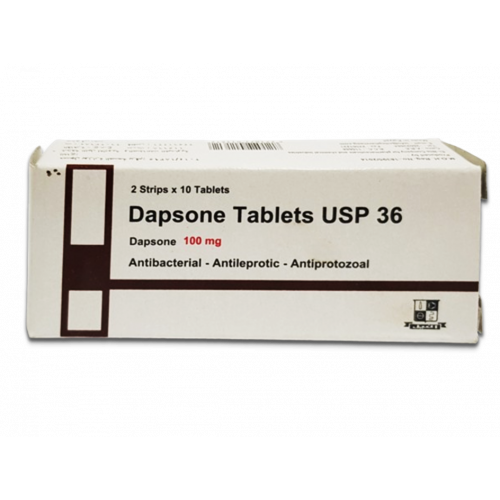
Ex Tax: 158EGP
Example
You can return the product within 14 days of purchase.
ReturnsYou can return the product within 14 days of purchase.

DAPSONE 50 MG & 100 MG – MEDICAL DESCRIPTION
Antibacterial & Dermatological Medication | Sulfone Class
DAPSONE is an antibacterial medication belonging to the sulfone class. It possesses antimicrobial and anti-inflammatory properties and is primarily used in the treatment of dermatitis herpetiformis and leprosy (Hansen's disease) caused by susceptible strains of Mycobacterium leprae.
Dapsone works by interfering with bacterial folate synthesis, inhibiting bacterial growth. It also has anti-inflammatory effects that contribute to its therapeutic activity in certain dermatological conditions.
Composition and Pharmaceutical Form
|
Component |
Details |
|---|---|
|
Active ingredient |
Dapsone |
|
Available strengths |
50 mg and 100 mg |
|
Pharmaceutical form |
Tablets |
|
Pack size |
20 tablets |
|
Route of administration |
Oral |
|
Drug classification |
Sulfone antibacterial agent |
Available presentations:
- DAPSONE 50 MG – 20 Tablets.
- DAPSONE 100 MG – 20 Tablets.
Indications and Uses
Dapsone may be prescribed for the following conditions:
- Dermatitis Herpetiformis: A chronic, intensely itchy blistering skin condition associated with gluten sensitivity and celiac disease. Dapsone helps rapidly control itching and skin lesions.
- Leprosy (Hansen's Disease): Used as part of multidrug therapy (MDT), in combination with rifampicin and clofazimine, to treat infection caused by Mycobacterium leprae.
- Pneumocystis jirovecii Pneumonia (PJP) Prevention: May be used as an alternative prophylactic agent in selected patients at increased risk of opportunistic infections.
- Toxoplasmosis Prevention: May be included in specific combination regimens for selected immunocompromised patients.
Important: Dapsone should not be used alone to treat leprosy because combination therapy is essential to prevent the development of antimicrobial resistance.
Mechanism of Action
Dapsone has both antibacterial and anti-inflammatory activities.
Antibacterial mechanism:
- Folate Synthesis Inhibition: Dapsone acts as a structural analogue of para-aminobenzoic acid (PABA).
- Enzyme Inhibition: It competitively inhibits dihydropteroate synthase, an enzyme involved in bacterial folic acid synthesis.
- Impaired Bacterial Growth: Interference with folate production reduces the availability of essential components required for bacterial DNA synthesis and replication.
- Antimicrobial Activity: This mechanism contributes to its bacteriostatic activity against susceptible microorganisms, including Mycobacterium leprae.
Anti-inflammatory mechanism:
Dapsone also suppresses certain inflammatory processes, including neutrophil-mediated activity, helping reduce inflammation associated with dermatitis herpetiformis.
Dosage and Method of Administration
Dapsone dosage varies according to the condition being treated, the patient's age, clinical response, and laboratory results.
A. Dermatitis Herpetiformis
- Initial adult dose: Usually 50 mg once daily.
- The dose may be gradually increased according to clinical response, commonly within the range of 50–300 mg daily.
- Once symptoms are controlled, the dose should be reduced to the lowest effective maintenance dose.
- A strict gluten-free diet is also recommended as part of long-term disease management.
B. Leprosy (Hansen's Disease)
Dapsone is administered as part of multidrug therapy (MDT):
- Paucibacillary leprosy: Dapsone 100 mg once daily in combination with rifampicin, according to the applicable treatment protocol.
- Multibacillary leprosy: Dapsone 100 mg once daily in combination with rifampicin and clofazimine.
According to WHO recommendations, multidrug therapy is generally administered for:
- 6 months for paucibacillary leprosy.
- 12 months for multibacillary leprosy.
C. Pneumocystis Pneumonia Prevention
Dapsone may be prescribed as an alternative prophylactic agent in selected patients, with dosage determined by the relevant clinical protocol.
Method of administration:
- Administer orally with or without food.
- Swallow the tablet with water.
- Take the medication regularly at the prescribed time.
Important: These are indication-specific examples, not interchangeable dosing schedules. Dapsone should only be initiated and adjusted under medical supervision.
Possible Side Effects
Dapsone can cause several adverse effects, particularly involving the blood and skin.
Common or clinically reported side effects:
- Nausea and vomiting.
- Abdominal discomfort.
- Headache.
- Dizziness.
- Skin rash and itching.
- Photosensitivity.
- Fatigue.
Potentially serious adverse effects:
- Hemolytic Anemia: Destruction of red blood cells, which may occur even in patients without G6PD deficiency.
- Methemoglobinemia: A condition in which hemoglobin becomes less capable of carrying oxygen effectively.
- Agranulocytosis: A severe reduction in white blood cells, increasing susceptibility to infections.
- Aplastic Anemia: A rare but serious bone marrow disorder.
- Dapsone Hypersensitivity Syndrome: A potentially severe reaction characterized by fever, skin rash, lymph node enlargement, and possible liver involvement.
- Hepatitis and Cholestatic Jaundice: Liver inflammation or impaired bile flow.
- Peripheral Neuropathy: Nerve damage that may cause numbness, tingling, or muscle weakness, particularly with prolonged treatment.
Seek immediate medical attention if the patient develops unusual pallor, blue or gray discoloration of the lips or skin, jaundice, persistent fever, sore throat, unusual bruising, or a widespread skin rash.
Contraindications and Precautions
Dapsone should not be used in patients with known hypersensitivity to dapsone or its derivatives.
Special precautions:
- G6PD Deficiency: Patients should be tested for glucose-6-phosphate dehydrogenase (G6PD) deficiency before treatment because of the increased risk of hemolytic anemia.
- Anemia: Assess hemoglobin levels before starting treatment. Severe anemia should be corrected before therapy.
- Blood Disorders: Use cautiously in patients with pre-existing hematological abnormalities.
- Liver Disease: Patients with hepatic impairment require careful assessment and monitoring because liver toxicity has been reported.
- Cardiopulmonary Conditions: Hemolysis and methemoglobinemia may be poorly tolerated in patients with significant heart or lung disease.
- Renal Impairment: Use cautiously in patients with significant kidney disease.
- Diabetes: Dapsone may interfere with HbA1c measurements, potentially producing falsely low results.
- Prolonged Treatment: Regular blood count and liver function monitoring are essential.
Recommended monitoring:
- G6PD level before treatment.
- Complete blood count (CBC).
- Hemoglobin and reticulocyte count.
- Liver function tests.
- Clinical assessment for signs of hemolysis, methemoglobinemia, and hypersensitivity.
Drug Interactions
Dapsone may interact with several medications, potentially affecting its blood concentrations or increasing the risk of adverse effects.
Important interactions include:
- Rifampicin: Can significantly reduce dapsone plasma concentrations by increasing its clearance. However, this combination is intentionally used in leprosy multidrug therapy.
- Trimethoprim: May increase the plasma concentrations of both dapsone and trimethoprim.
- Pyrimethamine: May increase the risk of hematological toxicity, including agranulocytosis.
- Other Hemolytic Medications: Drugs such as primaquine and certain sulfonamides may increase the risk of hemolysis, particularly in susceptible patients.
- Other Bone Marrow-Suppressing Medications: May increase the risk of blood cell abnormalities.
Patients should inform their physician or pharmacist about all prescription medications, over-the-counter products, and supplements they are taking.
Pregnancy and Breastfeeding
- Pregnancy: Dapsone may be used when clinically necessary following an individualized medical assessment of potential benefits and risks.
- Breastfeeding: Dapsone passes into breast milk and may cause hemolysis or methemoglobinemia in susceptible infants, particularly those with G6PD deficiency. Medical consultation is necessary before use during breastfeeding.
Storage Conditions
- Store at room temperature according to the manufacturer's instructions.
- Keep in the original packaging.
- Protect from excessive heat, moisture, and direct sunlight.
- Keep out of reach of children.
- Do not use after the expiry date.
Patient Disclaimer
This description is intended for educational and informational purposes only. It does not replace professional medical advice, diagnosis, or treatment.
Dapsone is a prescription medication that should only be used under the supervision of a qualified healthcare professional. Appropriate laboratory investigations, including G6PD testing and regular blood count monitoring, are important during treatment.
Patients should not change the prescribed dose or discontinue treatment without consulting their physician. Seek immediate medical attention if signs of anemia, unusual skin reactions, jaundice, or other serious adverse effects occur.
References
- Egyptian Drug Authority (EDA): Egyptian National Antimicrobial Formulary 2023 – Dapsone monograph, including available strengths, indications, dosage, contraindications, adverse effects, monitoring, and interactions. Egyptian National Antimicrobial Formulary – Dapsone (Page 305 onward).
- U.S. National Library of Medicine – DailyMed: Official dapsone prescribing information, including pharmacology, indications, dosage, warnings, and drug interactions. Dapsone Tablets – DailyMed.
- World Health Organization (WHO): Leprosy treatment recommendations and multidrug therapy protocols. WHO – Leprosy Treatment and Multidrug Therapy.
- Médecins Sans Frontières (MSF): Dapsone oral clinical guidelines, indications, dosage, and precautions. MSF Medical Guidelines – Dapsone Oral.
- NIH – HIV Clinical Guidelines: Dapsone drug information and official prescribing references. NIH – Dapsone Oral Drug Information.
Write a review
Your Name:Your Review: (optional) Text is optional. Maximum 1,000 characters. Reviews are published automatically after validation.
Rating: Bad Good
Enter the code in the box below:


