 Shopping Cart -
- Anti-hestaminic & Respiratory Drugs
- Anti-inflammatory Drugs +-
- Baby & Mom +-
- Baby & Mom > Bath, skin & Hair > Skin Care > wibes
- Beauty +-
- Beauty > Skin Care > whitening
- Chemotherapy & Immune Response +-
- Chemotherapy & Immune Response > ANTI-FUNGAL
- Chemotherapy & Immune Response > Chemotherapeutic Agents > Hormone Antagonists >Enzyme Inhibitors
- CIRCULATORY DISTURBANCE AGENTS
- Diet & Fitness Products +-
- DRUG AFFECTING CENTRAL NERVOUS SYSTEM
- HEMATOLOGY
-
Medical Supplies
+-
- Chemicals & Disinfectants
- Dental Supplies
- Devices & Instruments
- Diabetic Supplies
- General Medical Supplies
- I.V & Medical Solution
- Intensive Care Unit & Anesthesia Supplies
- KIDNEY UNIT SUPPLIES
- Lab Supplies
- Miscellaneous
- Neonatal Unit Supplies
- Operation Room Supplies
- Sanitary
- Sterilization Supplies
- Surgical Sutures
- Syringes
- Medicines & Health +-
- Medicines & health > Gout releif
- Natural & Organic Products +-
- OTC > Analgesics > Anti-inflammatory Drugs
- Personal Care +-
-
Prescription Drugs
+-
- Analgesics
- Cardiovascular System
- Drugs Affecting Musculoskeletal System
- Drugs Used In Infections
- Ear & Nose Drugs
- Endocrine System
- Gastrointestinal Tract
- Gastrointestinal Tract > Hepatology > Liver treatment
- GYNECOLOGY
- Miscellaneous
- NEPHROLOGY > URINARY SYSTEM > RENAL DISORDERS > URINARY TRACT DISORDERS
- NEUROLOGY
- Nutrients & Blood Electrolytes
- Respiratory System
- SKIN > NAILS > HAIR > TOPICAL PREPARATIONS
- Vaccines
- Prescription drugs > Cardiovascular system > Anti-hypertension drugs
- Sexual Wellness +-
- Vitamins & Minerals Supplements +-
Ex Tax: 62EGP
Example
You can return the product within 14 days of purchase.
ReturnsYou can return the product within 14 days of purchase.

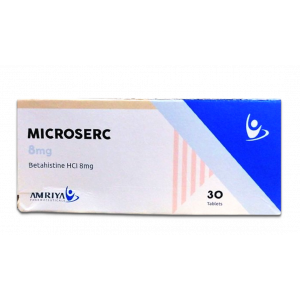
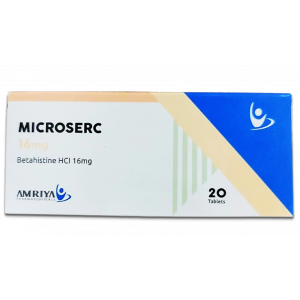
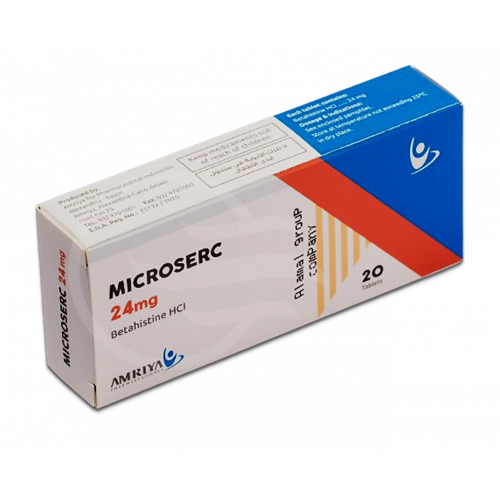
MICROSERC (BETAHISTINE DIHYDROCHLORIDE) – TABLETS
Available Strengths:
- Microserc 8 mg Tablets.
- Microserc 16 mg Tablets.
- Microserc 24 mg Tablets.
Active Ingredient: Betahistine Dihydrochloride.
Dosage Form: Oral tablets.
Therapeutic Class: Antivertigo Agent / Histamine Analogue.
Product Overview
Microserc contains betahistine dihydrochloride, a histamine analogue used primarily for the treatment of Ménière's disease and its associated vestibular symptoms.
It works by influencing histamine receptors involved in the regulation of blood flow in the inner ear and vestibular system. This may help improve inner-ear circulation and support the body's vestibular balance mechanisms.
Microserc is commonly prescribed to help manage symptoms such as vertigo, tinnitus (ringing in the ears), and hearing disturbances associated with Ménière's disease.
Indications and Therapeutic Uses
Microserc is indicated for the symptomatic treatment of Ménière's syndrome, which may involve:
- Vertigo: Helps reduce episodes of dizziness and spinning sensations associated with inner-ear disorders.
- Tinnitus: May help improve ringing or buzzing sensations in the ears associated with Ménière's disease.
- Hearing Disturbances: May help manage fluctuating hearing symptoms associated with Ménière's syndrome.
- Vestibular Symptoms: Helps manage symptoms associated with disturbances of the inner-ear balance system.
Important: Betahistine is not a general treatment for every type of dizziness or vertigo. Its effectiveness may vary between patients.
Mechanism of Action
Betahistine is a histamine analogue that acts primarily through histamine H1 and H3 receptors.
Its proposed mechanisms include:
- H1-Receptor Agonism: Promotes vasodilation in the inner ear and may improve cochlear and vestibular microcirculation.
- H3-Receptor Antagonism: Modulates histamine release and neurotransmission within the vestibular system.
- Improved Inner-Ear Circulation: May help regulate blood flow in the inner ear.
- Vestibular Compensation: May facilitate central vestibular compensation, helping the nervous system adapt to changes in balance signals.
These actions are believed to contribute to its therapeutic effects in Ménière's disease.
Dosage and Administration
Microserc is administered orally. The dosage depends on the patient's condition, clinical response, and prescribed strength.
Usual adult dosage:
|
Strength |
General adult dosing |
|---|---|
|
8 mg |
1–2 tablets, three times daily |
|
16 mg |
½–1 tablet, three times daily |
|
24 mg |
1 tablet, twice daily |
- The usual total daily dose is 24–48 mg, divided into two or three doses.
- The maximum recommended daily dose is 48 mg.
- Tablets should preferably be taken with or after meals to minimize gastrointestinal discomfort.
- Swallow tablets with water.
- Treatment may require several weeks before noticeable improvement, and the duration should be determined by the treating physician.
Important: Dosage must be individualized. The tablet score line should only be used for dose division if the specific product's leaflet confirms that it allows equal doses.
Possible Side Effects
Microserc is generally well tolerated, but some patients may experience adverse reactions.
Common side effects:
- Headache.
- Nausea.
- Indigestion (dyspepsia).
Other possible side effects:
- Vomiting.
- Abdominal discomfort or pain.
- Abdominal bloating.
- Skin rash.
- Itching (pruritus).
- Urticaria (hives).
Rare but serious reactions:
- Angioedema (swelling beneath the skin).
- Severe hypersensitivity reactions, including anaphylaxis.
Taking the medication with food may help reduce gastrointestinal side effects.
Contraindications
Microserc should not be used in patients with:
- Pheochromocytoma: A rare tumour of the adrenal gland that can cause excessive catecholamine release.
- Known hypersensitivity: Allergy to betahistine dihydrochloride or any of the product's excipients.
Warnings and Precautions
- Bronchial Asthma: Use cautiously in patients with asthma, as symptoms may worsen in susceptible individuals. Close monitoring is recommended.
- Peptic Ulcer Disease: Use cautiously in patients with an active or previous history of peptic ulcers.
- Severe Hypotension: Patients with significantly low blood pressure require careful medical assessment.
- Allergic Conditions: Patients with a history of urticaria, skin rashes, or allergic rhinitis should be monitored.
- Pregnancy: Betahistine should generally be avoided during pregnancy unless considered clearly necessary by a physician.
- Breastfeeding: Use is generally not recommended unless the potential benefits outweigh the possible risks.
- Children: Not recommended for individuals below 18 years because of insufficient safety and efficacy data.
Drug Interactions
Microserc may interact with certain medications:
- Antihistamines: Antihistamines may theoretically reduce the therapeutic effect of betahistine because of their opposing pharmacological actions.
- Monoamine Oxidase Inhibitors (MAOIs): MAO inhibitors, including selective MAO-B inhibitors such as selegiline, may inhibit betahistine metabolism and potentially increase its exposure.
- Other medications: Patients should inform their physician about all medications and supplements they are taking before starting treatment.
Storage Conditions
- Store below 25°C or according to the specific manufacturer's instructions.
- Protect from moisture and direct sunlight.
- Keep tablets in their original packaging.
- Keep out of reach of children.
- Do not use after the expiry date printed on the package.
Available Strengths
- MICROSERC 8 MG
- Betahistine Dihydrochloride 8 mg per tablet.
- Oral tablets
- MICROSERC 16 MG
- Betahistine Dihydrochloride 16 mg per tablet.
- Oral tablets
- MICROSERC 24 MG
- Betahistine Dihydrochloride 24 mg per tablet.
- Oral tablets
References
- The following trusted medical and educational references provide information about betahistine, its clinical uses, dosage, pharmacological activity, and safety.
- NHS – National Health Service (UK): Betahistine: uses, dosage, precautions, and side effects. NHS – Betahistine Medicine Guide
- Electronic Medicines Compendium (eMC): Betahistine 8 mg – Summary of Product Characteristics. Betahistine 8 mg – SmPC
- Electronic Medicines Compendium (eMC): Betahistine 16 mg – Summary of Product Characteristics. Betahistine 16 mg – SmPC
- Singapore National Drug Formulary: Betahistine 24 mg – indications, dosing, and contraindications. National Drug Formulary – Betahistine 24 mg
- Health Canada: Betahistine product monograph and approved product information. Health Canada – Betahistine Monograph
- Health Products Regulatory Authority (HPRA), Ireland: Official assessment of betahistine 8 mg, 16 mg, and 24 mg tablets. HPRA – Betahistine Product Assessment
Patient Disclaimer
This information is provided for educational purposes only and is not intended to replace professional medical advice, diagnosis, or treatment.
Microserc should be used according to the instructions of a qualified healthcare professional. Patients should not change their dosage, discontinue treatment, or use this medication for unexplained dizziness without medical consultation.
This product is not intended to diagnose, treat, cure, or prevent any disease without appropriate medical evaluation and supervision.
Write a review
Your Name:Your Review: (optional) Text is optional. Maximum 1,000 characters. Reviews are published automatically after validation.
Rating: Bad Good
Enter the code in the box below: