 Shopping Cart -
- Anti-hestaminic & Respiratory Drugs
- Anti-inflammatory Drugs +-
- Baby & Mom +-
- Baby & Mom > Bath, skin & Hair > Skin Care > wibes
- Beauty +-
- Beauty > Skin Care > whitening
- Chemotherapy & Immune Response +-
- Chemotherapy & Immune Response > ANTI-FUNGAL
- Chemotherapy & Immune Response > Chemotherapeutic Agents > Hormone Antagonists >Enzyme Inhibitors
- CIRCULATORY DISTURBANCE AGENTS
- Diet & Fitness Products +-
- DRUG AFFECTING CENTRAL NERVOUS SYSTEM
- HEMATOLOGY
-
Medical Supplies
+-
- Chemicals & Disinfectants
- Dental Supplies
- Devices & Instruments
- Diabetic Supplies
- General Medical Supplies
- I.V & Medical Solution
- Intensive Care Unit & Anesthesia Supplies
- KIDNEY UNIT SUPPLIES
- Lab Supplies
- Miscellaneous
- Neonatal Unit Supplies
- Operation Room Supplies
- Sanitary
- Sterilization Supplies
- Surgical Sutures
- Syringes
- Medicines & Health +-
- Medicines & health > Gout releif
- Natural & Organic Products +-
- OTC > Analgesics > Anti-inflammatory Drugs
- Personal Care +-
-
Prescription Drugs
+-
- Analgesics
- Cardiovascular System
- Drugs Affecting Musculoskeletal System
- Drugs Used In Infections
- Ear & Nose Drugs
- Endocrine System
- Gastrointestinal Tract
- Gastrointestinal Tract > Hepatology > Liver treatment
- GYNECOLOGY
- Miscellaneous
- NEPHROLOGY > URINARY SYSTEM > RENAL DISORDERS > URINARY TRACT DISORDERS
- NEUROLOGY
- Nutrients & Blood Electrolytes
- Respiratory System
- SKIN > NAILS > HAIR > TOPICAL PREPARATIONS
- Vaccines
- Prescription drugs > Cardiovascular system > Anti-hypertension drugs
- Sexual Wellness +-
- Vitamins & Minerals Supplements +-
Ex Tax: 16EGP
Example
You can return the product within 14 days of purchase.
ReturnsYou can return the product within 14 days of purchase.

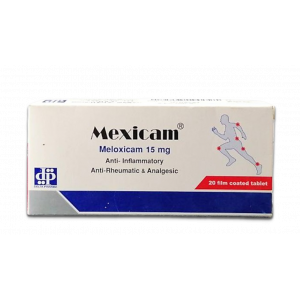
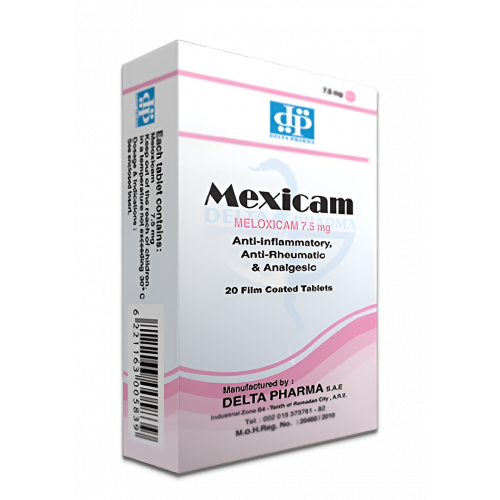
MEXICAM (MELOXICAM) – 7.5 MG & 15 MG – FILM-COATED TABLETS
Active Ingredient: Meloxicam
Available Concentrations:
- Mexicam 7.5 mg – 20 film-coated tablets.
- Mexicam 15 mg – 20 film-coated tablets.
Pharmaceutical Form: Oral film-coated tablets.
Therapeutic Class: Non-Steroidal Anti-Inflammatory Drug (NSAID) – Anti-inflammatory, Analgesic, and Antipyretic.
Product Overview
Mexicam contains meloxicam, a non-steroidal anti-inflammatory medication used to relieve pain, inflammation, and stiffness associated with various musculoskeletal and joint disorders.
Meloxicam works by inhibiting cyclooxygenase (COX) enzymes, particularly COX-2, which play an important role in the production of prostaglandins involved in inflammation, pain, and fever.
By reducing prostaglandin production, meloxicam helps:
- Relieve joint and musculoskeletal pain.
- Reduce inflammation and swelling.
- Improve joint mobility and physical function.
- Decrease stiffness associated with inflammatory joint conditions.
Meloxicam is available in two strengths, 7.5 mg and 15 mg, allowing dosage selection according to the patient's condition and treatment response.
Indications and Uses
Mexicam may be prescribed for the relief of pain and inflammation associated with:
- Osteoarthritis (OA): Helps relieve joint pain, inflammation, and stiffness associated with degenerative joint disease.
- Rheumatoid Arthritis (RA): Helps reduce joint pain, swelling, and stiffness associated with chronic inflammatory arthritis.
- Musculoskeletal Disorders: May help relieve pain and inflammation affecting muscles, joints, and surrounding tissues.
- Inflammatory Joint Conditions: Helps improve comfort and mobility in patients experiencing inflammatory joint symptoms.
Important: Meloxicam provides symptomatic relief but does not cure osteoarthritis or rheumatoid arthritis, nor does it prevent the underlying progression of these diseases.
Mechanism of Action
Meloxicam inhibits cyclooxygenase enzymes (COX-1 and COX-2), with preferential inhibition of COX-2 at therapeutic concentrations.
These enzymes are responsible for producing prostaglandins, which contribute to inflammation, pain, and fever.
Its therapeutic actions include:
- Reducing prostaglandin production.
- Decreasing inflammatory responses.
- Relieving pain and tenderness.
- Reducing joint swelling and stiffness.
- Improving mobility and physical comfort.
Dosage and Administration
Route of Administration: Oral.
The appropriate dose depends on the patient's condition, age, medical history, and response to treatment.
A. Mexicam 7.5 mg
- Osteoarthritis: Usually 7.5 mg once daily.
- Rheumatoid Arthritis: Usually 7.5 mg once daily initially; the dose may be increased if necessary under medical supervision.
B. Mexicam 15 mg
- May be prescribed as a higher daily dose for patients who require additional symptom control.
- The usual maximum adult dose is 15 mg once daily.
Administration Instructions:
- Swallow the tablet with sufficient water.
- Take once daily, preferably at the same time each day.
- May be taken with or without food.
- Use the lowest effective dose for the shortest possible treatment duration.
- Do not exceed 15 mg per day from all meloxicam-containing products combined.
Special Considerations:
- Elderly patients and individuals at increased risk of adverse reactions may require a lower dose, commonly 7.5 mg daily.
- Patients undergoing hemodialysis should not exceed 7.5 mg daily.
- Severe renal impairment may make meloxicam unsuitable.
The 7.5 mg and 15 mg strengths are not intended to be taken together to exceed the recommended daily dose. Dose selection must be determined by the treating physician.
Possible Side Effects
Common side effects may include:
- Abdominal pain.
- Nausea and vomiting.
- Indigestion (dyspepsia).
- Diarrhea or constipation.
- Flatulence.
- Headache.
- Dizziness.
- Fluid retention and swelling (edema).
Less common but potentially serious adverse reactions include:
- Gastrointestinal ulcers and bleeding.
- Kidney impairment or acute kidney injury.
- Increased blood pressure.
- Worsening of heart failure.
- Cardiovascular thrombotic events, including heart attack and stroke.
- Liver function abnormalities.
- Severe allergic reactions.
- Serious skin reactions.
Important: Seek immediate medical attention if you experience black stools, vomiting blood, chest pain, sudden weakness, difficulty breathing, or severe allergic reactions.
Contraindications and Precautions
Contraindications:
- Known hypersensitivity to meloxicam or any product component.
- History of asthma, urticaria, or allergic reactions following aspirin or other NSAIDs.
- Active gastrointestinal bleeding or active peptic ulcer disease.
- History of gastrointestinal bleeding or perforation associated with previous NSAID treatment.
- Severe uncontrolled heart failure.
- Use for the treatment of perioperative pain associated with coronary artery bypass graft (CABG) surgery.
- Pregnancy during the third trimester.
Precautions:
- Use cautiously in patients with hypertension or cardiovascular disease.
- Patients with kidney or liver impairment may require careful monitoring.
- Patients with a history of peptic ulcers or gastrointestinal bleeding have an increased risk of complications.
- Elderly patients are more susceptible to gastrointestinal, cardiovascular, and renal adverse effects.
- Patients with dehydration should be evaluated before treatment because of the increased risk of kidney injury.
- Avoid prolonged use without medical supervision.
- During pregnancy, NSAIDs should generally be avoided from 20 weeks onward unless specifically advised by a healthcare professional; use is contraindicated in the third trimester.
- Consult a healthcare professional before use during breastfeeding.
Important Drug and Lifestyle Interactions
- Other NSAIDs: Avoid combining meloxicam with ibuprofen, diclofenac, naproxen, or other NSAIDs because this increases the risk of gastrointestinal bleeding and kidney damage.
- Aspirin: Concomitant use may increase the risk of gastrointestinal bleeding.
- Anticoagulants: Warfarin and other blood thinners may increase the risk of bleeding.
- Corticosteroids: Medications such as prednisolone may increase the risk of gastrointestinal ulcers and bleeding.
- ACE inhibitors and ARBs: May increase the risk of kidney impairment and reduce blood pressure-lowering effectiveness.
- Diuretics: May increase the risk of kidney problems and electrolyte disturbances.
- Lithium: Meloxicam may increase lithium blood concentrations and toxicity risk.
- Methotrexate: May increase methotrexate exposure and toxicity.
- Cyclosporine: May increase the risk of kidney toxicity.
Inform your healthcare professional about all medications and supplements you are taking.
Storage Conditions
- Store at room temperature according to the manufacturer's instructions.
- Protect from excessive heat and moisture.
- Keep the tablets in their original packaging.
- Keep out of reach of children.
- Do not use after the expiry date.
Patient Counseling Points
- Take Mexicam exactly as prescribed.
- Use the lowest effective dose for the shortest possible duration.
- Do not exceed the recommended daily dose of 15 mg.
- Avoid combining Mexicam with other NSAIDs unless specifically instructed by your physician.
- Taking the medication with food may help reduce stomach discomfort, although it does not eliminate the risk of gastrointestinal ulcers or bleeding.
- Maintain adequate hydration during treatment.
- Inform your doctor if you have a history of stomach ulcers, kidney disease, heart disease, or high blood pressure.
- Discontinue treatment and seek medical advice if signs of gastrointestinal bleeding or severe allergic reactions occur.
- Do not use meloxicam during pregnancy without medical advice.
References
- U.S. National Library of Medicine (DailyMed): Meloxicam Tablets – Prescribing Information, indications, dosage, contraindications, and safety warnings. View prescribing information.
- U.S. Food and Drug Administration (FDA): Meloxicam – Drug Safety Information and NSAID Cardiovascular and Gastrointestinal Warnings. View FDA-approved labeling.
- National Library of Medicine: Meloxicam Tablets – Clinical Pharmacology and Dosage Guidelines. View clinical information.
- DailyMed: Meloxicam – Drug Interactions, Adverse Reactions, and Precautions. View safety information.
Patient Disclaimer: This information is intended for educational purposes only and should not replace professional medical advice, diagnosis, or treatment. Always consult a qualified healthcare professional before using this medication. The appropriate concentration, dosage, and treatment duration depend on the patient's medical condition, age, and individual risk factors. Prolonged use of NSAIDs requires appropriate medical supervision due to potential gastrointestinal, cardiovascular, and renal complications.
Write a review
Your Name:Your Review: (optional) Text is optional. Maximum 1,000 characters. Reviews are published automatically after validation.
Rating: Bad Good
Enter the code in the box below: