 Shopping Cart -
- Anti-hestaminic & Respiratory Drugs
- Anti-inflammatory Drugs +-
- Baby & Mom +-
- Baby & Mom > Bath, skin & Hair > Skin Care > wibes
- Beauty +-
- Beauty > Skin Care > whitening
- Chemotherapy & Immune Response +-
- Chemotherapy & Immune Response > ANTI-FUNGAL
- Chemotherapy & Immune Response > Chemotherapeutic Agents > Hormone Antagonists >Enzyme Inhibitors
- CIRCULATORY DISTURBANCE AGENTS
- Diet & Fitness Products +-
- DRUG AFFECTING CENTRAL NERVOUS SYSTEM
- HEMATOLOGY
-
Medical Supplies
+-
- Chemicals & Disinfectants
- Dental Supplies
- Devices & Instruments
- Diabetic Supplies
- General Medical Supplies
- I.V & Medical Solution
- Intensive Care Unit & Anesthesia Supplies
- KIDNEY UNIT SUPPLIES
- Lab Supplies
- Miscellaneous
- Neonatal Unit Supplies
- Operation Room Supplies
- Sanitary
- Sterilization Supplies
- Surgical Sutures
- Syringes
- Medicines & Health +-
- Medicines & health > Gout releif
- Natural & Organic Products +-
- OTC > Analgesics > Anti-inflammatory Drugs
- Personal Care +-
-
Prescription Drugs
+-
- Analgesics
- Cardiovascular System
- Drugs Affecting Musculoskeletal System
- Drugs Used In Infections
- Ear & Nose Drugs
- Endocrine System
- Gastrointestinal Tract
- Gastrointestinal Tract > Hepatology > Liver treatment
- GYNECOLOGY
- Miscellaneous
- NEPHROLOGY > URINARY SYSTEM > RENAL DISORDERS > URINARY TRACT DISORDERS
- NEUROLOGY
- Nutrients & Blood Electrolytes
- Respiratory System
- SKIN > NAILS > HAIR > TOPICAL PREPARATIONS
- Vaccines
- Prescription drugs > Cardiovascular system > Anti-hypertension drugs
- Sexual Wellness +-
- Vitamins & Minerals Supplements +-
Ex Tax: 354EGP
Example
You can return the product within 14 days of purchase.
ReturnsYou can return the product within 14 days of purchase.

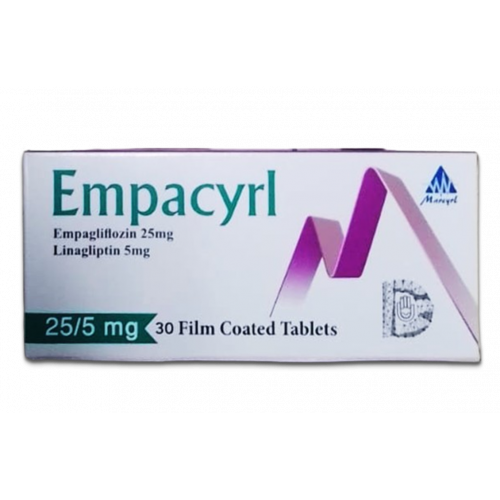
EMPACYRL 25/5 MG (EMPAGLIFLOZIN / LINAGLIPTIN) – FILM-COATED TABLETS
Empacyrl 25/5 mg contains a combination of Empagliflozin 25 mg and Linagliptin 5 mg, two oral antidiabetic agents with complementary mechanisms of action.
It is used to improve blood glucose control in adults with Type 2 Diabetes Mellitus (T2DM) when treatment with both medications is appropriate.
The combination works through two different pathways: empagliflozin increases urinary glucose excretion, while linagliptin enhances the body's natural incretin hormone activity, helping regulate insulin secretion and glucagon levels.
Active ingredients:
- Empagliflozin 25 mg.
- Linagliptin 5 mg.
Pharmaceutical class:
- Empagliflozin: Sodium-glucose cotransporter-2 (SGLT2) inhibitor.
- Linagliptin: Dipeptidyl peptidase-4 (DPP-4) inhibitor.
Dosage form: Film-coated oral tablets.
Pack size: 30 tablets.
Composition
Each film-coated tablet contains:
- Empagliflozin 25 mg: SGLT2 inhibitor.
- Linagliptin 5 mg: DPP-4 inhibitor.
Mechanism of Action
Empacyrl combines two antidiabetic agents that work through complementary mechanisms:
A. Empagliflozin (SGLT2 Inhibitor)
- Inhibits sodium-glucose cotransporter-2 in the kidneys.
- Reduces glucose reabsorption in the renal tubules.
- Increases urinary glucose excretion, helping lower blood glucose levels.
- Promotes mild sodium and fluid excretion, which may contribute to reductions in blood pressure.
B. Linagliptin (DPP-4 Inhibitor)
- Inhibits the DPP-4 enzyme responsible for breaking down incretin hormones.
- Prolongs the activity of GLP-1 and GIP hormones.
- Enhances glucose-dependent insulin secretion from pancreatic beta cells.
- Reduces glucagon secretion when blood glucose levels are elevated.
Combined effect: Provides complementary glucose-lowering activity through increased urinary glucose elimination and improved glucose-dependent hormonal regulation.
Indications
Empacyrl 25/5 mg is indicated for:
- Type 2 Diabetes Mellitus: Improves glycemic control in adults inadequately controlled with appropriate diabetes treatment.
- Combination therapy: Suitable for patients requiring both empagliflozin and linagliptin to achieve better glycemic control.
- Inadequate glycemic control: May be used when treatment with one of its individual components or other appropriate antidiabetic regimens does not provide sufficient control.
Important: Empacyrl is not indicated for the treatment of Type 1 Diabetes Mellitus or diabetic ketoacidosis.
Benefits / Therapeutic Effects
- Helps improve blood glucose control in adults with Type 2 Diabetes Mellitus.
- Reduces blood glucose levels through complementary mechanisms of action.
- Increases urinary glucose excretion, helping reduce circulating glucose levels.
- Enhances glucose-dependent insulin secretion.
- Helps reduce excessive glucagon secretion.
- Provides effective combination therapy for patients requiring additional glycemic control.
- Empagliflozin may provide additional cardiovascular and renal benefits in eligible patients with Type 2 Diabetes, depending on their clinical condition and treatment indication.
Dosage & Administration
- Recommended dosage: One tablet once daily, as prescribed by the physician.
- Preferably take in the morning.
- Can be taken with or without food.
- Swallow the tablet whole with water.
- Take regularly at approximately the same time each day.
Important dosage considerations:
- The usual starting dose of the empagliflozin/linagliptin combination is 10 mg/5 mg once daily.
- The dose may be increased to 25 mg/5 mg once daily in patients who tolerate the lower strength and require additional glycemic control.
- Empacyrl 25/5 mg is therefore generally intended for patients who require the higher empagliflozin dose and have appropriate renal function.
- Assess kidney function and hydration status before starting treatment.
- Do not exceed the prescribed dose.
Missed dose: Take the missed dose when remembered, unless it is almost time for the next dose. Do not double the next dose.
Perioperative precaution: Treatment should generally be withheld for at least 3 days before surgery or procedures involving prolonged fasting, if possible, because of the risk of ketoacidosis. Restart only when clinically stable and eating normally, according to medical advice.
Possible Side Effects
Commonly reported side effects include:
- Urinary tract infections.
- Genital fungal infections.
- Increased urination.
- Nasopharyngitis (common cold-like symptoms).
- Cough.
- Increased thirst.
- Nausea.
- Joint pain.
- Hypoglycemia, particularly when combined with insulin or sulfonylureas.
Less common but potentially serious adverse effects:
- Diabetic ketoacidosis: May occur even when blood glucose is not markedly elevated.
- Volume depletion: May cause dehydration, dizziness, or low blood pressure.
- Acute pancreatitis: Reported with linagliptin-containing treatments.
- Pyelonephritis: Serious kidney infection.
- Necrotizing fasciitis of the perineum (Fournier's gangrene): A rare but serious infection.
- Severe hypersensitivity reactions: Including angioedema and anaphylaxis.
- Bullous pemphigoid: A rare blistering skin condition associated with DPP-4 inhibitors.
Seek immediate medical attention if severe abdominal pain, persistent vomiting, difficulty breathing, unusual fatigue, or signs of serious infection develop.
Contraindications & Precautions
- Hypersensitivity to empagliflozin, linagliptin, or any of the product's ingredients.
- Not recommended for patients with Type 1 Diabetes Mellitus.
- Not indicated for the treatment of diabetic ketoacidosis.
- Use cautiously in patients with:
- Renal impairment.
- History of pancreatitis.
- Recurrent urinary tract or genital infections.
- Low blood pressure or dehydration.
- Congestive heart failure or patients receiving diuretics.
- A history of severe hypersensitivity reactions.
- Elderly patients may be more susceptible to dehydration and volume depletion.
- Monitor for symptoms of ketoacidosis, particularly during acute illness, prolonged fasting, or reduced food intake.
- Consider reducing insulin or sulfonylurea doses when necessary to minimize hypoglycemia risk.
- Pregnancy: Not recommended, particularly during the second and third trimesters, because of potential effects on fetal kidney development.
- Breastfeeding: Not recommended due to potential risks to the developing infant's kidneys.
Renal considerations:
- Assess estimated glomerular filtration rate (eGFR) before initiating treatment.
- Empagliflozin's glucose-lowering effectiveness decreases as renal function declines.
- The 25 mg empagliflozin strength is generally unsuitable when eGFR is below 60 mL/min/1.73 m² under the European product dosing recommendations; a lower strength may be appropriate depending on the indication and renal function.
- Empagliflozin is not recommended for glycemic control in patients with eGFR below 30 mL/min/1.73 m² under the U.S. labeling.
- Linagliptin itself does not generally require renal dose adjustment.
Drug Interactions
Important drug interactions include:
- Insulin and sulfonylureas: May increase the risk of hypoglycemia.
- Rifampicin: May reduce linagliptin exposure and potentially decrease its effectiveness.
- Diuretics: May increase the risk of dehydration, hypotension, and volume depletion.
- Lithium: Empagliflozin may reduce serum lithium concentrations.
- Other glucose-lowering medications: May require dose adjustments to reduce the risk of hypoglycemia.
Patients should inform their healthcare provider about all medications, supplements, and herbal products they are taking.
Monitoring
- Blood glucose: Regular monitoring of fasting and postprandial blood glucose levels.
- HbA1c: Assess approximately every 3–6 months to evaluate long-term glycemic control.
- Renal function: Monitor eGFR before treatment and periodically thereafter.
- Blood pressure: Monitor for hypotension, particularly in elderly patients and those taking diuretics.
- Hydration status: Assess for signs of dehydration and volume depletion.
- Urinary and genital infections: Monitor for symptoms of infection.
- Ketones: Check when ketoacidosis is suspected, even if blood glucose is not significantly elevated.
Storage
- Store according to the manufacturer's recommended storage conditions.
- Protect from excessive heat and moisture.
- Keep in the original packaging.
- Keep out of reach of children.
References
European Medicines Agency (EMA): Glyxambi – Summary of Product Characteristics (Empagliflozin/Linagliptin), composition, indications, dosage, contraindications, and precautions.
U.S. Food and Drug Administration (FDA): Glyxambi Official Prescribing Information – Drug interactions, warnings, adverse reactions, and clinical use.
U.S. National Library of Medicine – DailyMed: Empagliflozin/Linagliptin Tablets – Official Drug Label.
National Institute for Health and Care Excellence (NICE): Type 2 Diabetes in Adults – Management and Pharmacological Treatment Recommendations. NICE Guideline NG28.
American Diabetes Association (ADA): Standards of Care in Diabetes – Pharmacologic Approaches to Glycemic Treatment. Diabetes Care – Standards of Care.
Patient Disclaimer:
This information is provided for educational purposes only and is not intended to diagnose, treat, cure, or prevent any disease. Empacyrl 25/5 mg is a prescription medication and should only be used under medical supervision. Treatment should be individualized according to blood glucose levels, kidney function, cardiovascular status, and the patient's overall medical condition. Do not start, discontinue, or adjust the dose without consulting your healthcare professional.
Write a review
Your Name:Your Review: (optional) Text is optional. Maximum 1,000 characters. Reviews are published automatically after validation.
Rating: Bad Good
Enter the code in the box below: